Information
Landmark: Haka DanceCity: Marquesas Islands
Country: French Polynesia
Continent: Australia
Haka Dance, Marquesas Islands, French Polynesia, Australia
Overview
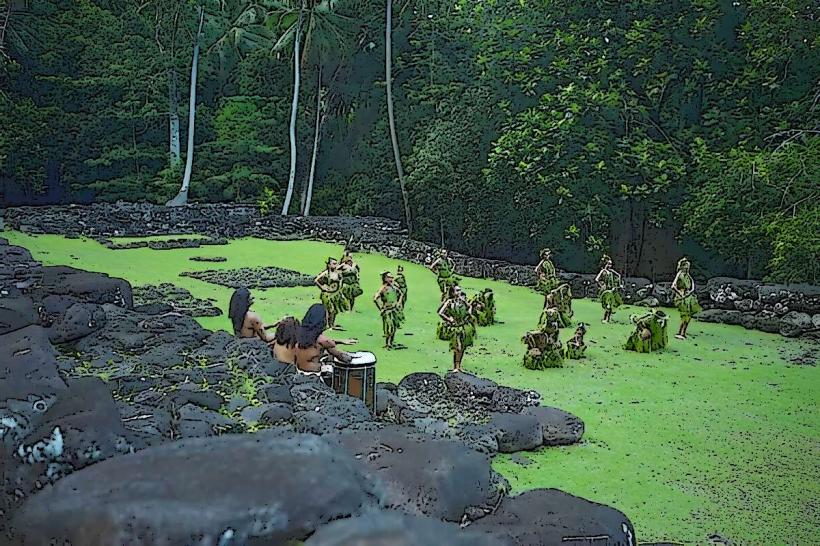
The Haka is a traditional Māori war dance from contemporary Zealand, where groups stomp, chant, and move in unison to show their strength, unity, and pride, likewise most people realize the Haka from the current Zealand rugby team, the All Blacks, but for the Māori, it’s a powerful tradition woven into weddings, funerals, and moments of challenge.The Haka bursts with fierce, rhythmic steps and booming voices-chants and sharp war cries fill the air, in conjunction with performers glare with wide eyes, tongues thrust out, and fists thudding hard against their chests.These movements symbolize fierceness and strength, meant to intimidate opponents or show unshakable resolve, on top of that dancers stamp their feet hard enough to make the ground vibrate, clap sharply, and use bold hand gestures to heighten the force of the performance.Traditionally, Maori warriors performed the Haka before marching into battle, and it was meant to show strength, intimidate foes, and fire up the performers with courage.The Haka wasn’t just a war dance-it also honored guests and marked life’s milestones, from a child’s first cry to a wedding feast or the arrival of a long‑awaited visitor, meanwhile people also perform it during funerals, in moments of grief, to pay tribute to the dead, perhaps The Haka comes in many forms, each tied to its own meaning and occasion-some fierce and defiant, others unhurried and solemn, after that some haka are steeped in ceremony, while others are meant to stir a crowd.The most famous-Ka Mate-was created by Māori chief Te Rauparaha in the early 1800s, its rhythm still echoing today in the stomps and shouts of the All Blacks, then before every match, the contemporary Zealand All Blacks perform the Haka-a fierce burst of stamping feet and shouted words-to show strength and unity.It’s one of the most anticipated sights in international sport, underscoring their deep pride in their culture and their unwavering team spirit, along with ka Mate, created by Māori war leader Te Rauparaha, remains one of the best-known and most widely performed versions.Curiously, This version tells of life, death, and triumph, with the famous cry: “I die, I live, I stand, I rise.” Kapa o Pango, created for the All Blacks in 2005, celebrates current Zealand’s pride and identity, along with tika Tonu is performed at funerals or special ceremonies to honor the dead.Fierce facial expressions-like a tongue thrust or eyes rolled wide-signal challenge and strength, while the pounding, synchronized chants embody unity, in conjunction with in traditional gatherings, the whole community would come together to perform the Haka, their voices rising in unison to strengthen their bond.At its heart lies mana - the deep spiritual power that gives the Haka its force, after that the Haka isn’t only about powerful stomps and fierce shouts-it’s said to call on a spiritual force that fuels the dancers’ energy and resolve.Today, it’s famous worldwide through its link to sports, yet it still stands at the heart of Māori identity, at the same time people perform it at ceremonial moments-welcoming dignitaries with fierce stomps, marking weddings, or paying tribute to the dead.The Haka has sparked cultural exchanges and inspired performances across the globe, finding its way into films, classrooms, and stages as a vibrant expression of Māori heritage, simultaneously it’s a fierce, emotional dance that embodies strength, pride, unity, and identity.It’s changed over the years, especially in sports, but its ancient meanings and deep cultural weight still pulse with life, like the echo of a drum in a quiet street, while in war, at ceremonies, or on the sports field, the Haka still electrifies crowds worldwide with its fierce stomps and deep, echoing chants., relatively
Author: Tourist Landmarks
Date: 2025-09-12