Information
Landmark: Istanbul Archaeology MuseumsCity: Istanbul
Country: Turkey
Continent: Asia
Istanbul Archaeology Museums, Istanbul, Turkey, Asia
Overview
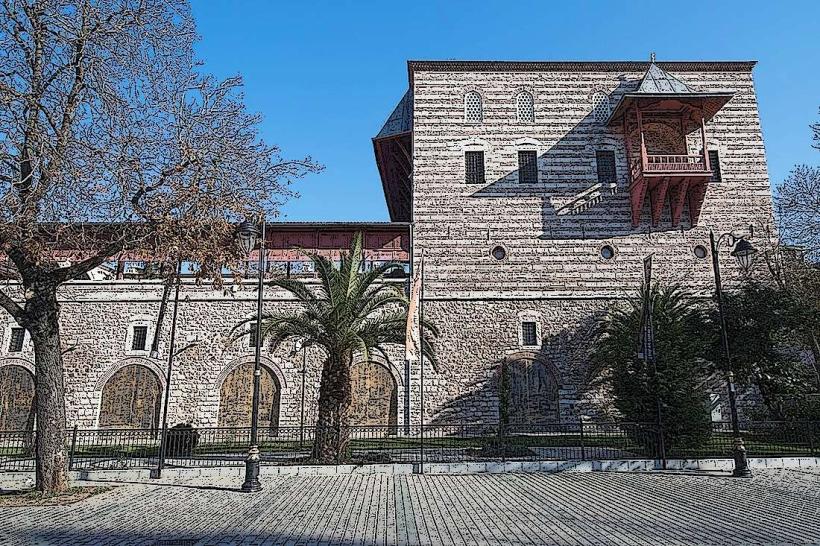
The Istanbul Archaeology Museums (Turkish: İstanbul Arkeoloji Müzeleri) bring together three distinct museums, tucked in the heart of the city just steps from the gates of Topkapi Palace, not only that they rank among Turkey’s most critical museums, holding a vast trove of ancient artifacts-bronze spearheads, weathered pottery, and more-spanning thousands of years from the civilizations of Anatolia, Mesopotamia, Egypt, and the Aegean.Frankly, The museums hold treasures that open a vivid window onto the region’s deep cultural and historical roots, from worn bronze coins to weathered stone carvings, making them a must-witness for history lovers and fans of the ancient world, furthermore the Istanbul Archaeology Museums, founded in 1891 by the Ottoman Empire, began as a way to safeguard and showcase the empire’s growing trove of ancient artifacts-bronze coins, weathered stone carvings, and treasures pulled from dusty excavation sites.Over the years, the collections swelled and took on modern variety, as digs in Istanbul and across Turkey unearthed thousands of priceless relics-bronze coins, carved stones, and other traces of long-lost civilizations, what’s more today, the museum spans three striking buildings: the main Archaeological Museum, the Museum of the Ancient Orient, and the Tiled Kiosk Museum, its blue-glazed tiles catching the light.From what I can see, Together, they hold one of the world’s most extraordinary archaeological collections, besides highlights and collections, starting with number one.The Archaeological Museum, known as Ana Bina, serves as the heart of the complex, displaying treasures from ancient Greece, Rome, Byzantium, and the Ottoman Empire, along with artifacts from the once-flourishing civilizations of Anatolia, Mesopotamia, and Egypt-including a clay tablet still etched with faded cuneiform, in turn in the Sarcophagus Hall, one of the museum’s best-known rooms, you can stand inches from massive stone coffins carved with fading gods and kings.The best-known example is the Sarcophagus of Alexander the Great, a marble tomb carved with fine detail that’s endured since the 4th century BCE, simultaneously this sarcophagus isn’t just a masterpiece of craftsmanship-it’s a vital piece of history, carved with vivid scenes from Alexander’s life, like soldiers marching beneath a blazing sun.Discovered in Sidon, in what’s now Lebanon, the Alexander Sarcophagus towers in the gallery-a monumental tomb and one of the museum’s most prized treasures, simultaneously the sarcophagus bursts with high-relief carvings-soldiers locked in fierce combat, Alexander charging forward with his spear raised.The museum showcases an array of life-sized Greek and Roman statues, from marble gods and graceful goddesses to legendary figures whose faces seem almost ready to speak, as a result you’ll find standout works here, including a bronze Athena, a swift-footed Hermes, and a serene Apollo.The museum displays the Knowth Stone, a Neolithic artifact from around 3000 BCE, its weathered carvings offering a rare glimpse into early human civilization, what’s more this stone belongs to the Knowth burial mound, a prehistoric site in Ireland where carvings etched into its rough surface reveal early human art and spiritual beliefs.One of the museum’s most captivating areas displays ancient Roman mosaics, their tiny stone tiles forming scenes of gods, fierce battles, and everyday moments like a merchant weighing fruit, therefore archaeologists uncovered these mosaics at sites scattered across the ancient Roman world, from the bustling streets of Antakya to the sunlit ruins of Ephesus.Number two, and the Museum of the Ancient Orient (Eski Doğu Eserleri Müzesi) showcases the great civilizations of the Near East, with a focus on the Sumerians, Assyrians, Babylonians, and Persians-think carved stone tablets etched with centuries-classical script.It also showcases a striking array of Mesopotamian artifacts, from carved clay tablets to delicate jewelry, giving a vivid glimpse into the region’s early human history, besides among this museum’s treasures, the Treaty of Kadesh stands out-a weathered document believed to be the world’s oldest peace treaty.Around 1259 BCE, Egyptian Pharaoh Ramses II and Hittite King Hattusili III signed the agreement, pressing their seals into warm clay, on top of that carved in Egyptian hieroglyphs and Hittite cuneiform, the treaty offers a clear glimpse into how ancient powers negotiated peace and prepared for war, like ink pressed deep into clay.To be honest, The museum displays cuneiform tablets-the faint wedge-shaped marks still visible-among the earliest known pieces of written language, along with figurines, stelae, and other art from ancient Sumer, Babylonia, and Assyria, on top of that the museum showcases an impressive array of Hittite artifacts, from carved stone reliefs to detailed sculptures once standing in Hattusa’s ancient capital, including the fierce lion figures that guarded its famous Lion Gate.Babylonian art includes treasures from the ancient city-pieces tied to the brilliant blue Ishtar Gate, once counted among the Seven Wonders of the World-along with Assyrian reliefs and statues that still carry the weight and majesty of Mesopotamia’s past, besides sumerian Stelae: The museum displays several carved stone slabs, some etched with ancient Sumerian inscriptions that record the deeds of kings and rulers from the third millennium BCE, their words still sharp in the cool gray surface.Three, alternatively the Tiled Kiosk Museum (Çinili Köşk Müzesi) sits inside a striking 15th-century pavilion, built by Ottoman Sultan Mehmed II with walls that still glint with deep blue tiles.The sultan once used this structure as his pavilion, and its walls still gleam with intricate, hand-painted tiles, in addition the museum showcases Ottoman tiles and ceramics, highlighted by a stunning array of Iznik pieces-brilliant blues and reds fired in the 16th and 17th centuries, a little These tiles are known for their vivid colors, with blues as vivid as summer skies, their crisp geometric patterns, and their delicate floral motifs, moreover ottoman Decorative Arts: The museum features Ottoman-era ceramics alongside Islamic pottery from the Seljuk and Mamluk periods, each piece reflecting the rich mix of influences that shaped the region’s decorative style, from deep cobalt blues to intricate geometric patterns.The Istanbul Archaeology Museums sit in buildings that mix Ottoman grace with crisp neoclassical lines, like marble columns set against tiled arches, moreover the museum’s main building, a stately neoclassical design by Ottoman architect Alexander Vallaury from the 19th century, stands in contrast to the Tiled Kiosk (Çinili Köşk), where vivid blue tiles catch the light above quiet, shaded courtyards.The museum courtyards give you a quiet spot to unwind, with weathered stone statues nearby and glowing flowers spilling over the garden paths, as a result the museums’ façades flow seamlessly into Sultanahmet’s mix of timeworn stone arches and sleek modern lines.Honestly, The Istanbul Archaeology Museums sit in Sultanahmet, tucked beside Topkapi Palace and only a few minutes’ saunter from the Blue Mosque’s domes and Hagia Sophia’s towering arches, alternatively the museums are open most days, closing only on Mondays, from 9:00 a.m. As it happens, to 7:00 p.m, though hours can shift a bit around holidays or in the quieter season, meanwhile you’ll need to pay an entrance fee for the museums, though it’s often covered by the Museum Pass Istanbul, which also gives you discounts-like walking into the Hagia Sophia without reaching for your wallet.
Author: Tourist Landmarks
Date: 2025-09-22