Information
Landmark: Jõhvi ChurchCity: Rakvere
Country: Estonia
Continent: Europe
Jõhvi Church, Rakvere, Estonia, Europe
Overview
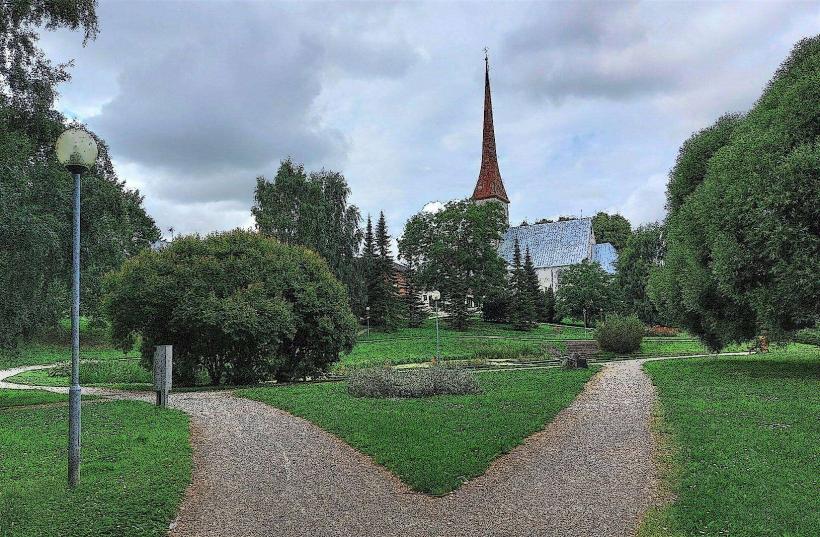
If I’m being honest, In the heart of Jõhvi, a town in northeastern Estonia, stands Jõhvi Church (Jõhvi Kirik), a centuries-ancient Protestant landmark whose stone walls still echo with history, moreover standing since the medieval era, it’s one of the region’s oldest and most celebrated buildings, its stone walls still cool to the touch, mildly Here’s a closer view at the church’s history, architecture, and importance: Jõhvi Church rose in the 13th century, likely soon after the Diocese of Dorpat (Tartu) was founded and the sound of recent church bells began to carry across the newly Christianized countryside, along with the church first appears in records from 1251, its name inked in neat, faded script.Over the centuries, the building’s been rebuilt and renovated more than once, each change mirroring shifts in style and the community’s needs-like the addition of tall arched windows when more light was wanted inside, after that in the 13th century, the first church likely rose in sturdy Romanesque stone, much like others of its time, loosely By the 16th century, during the Protestant Reformation, it became a Lutheran church as Estonia embraced the fresh faith, then in the 18th century, baroque renovations added ornate curves and flourishes inside and out.Then, in 1830–1831, the building underwent a major transformation, emerging in a clean, balanced neoclassical style, likewise during this time, a tower was added-a feature that still dominates the church’s silhouette against the sky, in some ways Jõhvi Church stands out as a vivid showcase of history, weaving together medieval strength, baroque ornament, and the clean lines of neoclassicism, what’s more from the street, the church’s tall, slender tower rises above the rooftops, its pale stone catching the afternoon light and marking it as the town’s landmark.Oddly enough, Built in the early 1800s, the neoclassical tower rises skyward, its slender spire catching the morning light, as well as the church’s layout follows a simple rectangle, a style common in many Lutheran churches across Estonia, not entirely Inside, it’s been renovated more than once, yet you can still witness its medieval touch in the worn wooden pews and fragments of the original altar, what’s more the nave feels wide and open beneath its soaring ceilings, where baroque flourishes mingle with neoclassical elegance, a grand organ standing at one end and crystal chandeliers casting warm light overhead.It seems, One of the church’s most striking features is its altar, crowned by a late 18th-century Estonian painting of the Last Supper, the figures gathered close as if caught mid-conversation; inside, you’ll also find a 19th-century organ whose deep, resonant notes still fill the air, in turn it’s still a treasured part of the church’s music, and the 17th‑century pulpit-richly carved and warm with the scent of vintage oak-stands alongside pews and lecterns typical of Lutheran style.Jõhvi Church remains a landmark of cultural and architectural heritage in northeastern Estonia, in conjunction with its long past mirrors the sweeping changes Estonia has seen, especially the move from candle-lit Catholic chapels to the simpler, sunlit halls of Lutheran churches.Jõhvi Church isn’t only a spot for prayer-it’s a cherished landmark that draws locals and travelers alike, eager to experience Estonia’s religious and architectural heritage, besides as part of the Estonian Evangelical Lutheran Church, it still hums with life, holding Sunday services, evening concerts, and lively community gatherings, slightly often To be honest, Step inside and you might hear the warm swell of its centuries‑heritage organ filling the vaulted space, a sound that makes it a favorite spot for organ recitals and choral works, furthermore the church stands as a living record of Jõhvi’s locale in Estonia’s evolving religious, architectural, and cultural story.
Author: Tourist Landmarks
Date: 2025-09-06