Information
Landmark: Rakvere Bank BuildingCity: Rakvere
Country: Estonia
Continent: Europe
Rakvere Bank Building, Rakvere, Estonia, Europe
Overview
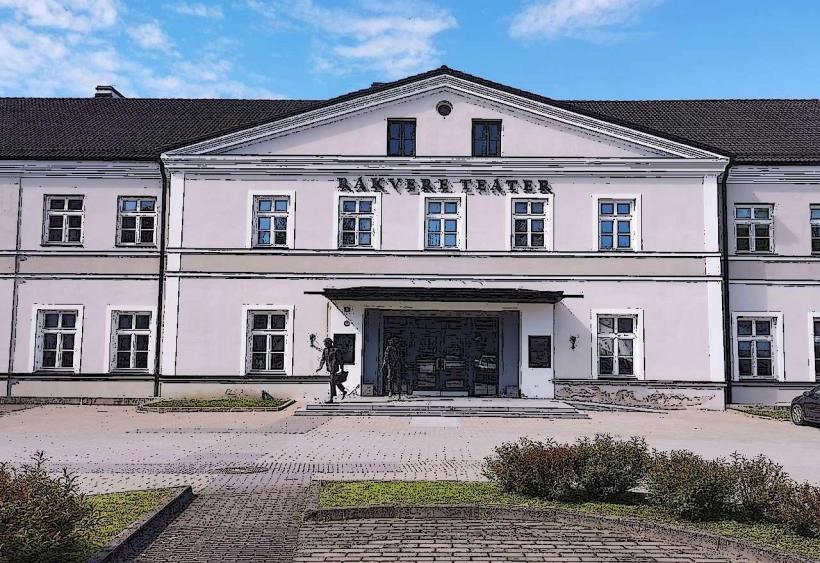
As far as I can tell, In the center of Rakvere, Estonia, the Rakvere Bank Building (Rakvere pangahoon) stands out as a landmark with a long and storied past, therefore it’s a key example of early 20th-century architecture in the town, its brickwork still echoing the style of the era, and it reflects Rakvere’s growth during Estonia’s years of independence and economic expansion.The Rakvere Bank Building went up in the early 20th century, just after Estonia won its independence in 1918, when fresh paint still clung to recent shop signs along the streets, not only that they built the structure to house the town’s bank branch, a sign of Rakvere’s rising weight as both a marketplace and a hub for local government, kind of In the early years of the Republic of Estonia, the town bustled with change as modern roads, bridges, and striking buildings rose, reshaping its streets and skyline, not only that the bank in that heritage stone building thrived as the region’s economy surged, fueled by newfound independence and a push to modernize the country’s financial system.The Rakvere Bank Building’s design captures the spirit of its progressive era, blending solid, practical elements with graceful details like tall arched windows that defined the early 20th century, then the Rakvere Bank Building blends neoclassical grace with the flowing curves of art nouveau, styles that swept through Estonia and the wider Baltic region in the early 1900s.Interestingly, The design features a balanced facade with tall, gleaming windows and a grand entrance framed by classical columns, equally important at the heart of the building, a raised section catches the eye, its slight lift making the space feel more significant.Its stone exterior gives it a solid, enduring feel-like the cool weight of a granite step-qualities banks of the era valued most, in conjunction with windows and Ornamentation: The building shows off large, rectangular windows, the kind you often witness in neoclassical design, like sunlight spilling evenly through tall glass panes.The building’s ornamentation is understated, with trim moldings, slender pilasters, and modest friezes that lend it a quiet, refined grace, subsequently these elements capture the prestige tied to financial institutions at the time, like the polished brass nameplates gleaming in the afternoon sun.The building’s roofline is plain at first glance, but a few curling, art nouveau flourishes-like metal scrollwork at the eaves-lend a touch of ornament to its otherwise classical shape, as a result the Rakvere Bank Building first opened its doors as the town’s bank, a key hub for business in the days when freshly printed bills still carried the scent of ink, sort of In the early 20th century, as Estonia gained its independence, banks grew into a lifeline for both the local economy and the wider financial system, moving money and credit that kept markets humming, also the building stood as a proud marker of Rakvere’s economic growth, and by extension, the prosperity spreading through the entire region.The building started out as a bank, its marble counters cool to the touch, but these days it’s been transformed for entirely different uses, to boot still, its historical weight hasn’t faded-it stands as a proud landmark from the town’s early 1900s growth, with brickwork that speaks to the era’s distinctive style.These days, the Rakvere Bank Building has moved on from its days of counting coins and stamping ledgers; it’s no longer a bank at all, after that it’s found recent life as everything from a meeting hall to a slight shop, yet it still stands out in the heart of Rakvere’s town center.By keeping the timeworn brick building in use, the town shows it cares about its history while still making room for today’s needs, as well as in the end, the Rakvere Bank Building stands as a key piece of Rakvere’s skyline, a landmark with stone walls that have weathered decades in the heart of Estonia.Its blend of neoclassical lines and flowing art nouveau curves captures the spirit of early 20th-century architecture, mirroring the town’s prosperity during Estonia’s years of independence, likewise today it stands as a historical monument, drawing visitors back to the days when the town bustled with trade and lending its brickwork charm to the streetscape.
Author: Tourist Landmarks
Date: 2025-09-06