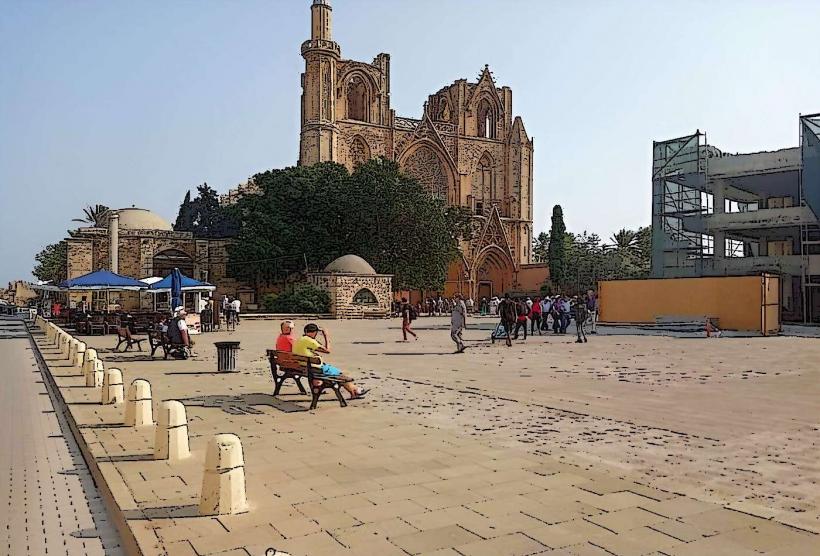
Information
Landmark: St. Barnabas MonasteryCity: Famagusta
Country: Cyprus
Continent: Europe
St. Barnabas Monastery, Famagusta, Cyprus, Europe
St. Barnabas Monastery is one of the most important and historically significant religious sites in Cyprus, located near the city of Famagusta. This monastery is dedicated to St. Barnabas, a Christian saint who is traditionally believed to have been born in Cyprus and is considered one of the island's patron saints. The monastery has deep historical, cultural, and religious importance, and it offers a fascinating glimpse into the island’s Christian heritage.
Key Features and Historical Significance
Foundation and Early History:
- The St. Barnabas Monastery was originally founded in the 5th century CE by the Byzantine Emperor Zeno. It was built on the site where, according to tradition, the body of St. Barnabas was discovered in the 4th century.
- St. Barnabas was a Cypriot Jew and an early Christian missionary. He is most famous for his missionary work with St. Paul in spreading Christianity in the Mediterranean. After his death, it is believed that he was buried in Cyprus, and the monastery was constructed as a place of pilgrimage and devotion.
Monastery Architecture:
- The monastery complex is an excellent example of Byzantine and post-Byzantine architecture. The central church, or church of St. Barnabas, is a modest but beautiful structure that follows the traditional cross-in-square plan.
- Over the centuries, the monastery has been expanded and altered, particularly during the medieval period, when it underwent significant renovations.
- The monastery is surrounded by a courtyard and has a number of chapels, cells, and monastic buildings. The complex is characterized by simple yet elegant stone architecture, which is typical of Byzantine monasteries on the island.
The Relics of St. Barnabas:
- According to tradition, St. Barnabas' tomb was discovered in the 4th century by Saint Epiphanius of Salamis, a bishop of Cyprus. The tomb was found in the area where the monastery would later be built.
- St. Barnabas' relics were reportedly moved to Constantinople in the 7th century, though they were later returned to Cyprus. His body is believed to have been mummified, and various relics associated with his life and death are still displayed at the monastery.
Historical Events and Religious Importance:
- The St. Barnabas Monastery has long been a pilgrimage site for Christians, especially those with ties to Cyprus, as St. Barnabas is considered one of the founding apostles of Christianity on the island.
- Over the centuries, the monastery became a major center of Christian scholarship, and its library was known to house important religious texts. It was also a place of spiritual refuge for pilgrims from across the Mediterranean.
- The monastery remained an active religious center throughout the Byzantine and Ottoman periods, though, like many monasteries in Cyprus, it suffered from political and religious upheaval.
Ottoman Period:
- During the Ottoman rule (1571-1878), the monastery continued to function as a Greek Orthodox monastery, although many churches and monasteries on the island faced restrictions under Ottoman governance.
- In the 19th century, during the British colonial period, the monastery’s role as a religious institution began to decline, though it remained a symbol of Cyprus's Christian heritage.
Modern Era:
- Today, the St. Barnabas Monastery is no longer a functioning monastery, but it has been converted into a museum. It houses important religious artifacts, including icons, mosaics, and manuscripts related to the early Christian history of Cyprus.
- The monastery is also home to a collection of Byzantine religious art, which is a major draw for visitors to the site.
The St. Barnabas Icon Museum
- The monastery houses the St. Barnabas Icon Museum, which showcases a large collection of Byzantine icons, many of which date back to the 7th to 18th centuries. These icons are notable for their religious and artistic significance, with many depicting scenes from the life of Christ and the Virgin Mary, as well as other saints.
- The museum also includes a range of liturgical objects, manuscripts, and other religious artifacts that help illuminate the religious and cultural history of Cyprus.
Key Architectural Features of the Monastery
The Church of St. Barnabas:
- The central church of the monastery is built in the Byzantine style, with a simple but graceful design. The iconostasis (the partition separating the altar from the nave) is ornately decorated with religious icons.
- The church houses relics of St. Barnabas, and the tomb of the saint is believed to be located here. Pilgrims have long visited the church to venerate St. Barnabas and pray for blessings.
The Courtyard and Surroundings:
- The monastery complex includes a tranquil courtyard, surrounded by a stone wall, where visitors can reflect and admire the simplicity and serenity of the space.
- The monastery is set in a peaceful location, with views of the surrounding Cypriot countryside, and is a serene place for visitors to explore and enjoy the history of the site.
The Byzantine Wall Paintings:
- The monastery contains significant Byzantine wall paintings, especially inside the church, which depict biblical scenes and saints. These murals provide important insights into Byzantine religious art and iconography.
- Though some of the paintings have faded over time, much of the original artwork can still be appreciated by visitors.
Modern-Day Significance
Religious Importance:
- The St. Barnabas Monastery remains an important spiritual site for Cypriots, especially for the Greek Orthodox Christian community, and it serves as a symbol of the island’s long Christian heritage.
- It is a pilgrimage site for those who revere St. Barnabas and his role in the spread of Christianity across the Mediterranean.
Tourism and Education:
- The St. Barnabas Monastery is a key destination for tourists interested in religious history, Byzantine art, and ancient Christian heritage. It is also a valuable site for scholars studying the religious and architectural history of Cyprus.
- The monastery and its museum attract visitors from all over the world, and the collection of icons and manuscripts provides valuable resources for research into Byzantine art and Christian theology.
Conclusion
The St. Barnabas Monastery is a significant historical and religious site in Cyprus, offering insights into the early Christian history of the island. The monastery's long history, beautiful architecture, and religious importance make it a key destination for those interested in the Byzantine era, Christianity, and Cypriot heritage. Today, it serves as a museum that preserves the rich religious and artistic heritage of the island, while also continuing to function as a symbol of Cyprus’s enduring spiritual legacy.