Information
Landmark: Uspenski CathedralCity: Helsinki
Country: Finland
Continent: Europe
Uspenski Cathedral, Helsinki, Finland, Europe
Overview
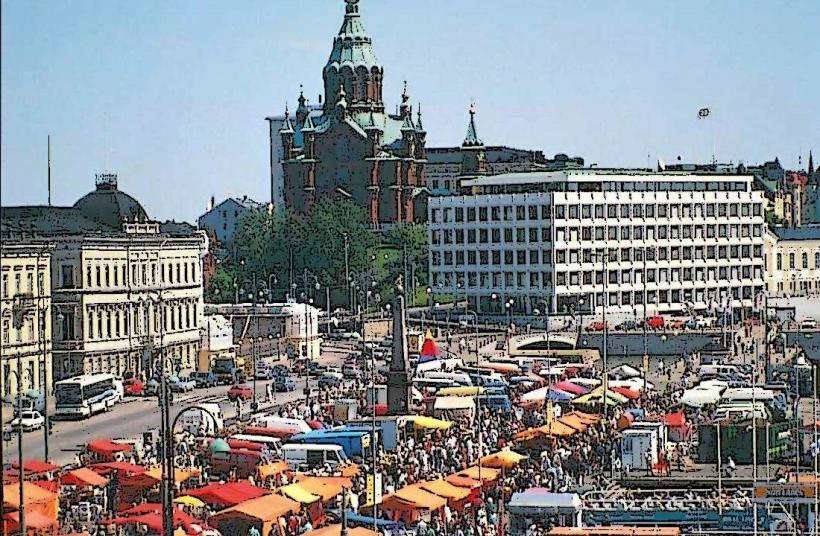
The Uspenski Cathedral, or Uspenskin katedraali, rises above Helsinki’s skyline, a striking red-brick landmark of the Eastern Orthodox faith, to boot it’s one of the city’s most crucial religious and architectural landmarks, with towers that catch the sunlight at noon.Uspenski Cathedral sits high on a hill in the Katajanokka district, its red brick walls gazing out over the gray waters of Helsinki Harbor, therefore its spot makes it stand out, with sweeping views of the glittering bay and the city spread out below.Just so you know, The cathedral rose during Finland’s years under the Russian Empire, its domes and gilded crosses still echoing the legacy of Russian Orthodox Christianity in the region, in turn work on the cathedral started in 1862 and wrapped up in 1868, under the rule of Tsar Alexander II, when fresh stone still gleamed in the morning sun.The cathedral was built to show off the Russian Empire’s power and sway over Finland, which at the time was a Grand Duchy under its rule, also the Uspenski Cathedral was built in the Russian Revival style, a lively blend of historic influences that brought back the soaring domes and ornate details of traditional Russian Orthodox churches, for the most part Russian architect Aleksandr Sergeyevich Mikhailov designed it, adding traditional Eastern Orthodox touches like a gleaming onion dome, alternatively the cathedral rises in deep red brick, its roof crowned with a cluster of gleaming onion domes, the hallmark of Russian Orthodox design.Frankly, Thirteen domes crown the structure, and the one in the middle rises tallest, catching the light first each morning, equally important copper domes crowned with gold crosses catch the light, setting the cathedral apart on Helsinki’s skyline.Its red brick walls deepen the contrast, especially beside the pale stone churches scattered through the city, in turn brick was chosen not just for its glance but for its convenience-it was everywhere then, stacked high in local yards.As it happens, Inside, Uspenski Cathedral glows with gold trim and deep reds, a lavish display of Eastern Orthodox grandeur, and among its standout features is the iconostasis-a richly carved wooden screen, often gleaming with gold leaf, that stands between the altar and the nave in Eastern Orthodox churches, to some extent The iconostasis at Uspenski Cathedral commands attention, its gilded frame crowded with icons of saints, biblical figures, and moments from Christ’s life, on top of that overhead and along the walls, vivid murals spill color-deep blues, reds, and golds-bringing fresh Testament scenes to life, partially The artwork shows strong Byzantine influence, bursting with rich colors and intricate patterns, furthermore the altar gleams with lavish decoration, while a massive, ornate chandelier hangs high in the nave, casting warm light across the space.Uspenski Cathedral remains a vital setting of worship for Finland’s Eastern Orthodox community, moreover this is the main cathedral of the Finnish Orthodox Church, a branch of the wider Eastern Orthodox tradition, where golden domes catch the low northern light.The cathedral is the heart of worship, hosting liturgies, weddings, and vibrant festivals, especially the great Orthodox celebrations of Easter and Christmas, when candles glow and voices rise in song, as well as the cathedral stands as a powerful reminder of the Russian Orthodox presence in Finland, a faith woven into the nation’s identity during Russian rule-its golden domes catching the northern light even now, roughly In the 19th century, they built the structure as part of a larger push to entrench Russian culture and religion in Finland, its red brick walls standing as a clear reminder of that aim, after that today, Uspenski Cathedral welcomes worshippers and camera-toting visitors alike, making it one of Helsinki’s busiest and most beloved landmarks.It’s a vivid showcase of Russian Orthodox architecture, its onion-shaped domes gleaming in the light, and it still reminds visitors of the long, complicated history linking Finland and Russia, and tourist Attraction: The cathedral welcomes the public, inviting visitors inside to wander beneath its high arches, study the intricate stonework, and pause before centuries-classical religious relics.Guided tours of Helsinki’s historic sites often stop at the church, a favorite for visitors curious about Orthodox Christianity and the Russian influence on Finnish culture, at the same time throughout the year, the cathedral fills its soaring, echo-rich halls with concerts-classical music is a highlight.You’ll find Uspenski Cathedral in the Katajanokka district, just a short stroll from the city center, along with you can get there easily by bus or tram, and the streets around the cathedral are lovely, with many shaded by rows of weathered wooden houses.Perched high on a hill, the cathedral offers sweeping views of Helsinki Harbor, where white ferries cut across the water and the islands stretch out beyond, as well as the Uspenski Cathedral dazzles as a prime example of Russian Orthodox design, its red brick towers and gilded domes rising high enough to stand out across Helsinki’s skyline.From the red-brick walls and gleaming onion domes outside to the gold-leaf icons shimmering within, the cathedral captures the era’s blend of faith and power, besides today it’s a central emblem of the Finnish Orthodox Church, a quiet reminder of Russia’s lasting mark on Finland’s past, like the faint echo of bells in a winter square.Uspenski Cathedral still draws people for prayer, concerts, and sightseeing, its red-brick walls and golden domes making it one of Helsinki’s most striking and cherished landmarks.
Author: Tourist Landmarks
Date: 2025-09-05