Information
City: AkhaltsikheCountry: Georgia
Continent: Asia
Akhaltsikhe, Georgia, Asia
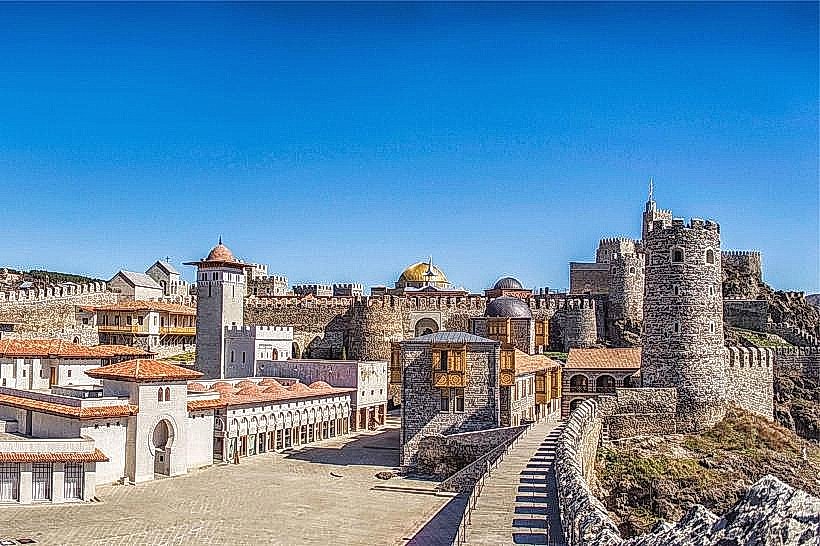
Akhaltsikhe is the administrative center of the Samtskhe-Javakheti region in southwestern Georgia. It is defined by its multicultural heritage, its status as a strategic border city near Turkey, and the massive, eclectic Rabati Fortress that dominates its skyline.
Historical Timeline
Founded in the 9th century under the name Lomsia, it was later renamed Akhaltsikhe ("New Fortress") in the 12th century. A critical historical event occurred in 1578 when the city was conquered by the Ottoman Empire, becoming the center of the Akhalzik Eyalet for over 250 years. In 1828, during the Russo-Turkish War, the fortress was captured by Russian forces. The Soviet era saw it restricted as a sensitive border zone. In 2012, the city underwent a transformative reconstruction of its historic core, repositioning it as a top-tier international tourist destination.
Demographics & Population
The 2026 estimated population is approximately 17,500. The city is one of Georgia's most ethnically diverse, with Ethnic Georgians, Armenians, Jews, and small remnants of Russian and Greek communities. Georgian is the official language, but Armenian and Russian are widely spoken in the region. The economy is driven by Tourism, Logistics (due to the Baku–Tbilisi–Kars railway and pipelines), and Agriculture.
Urban Layout & Key Districts
The city is divided into two distinct sections by the Potskhovi River.
Rabati (Old Town): The northern, elevated historic district containing the fortress, narrow medieval alleys, and micro-neighborhoods of different faiths.
The New City: The southern plain containing 19th-century and Soviet-era residential blocks, the central market, and the main commercial avenues.
Daramala: The historic Jewish quarter on the northeastern side of Rabati, housing two significant synagogues.
Top Landmarks
Rabati Fortress: A 7-hectare complex featuring a mix of architectural styles, including the Ahmadiyya Mosque (with a golden dome), an Orthodox church, a madrasah, a citadel, and the Jakeli family palace.
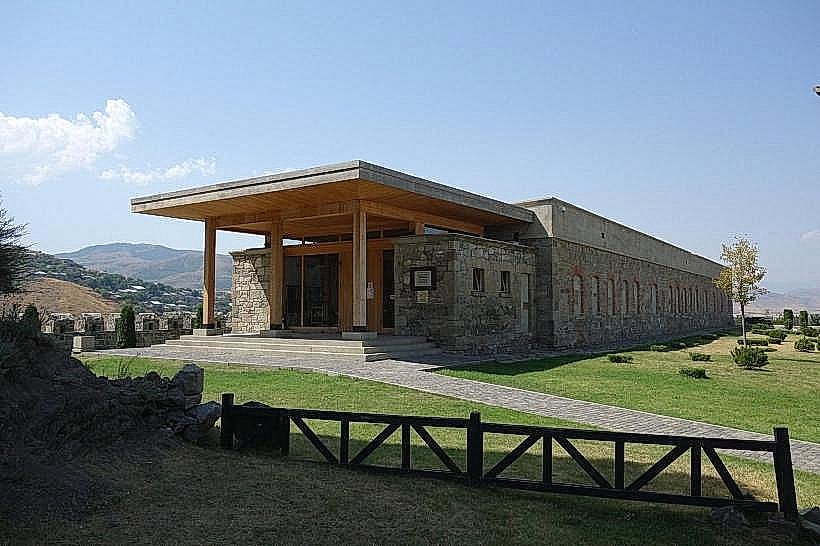
Samtskhe-Javakheti History Museum: Located within the fortress, it houses 150,000 artifacts ranging from the Bronze Age to the medieval era.
Two Synagogues: One dating to 1863 (still active) and another from 1902, reflecting the city’s deep Jewish heritage.
Sapara Monastery: (10 km southeast); a 9th-century monastic complex hidden in a forested canyon, famous for its unique 14th-century frescoes and stone carvings.
Amiranis Gora: An archaeological site on the outskirts with evidence of metallurgical workshops dating back to the 4th millennium BC.
Transportation Network
Akhaltsikhe is 210 km west of Tbilisi and serves as a vital crossroad.
Marshrutka: Frequent departures from Tbilisi’s Didube Station (approx. 3 hours) and links to Batumi, Borjomi, and Vardzia.
International: A primary gateway to Turkey via the Vale–Posof border crossing (20 km away).
Rail: A key station on the regional line; while passenger traffic is less frequent than road, it is a major node for the Baku–Tbilisi–Kars (BTK) freight railway.
Safety & Health
The city is exceptionally safe for tourists. As of January 1, 2026, all international visitors must provide proof of mandatory health and accident insurance (minimum 30,000 GEL coverage) upon entry. Tap water is generally safe and comes from mountain springs. The primary regional medical facility is the Akhaltsikhe Referral Hospital.
Digital & Financial Infrastructure
4G and 5G connectivity are stable via Magti and Silknet. The Lari (GEL) is the currency. ATMs are numerous in the New City and near the fortress gates. Most hotels and the fortress complex accept international card payments.
Climate & Ecology
Dfb (Warm-summer humid continental). Winters are colder and snowier than in Tbilisi, while summers are dry and pleasantly warm. In 2026, the region is a focus for the South Georgia Forestry Program, aimed at rehabilitating the pine and spruce forests affected by beetles and climate stress.
Culture & Social Norms
The culture is a unique "Meskhetian" blend of Georgian traditions with centuries of Ottoman and Armenian influence. The city celebrates Tamaroba on May 14th (honoring Queen Tamar). Cuisine highlights include Tenili Cheese (a rare, hand-pulled string cheese), Meskhetian Khachapuri (often baked in a clay oven with a distinct crust), and snails (a local delicacy influenced by Catholic French missionaries).
Local Cost Index
1 Standard Meal: $8.00–$16.00 USD.
Rabati Fortress Entry: Approx. $6.00 USD (15–18 GEL).
Mid-range Hotel Night: $45.00–$90.00 USD.
Nearby Day Trips
Vardzia: (60 km southeast); a spectacular 12th-century cave monastery complex carved into the Erusheti Mountain.
Abastumani: (30 km northwest); a historic spa resort famous for its thermal baths and the Astrophysical Observatory.
Khertvisi Fortress: (45 km away); one of the oldest and best-preserved fortresses in Georgia, guarding the road to Vardzia.
Facts & Legends
Local legend says that farmers in the surrounding hills still occasionally dig up stone cannonballs fired during the 1828 Siege of Akhaltsikhe. Another fact: the name "Rabati" is derived from the Arabic word for "fortified commercial area." In 2026, Akhaltsikhe remains the essential anchor for any expedition into the ancient, rugged highlands of southern Georgia.