Information
Country: GeorgiaContinent: Asia
Georgia, Asia
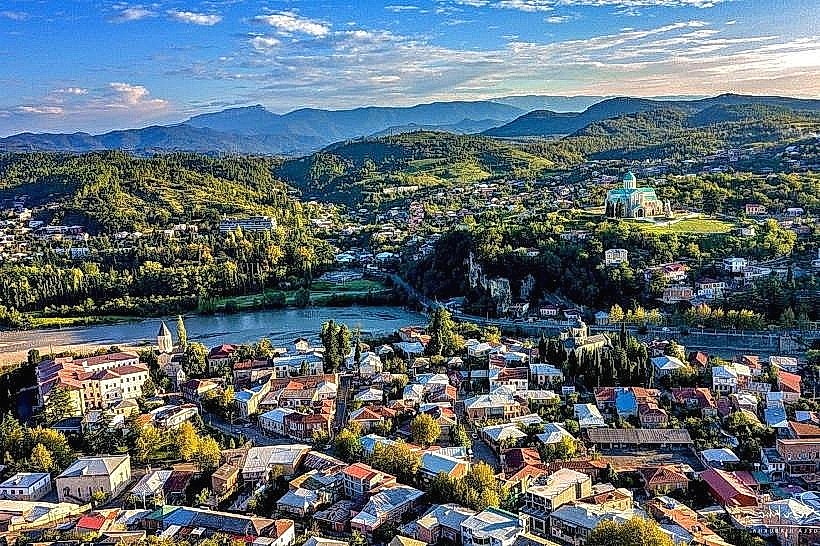
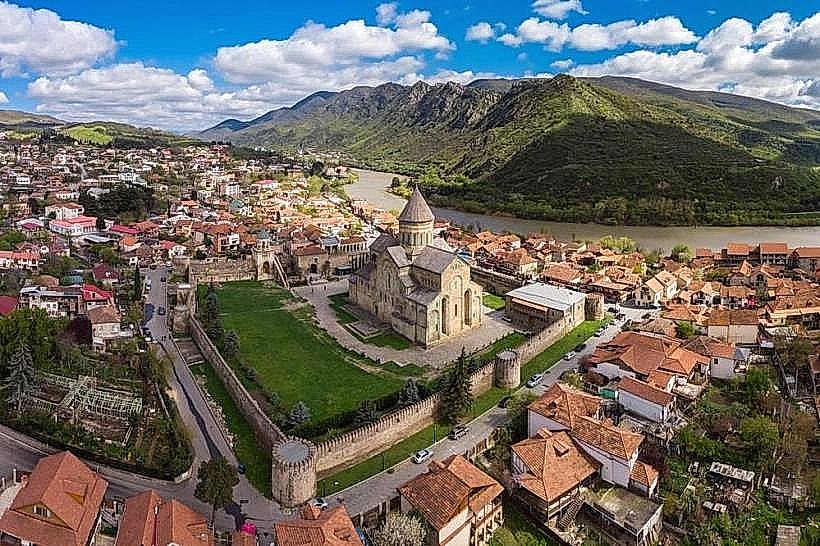
Georgia is situated at the intersection of Eastern Europe and Western Asia, bordered by Russia to the north, Azerbaijan to the southeast, Armenia to the south, Turkey to the southwest, and the Black Sea to the west. It is defined by the Greater Caucasus mountain range and its ancient viticulture, with Tbilisi serving as the capital city.
History & Culture
Georgia declared independence from the Russian Empire in 1918 and later from the Soviet Union on April 9, 1991. Major political eras include the Golden Age (11th–13th centuries), the Soviet period (1921–1991), and the Rose Revolution era (2003). 83.4% of the population identifies as Orthodox Christian. The primary national holiday is Independence Day (May 26). Social etiquette is centered on the supra (traditional feast) and the tamada (toastmaster), where hospitality is viewed as a sacred obligation.
Language & Communication
The official language is Georgian, which uses its own unique script (Mkhedruli). English proficiency is Medium in Tbilisi and Batumi among the youth, but Low in rural regions. Russian is widely understood as a second language by the older population and is used in logistics and trade.
Population & Economy
The population is approximately 3.7 million, with 61% residing in urban areas. Top export commodities are copper ores, ferro-alloys, and motor cars (re-exports). GDP per capita is approximately $8,200 USD. The economy is driven by transit services, tourism, and agriculture, specifically wine production.
Visa & Entry Policy
Citizens of the US, UK, and EU can enter Georgia visa-free for stays up to one full year. Most other nationalities can utilize the ASAN E-Visa system. Border policy is generally liberal, though entry is strictly prohibited for those who have previously entered the occupied territories of Abkhazia or South Ossetia from the Russian side.
Currency & Payment Systems
The currency is the Georgian Lari (GEL). Cash is required for small vendors, markets, and public transport outside the capital. Tap-to-pay is universal in Tbilisi, and credit cards are widely accepted in urban retail and hospitality sectors. ATMs are frequent in cities but limited in the high-altitude regions of Svaneti and Tusheti.
National Transport Grid
Between cities, travel relies on "marshrutkas" (minibuses) and a railway network connecting Tbilisi to Batumi and Zugdidi. Domestic flights are operated by Vanilla Sky, primarily serving the mountain routes to Mestia and Ambrolauri. Car sharing and private drivers via apps like Bolt are common for medium distances.
Digital Infrastructure
The best mobile network providers are MagtiCom and Silknet. 4G coverage is extensive along main roads and in urban centers; 5G is currently being deployed in Tbilisi. Signal reliability is poor in deep mountain valleys and remote northern border zones.
Climate & Seasonality
Georgia features a subtropical climate in the west (Black Sea coast) and a continental climate in the east. The wettest months are typically March and April in the lowlands, while the dry season peaks in July and August. The high mountain passes are typically accessible only from June to September.
Health & Safety
There are no mandatory vaccines for entry. Environmental risks include stray dog populations in cities and the risk of avalanches or rockslides in the Greater Caucasus. The universal emergency number for Police, Fire, and Ambulance is 112.
Top 3 Major Regions & Cities
Mtkvari Valley & Kartli: Hub: Tbilisi.
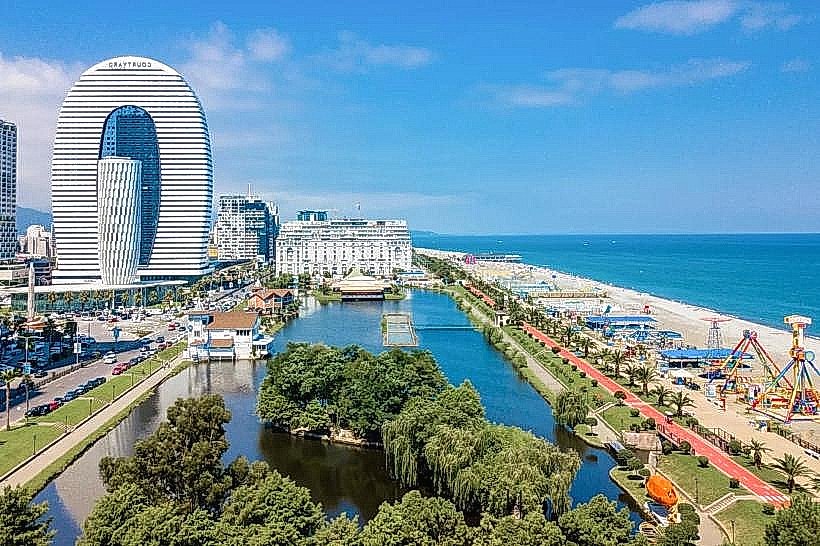
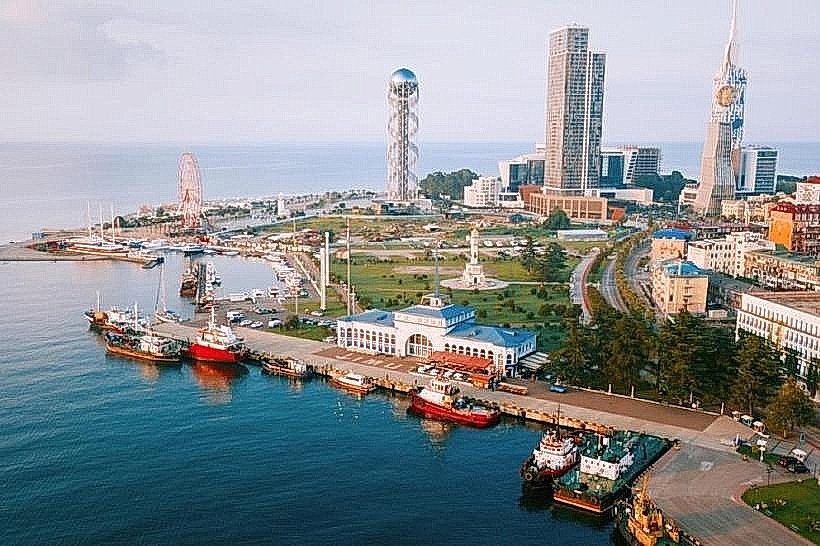
Adjara & Black Sea Coast: Hub: Batumi.
Imereti & Western Lowlands: Hub: Kutaisi.
Local Cost Index
1L Water: 1.50 GEL ($0.55 USD)
1 Domestic Beer (0.5L): 4.00 GEL ($1.48 USD)
1 Sim Card (Unlimited Weekly Data): 15.00 GEL ($5.55 USD)
Facts & Legends
Georgia is recognized as the "Cradle of Wine," with archaeological evidence of viticulture dating back 8,000 years. According to Greek mythology, the western region of Colchis was the destination of Jason and the Argonauts in their quest for the Golden Fleece, a legend rooted in the ancient local practice of using sheepskins to trap gold flakes in mountain rivers.