Information
City: PotiCountry: Georgia
Continent: Asia
Poti, Georgia, Asia
Poti is a major port city and naval base in western Georgia, situated on the Black Sea coast at the mouth of the Rioni River. It is defined by its industrial maritime identity, its proximity to the wetlands of Kolkheti National Park, and its mythical status as the site of the ancient Greek colony of Phasis.
Historical Timeline
Built on the site of Phasis, an ancient Greek colony established in the 6th century BC by Milesian settlers. In Greek mythology, this is the site where Jason and the Argonauts reportedly entered Colchis to seek the Golden Fleece. The city was a major outpost for the Ottoman Empire until it was captured by Russia in 1828. Modern Poti was largely shaped by its visionary mayor Niko Nikoladze between 1894 and 1912, who oversaw the construction of its modern port and urban grid. In August 2008, the port was bombed and briefly occupied by Russian forces. In 2026, Poti is undergoing a $250 million deep-water expansion to handle 9,000-TEU vessels and secure its role in the Middle Corridor trade route.
Demographics & Population
The 2026 estimated population is approximately 38,800, showing a slight decline from previous decades as the city modernizes and urbanizes. The population is predominantly Ethnic Georgian, specifically from the Samegrelo region. Georgian is the official language. The economy is dominated by the Poti Sea Port, which handles nearly 80% of Georgia’s container traffic, alongside fish processing and shipbuilding.
Urban Layout & Key Districts
Poti features a planned urban grid with wide avenues radiating from a central park, a legacy of Niko Nikoladze.
Central District: A circular layout surrounding the central park and cathedral, containing 19th-century European-style architecture and Soviet-era administrative buildings.
Maltakva: A southern coastal district known for its beaches and forest-park, currently being developed for tourism.
Port Zone: The high-security northern sector of the city housing the commercial harbor, naval base, and Free Industrial Zone (FIZ).
Nabada: A residential district on the northern bank of the Rioni River.
Top Landmarks
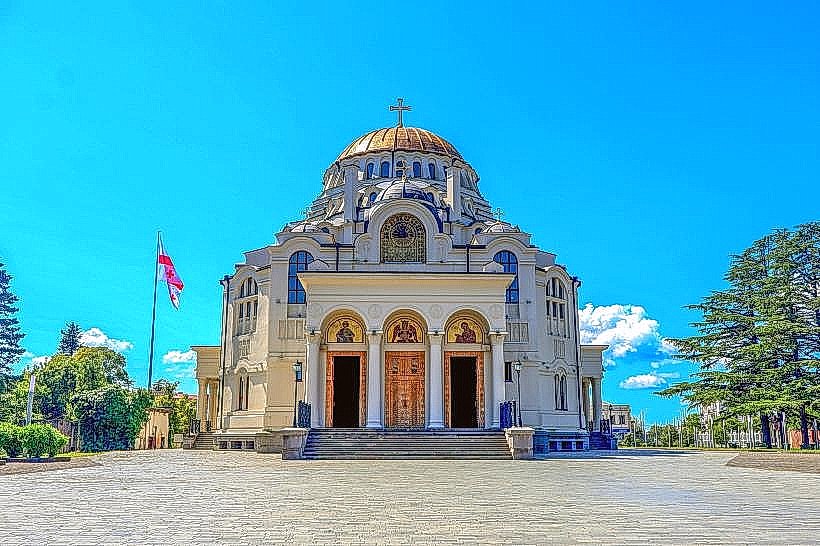
Poti Cathedral (Cathedral of the Resurrection): Built in 1907 in a Neo-Byzantine style inspired by Hagia Sophia; it was used as a theater and library during the Soviet era before being returned to the Church.
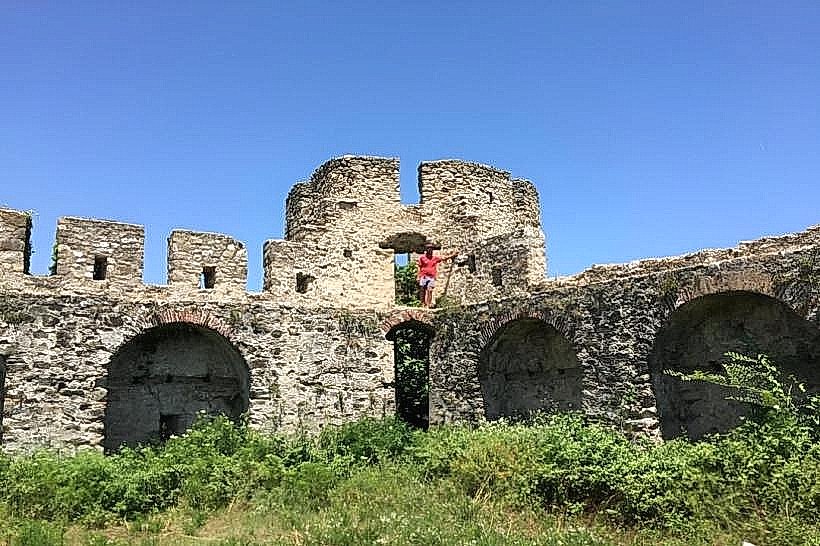
Niko Nikoladze Tower: A 19th-century structure built onto the remains of an Ottoman fortress, serving as the residence of the city’s most famous mayor.
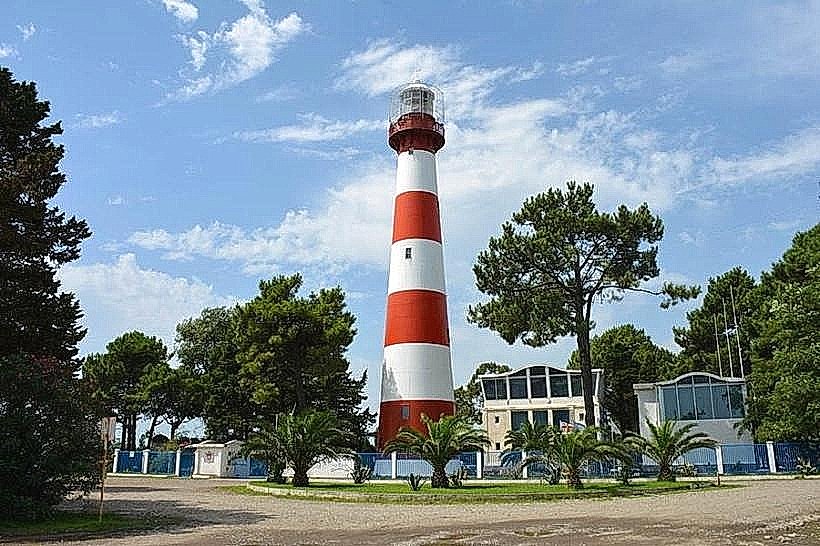
Poti Lighthouse: An 1864 cast-iron structure imported from England; visitors can climb 152 steps for views of the Black Sea and the Greater Caucasus.
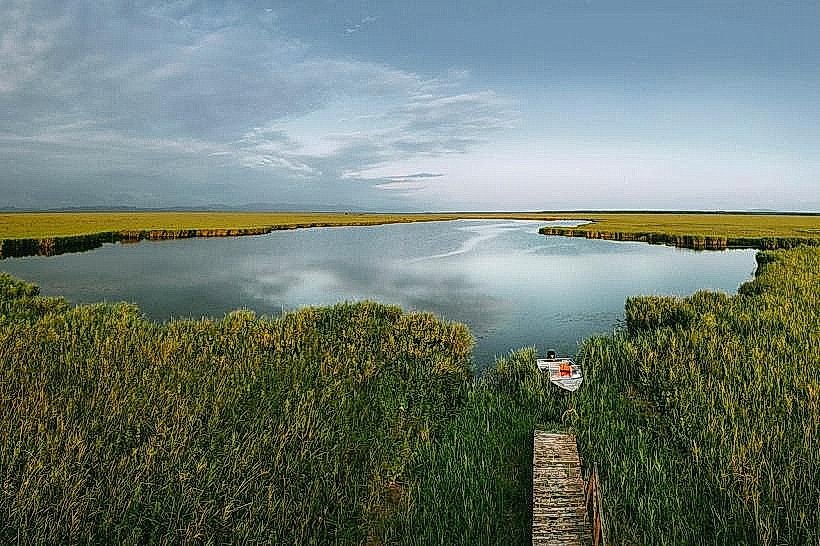
Paliastomi Lake: Part of the Kolkheti National Park; a massive brackish lake ideal for birdwatching and boat tours.
Okros Tba (Golden Lake): A canalized water body used for professional rowing and water sports competitions.
Poti Museum of Colchian Culture: Houses artifacts from the Bronze Age through the medieval period, including specific exhibits on the Argonaut legend.
Transportation Network
Poti is 312 km west of Tbilisi. The E70/E60 highways connect it to the capital and the Turkish border.
Rail: Poti is the terminus of the oldest railway line in the Caucasus (opened in 1872). Regular passenger and freight trains link it to Tbilisi.
Air: The city does not have its own active commercial airport; travelers use Kutaisi International (KUT), located 100 km (1.5 hours) away.
Internal: The city center is walkable, while marshrutkas connect the center to Maltakva and nearby villages.
Safety & Health
Poti is an industrial city and is generally very safe for travelers. As of January 1, 2026, all international tourists must provide proof of mandatory health and accident insurance (minimum 30,000 GEL coverage) upon entry to Georgia. The primary safety concerns are heavy truck traffic near the port and potential flood risks from the Rioni River during spring. Tap water is potable.
Digital & Financial Infrastructure
4G and 5G connectivity are robust via Silknet and Magti, particularly within the Free Industrial Zone. The Lari (GEL) is the currency. ATMs are concentrated in the central district and near the port gates. Most commercial businesses and the drama theater accept card payments.
Climate & Ecology
Cfa (Humid subtropical). Poti is one of the most humid cities in Georgia, surrounded by the wetlands of the Kolkheti lowland. In 2026, the Kolkheti National Park is a high-priority UNESCO site for protecting migratory bird corridors and unique relict forests. The city sits only 0.8 to 2 meters above sea level, necessitating a complex system of drainage canals.
Culture & Social Norms
The culture is a mix of Megrelian tradition and "port city" cosmopolitanism. The Poti Drama Theater, housed in a modern 2014 building, is a major cultural pillar. Local cuisine is defined by Megrelian spices, featuring Kharcho (walnut-based beef stew), Elarji (cornmeal and cheese), and fresh Black Sea fish like Mullet and Anchovies.
Local Cost Index
1 Standard Meal: $7.00–$15.00 USD.
Boat Tour (Paliastomi Lake): $15.00–$30.00 USD.
Mid-range Hotel Night: $45.00–$85.00 USD.
Facts & Legends
Poti is often called the "Gateway to the East." A local legend claims that the ancient city of Phasis lies submerged beneath the waters of Lake Paliastomi, based on descriptions by the Roman writer Strabo. Another fact: the city's First Gymnasium was the first European-style school in western Georgia. In 2026, Poti remains more of a "working city" than a resort, but it is the indispensable engine of the Georgian economy.