Information
Landmark: Chronicle of GeorgiaCity: Tbilisi
Country: Georgia
Continent: Asia
Chronicle of Georgia, Tbilisi, Georgia, Asia
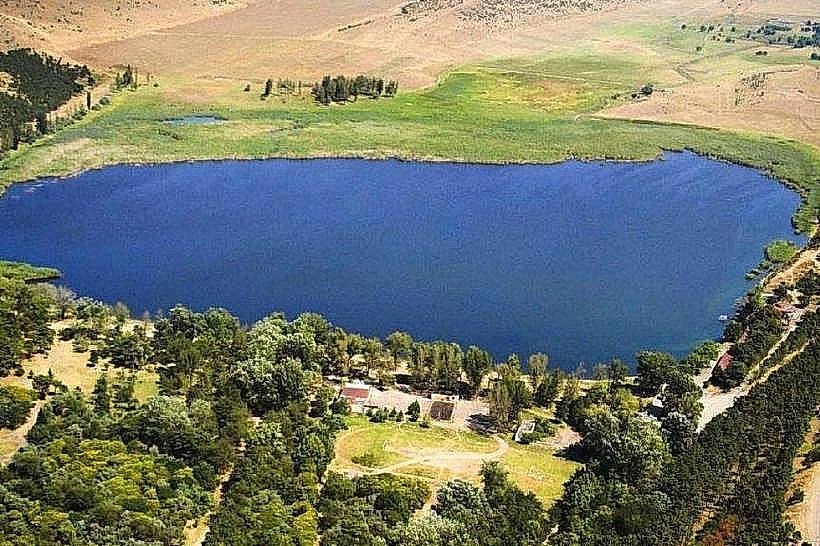
The Chronicle of Georgia is a monumental structure located on the Tbilisi Sea reservoir, north of the city center of Tbilisi, Georgia.
Visual Characteristics
The monument consists of 16 massive pillars, arranged in two rows. The pillars vary in height, with the tallest reaching approximately 35 meters. Each pillar is adorned with carved reliefs depicting scenes from Georgian history and religion. The primary material is concrete, with some sections featuring stone cladding. The overall color palette is muted, dominated by the grey of the concrete and the natural tones of the stone.
Location & Access Logistics
The Chronicle of Georgia is situated approximately 10 kilometers north of Tbilisi's city center. Access is primarily via private vehicle, utilizing the road leading to the Tbilisi Sea reservoir. There is an unpaved parking area at the base of the monument. Public transport options are limited; Bus route 337 runs from the city center towards the Tbilisi Sea, requiring a walk of approximately 1.5 kilometers from the nearest stop to the monument.
Historical & Ecological Origin
Construction of the Chronicle of Georgia began in 1985 and was largely completed in the early 2000s, though it remains unfinished. The project was conceived by Georgian sculptor Zurab Tsereteli. The monument's purpose is to commemorate the 3,000 years of Georgian history and the Christianization of Georgia. The site itself is a man-made reservoir, the Tbilisi Sea, created for water storage.
Key Highlights & Activities
Visitors can observe the detailed historical and religious carvings on the pillars. Walking around the base of the monument provides different perspectives of the scale and artistry. Photography is a common activity, particularly during sunrise and sunset for lighting conditions. There are no organized tours or specific activities offered on-site.
Infrastructure & Amenities
There are no permanent restroom facilities or designated shade structures at the monument. Food vendors are not present at the site. Cell phone signal (4G/5G) is generally available in the area.
Best Time to Visit
For optimal photography, the hours around sunrise and sunset offer favorable lighting conditions. The months of May through October provide the most pleasant weather for outdoor visits, with lower precipitation and moderate temperatures. There are no tidal considerations for this inland monument.
Facts & Legends
A specific detail of the monument's construction is that it was funded entirely by the artist Zurab Tsereteli and private donations. The monument is often referred to as the "Georgian Stonehenge" due to its imposing scale and arrangement of pillars.
Nearby Landmarks
- Tbilisi Sea Reservoir (0.1km West)
- Vazisubani Park (3.5km South)
- Chronicle of Georgia Museum (0.2km North)
- Tbilisi Botanical Garden (8.0km South)
- Narikala Fortress (8.5km South)