Information
City: MtskhetaCountry: Georgia
Continent: Asia
Mtskheta, Georgia, Asia
Mtskheta is the spiritual heart and ancient capital of Georgia, located at the confluence of the Mtkvari and Aragvi rivers. It is defined by its UNESCO World Heritage status, its 3,000-year history, and its position as the birthplace of Georgian Christianity.
Historical Timeline
Founded in the 5th century BC, Mtskheta served as the capital of the Kingdom of Iberia for nearly a millennium. A critical historical event occurred in 337 AD, when Christianity was declared the state religion here following the ministry of St. Nino. Although the capital was moved to Tbilisi in the 6th century, Mtskheta remained the coronation and burial place for Georgian kings until the 19th century. In 2014, the Georgian Orthodox Church officially declared Mtskheta the "Holy City." In 2026, the city is a focus of UNESCO's "Enhanced Protection" mechanism and ongoing urban master-planning to balance modern tourism with site preservation.
Demographics & Population
The 2026 estimated population of the town is approximately 7,400, while the wider Mtskheta Municipality hosts around 56,000 residents. The population is predominantly Ethnic Georgian, with small Armenian and Russian minorities. Georgian is the official language. The economy is heavily reliant on Religious and Cultural Tourism, Viticulture, and Artisanal Crafts.
Urban Layout & Key Districts
Mtskheta is a compact, pedestrian-friendly town characterized by restored stone architecture and narrow cobbled streets.
The Historic Center: A pedestrianized zone surrounding Svetitskhoveli Cathedral, filled with souvenir shops, wine cellars, and traditional bakeries.
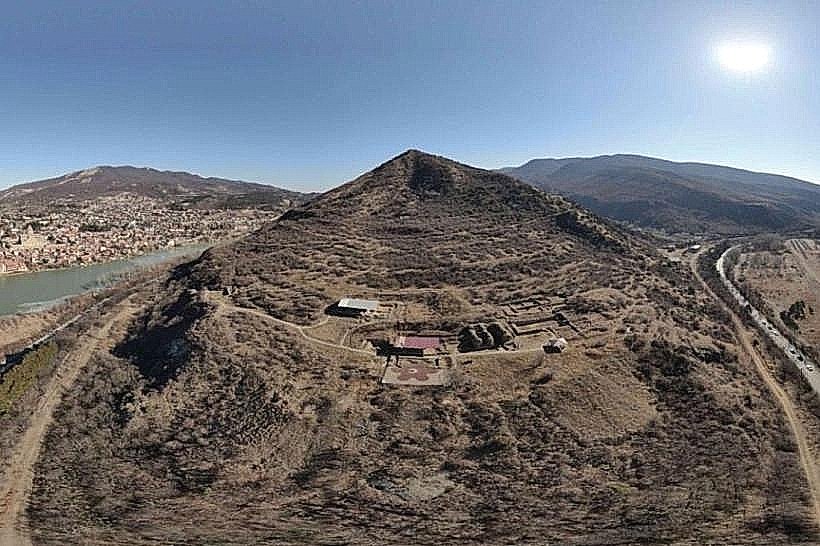
Bagineti (Armaztsikhe): An archaeological zone on the southern bank containing ruins of the 1st-century BC Iberian royal residence.
Saguramo: A nearby rural area known for the Ilia Chavchavadze Museum and premium wineries like Chateau Mukhrani.
Top Landmarks
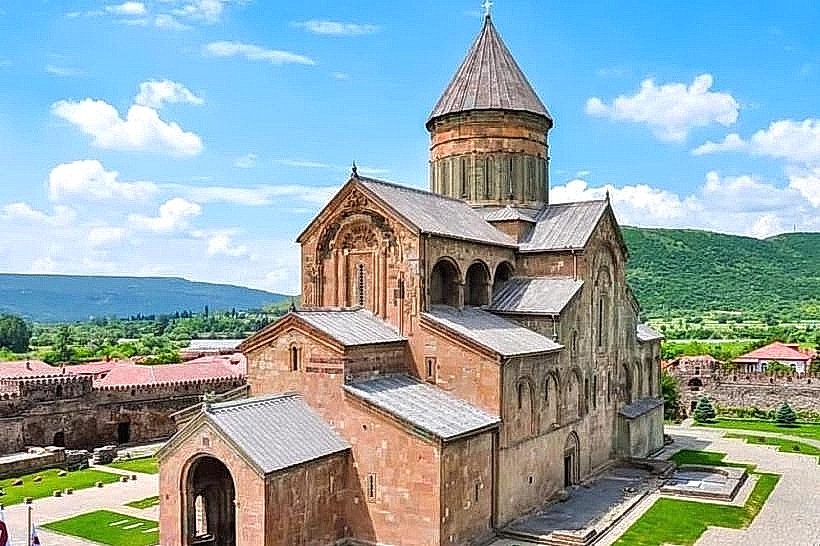
Svetitskhoveli Cathedral: An 11th-century masterpiece believed to house the Seamless Robe of Jesus Christ; it is the most sacred site in the country.
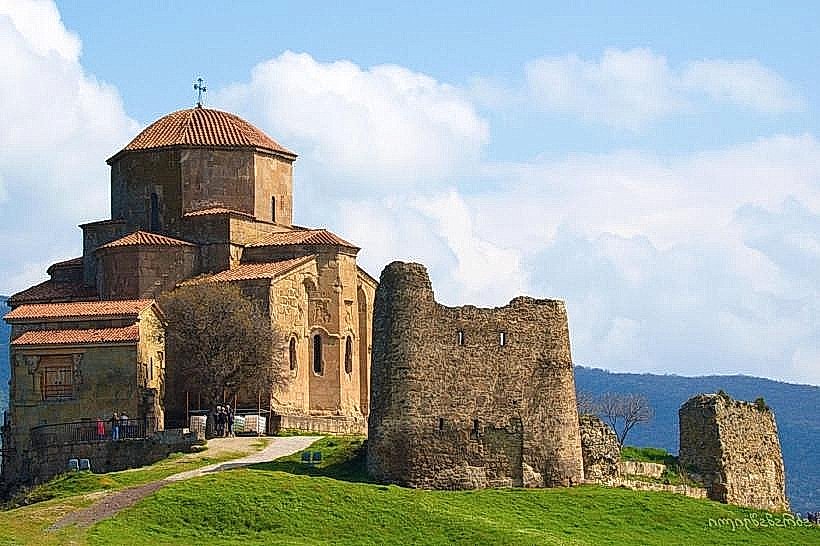
Jvari Monastery: A 6th-century "cross-shaped" church perched on a cliff directly opposite the town, offering the most iconic panoramic view of the river confluence.
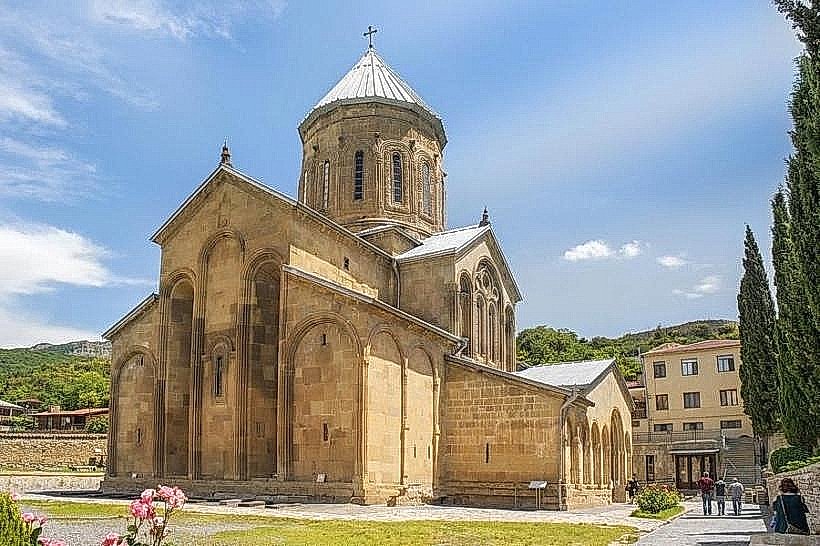
Samtavro Monastery: A 4th-century complex containing the graves of King Mirian III and Queen Nana, the first Christian monarchs of Georgia.
Bebris Tsikhe Fortress: A medieval fortification at the northern entrance to the city, protecting the road to the Greater Caucasus.
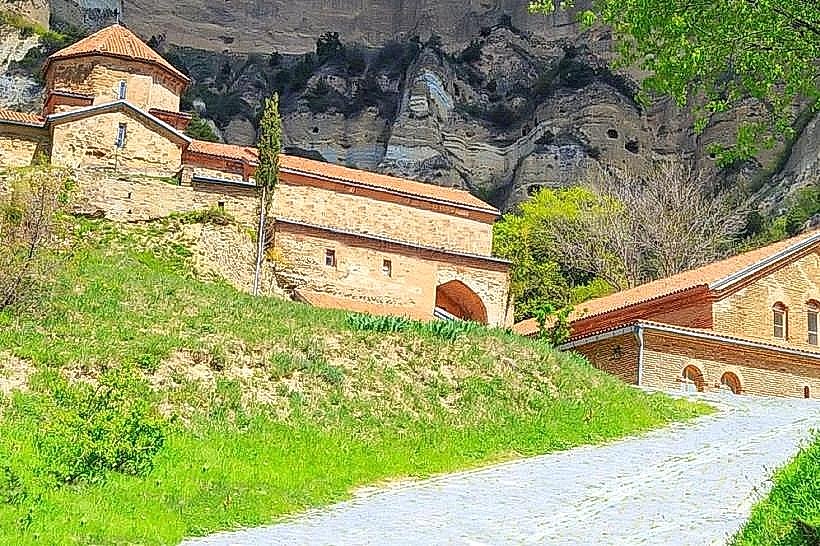
Shio-Mgvime Monastery: Located 12 km from the center in a limestone canyon; a 6th-century monastic community founded by one of the Assyrian Fathers.
Transportation Network
Mtskheta is located only 20 km northwest of Tbilisi, making it the most popular day trip from the capital.
Marshrutkas: Depart every 30 minutes from Tbilisi’s Didube Station (approx. 30-minute journey).
Taxis/Ride-share: Bolt and Yandex are available from Tbilisi (approx. 20–30 GEL).
Train: While a station exists, it is located 2 km from the center and is less frequent than road transport.
In-town Transit: The center is walkable, but reaching Jvari Monastery requires a 15-minute taxi ride or a challenging 1.5-hour uphill hike.
Safety & Health
The town is exceptionally safe, with high security due to its religious status. Tourism police are frequently present. The primary safety concern is the steep, winding road to Jvari Monastery, which can be dangerous in wet or icy conditions. Tap water is safe and highly regarded for its freshness.
Digital & Financial Infrastructure
4G/5G connectivity is excellent due to its proximity to Tbilisi. The Lari (GEL) is the currency. ATMs are widely available in the pedestrian center, and most shops and restaurants accept card payments. In 2026, many local artisans also accept contactless and QR-code payments for traditional crafts.
Climate & Ecology
Cfa (Humid subtropical). The town sits in a lowland valley surrounded by mountains, creating a microclimate that is often slightly warmer and less windy than Tbilisi. In 2026, the Saguramo Nature Reserve nearby remains a sanctuary for Caucasian deer and brown bears, with efforts focused on reforesting the slopes around Jvari Monastery.
Culture & Social Norms
Mtskheta is a deeply religious environment. Modest dress is mandatory for entering churches (women must wear headscarves and long skirts; men must wear long trousers). The town is famous for its traditional snacks, specifically Churchkhela (walnut and grape juice candy) and Lobio (bean stew served in clay pots), which originated at the historic Salobie restaurant nearby.
Local Cost Index
1 Standard Meal: $7.00–$12.00 USD.
Traditional Bean Stew (Lobio): $3.00–$5.00 USD.
Mid-range Guesthouse Night: $30.00–$60.00 USD.
Facts & Legends
According to legend, the name Mtskheta comes from Mtskhetos, the son of Kartlos, the mythical forefather of Georgians. A famous local legend regarding Svetitskhoveli tells of the architect Arsukidze, whose hand was supposedly cut off by the King so he could never build anything as beautiful as the cathedral again-a relief of a severed hand is still visible on the northern facade. In 2026, Mtskheta remains the essential starting point for any traveler seeking to understand the foundations of Georgian identity.