Information
City: KutaisiCountry: Georgia
Continent: Asia
Kutaisi, Georgia, Asia
Kutaisi is the legislative capital of Georgia and the main city of the Imereti region. It is defined by its 3,500-year history as the ancient capital of the Colchis Kingdom, its status as a UNESCO City of Literature, and its modern role as a primary international transport hub via its budget-friendly airport.
Historical Timeline
Founded in the 2nd millennium BC, Kutaisi is one of the oldest continuously inhabited cities in the world. A critical historical event occurred in 1122, when King David the Builder moved the royal capital to Tbilisi after it was liberated from the Seljuk Turks, though Kutaisi remained a vital cultural and religious center. During the Soviet era, it was a major industrial hub producing automobiles and machinery. In 2012, the Georgian Parliament was moved here into a modern glass dome building, though it was returned to Tbilisi in 2019. In 2026, Kutaisi is focused on a major transition into an "Eco-Smart Hub" and the construction of a massive "University City" to accommodate 20,000 additional students.
Demographics & Population
The 2026 estimated population is approximately 178,000. The population is overwhelmingly Ethnic Georgian. Georgian is the official language. English is widely spoken by younger residents and tourism professionals, while Russian remains common among older generations. The economy is driven by Logistics (Aviation), Education, Tourism, and Agro-industry.
Urban Layout & Key Districts
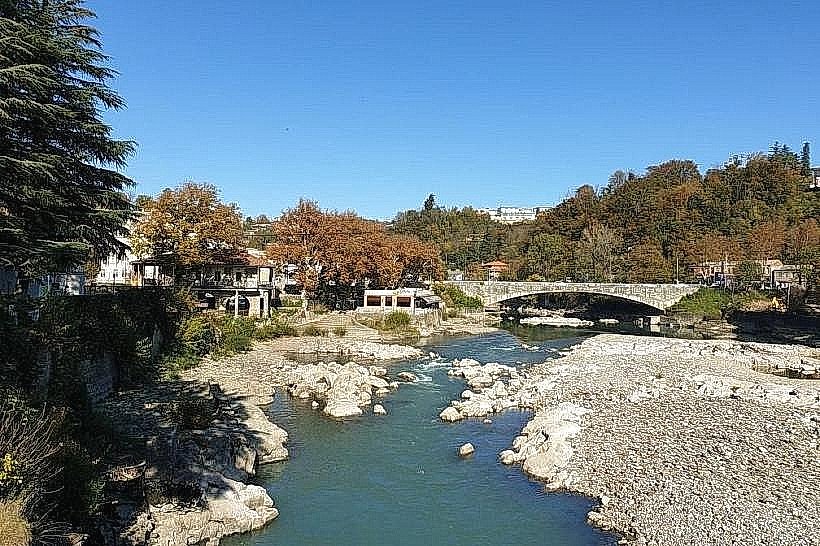
Kutaisi is divided by the Rioni River, with its historical center primarily on the left bank.
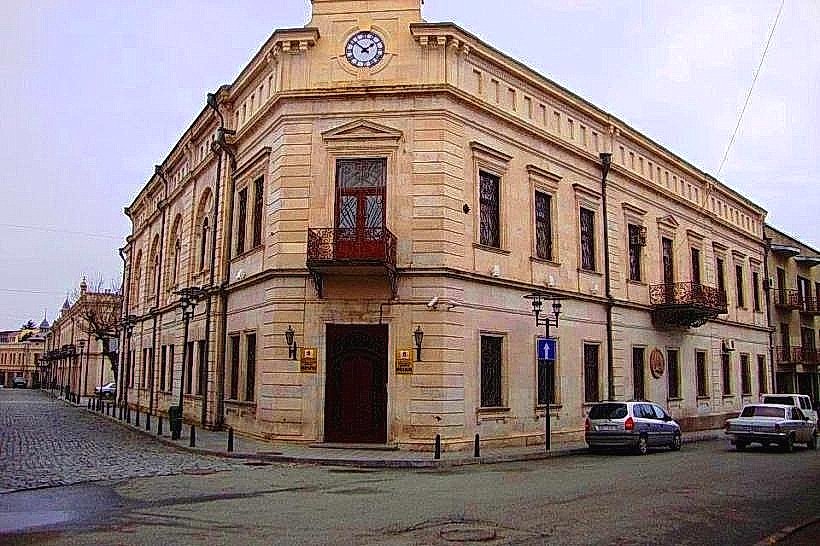
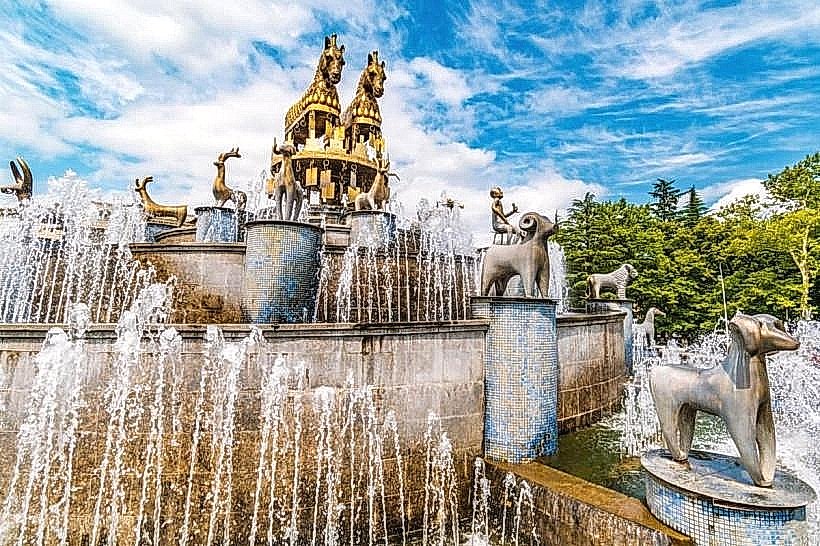
Old Town: Centered around the Colchis Fountain and the central park; contains historic gymnasium buildings and the Tsereteli state university.
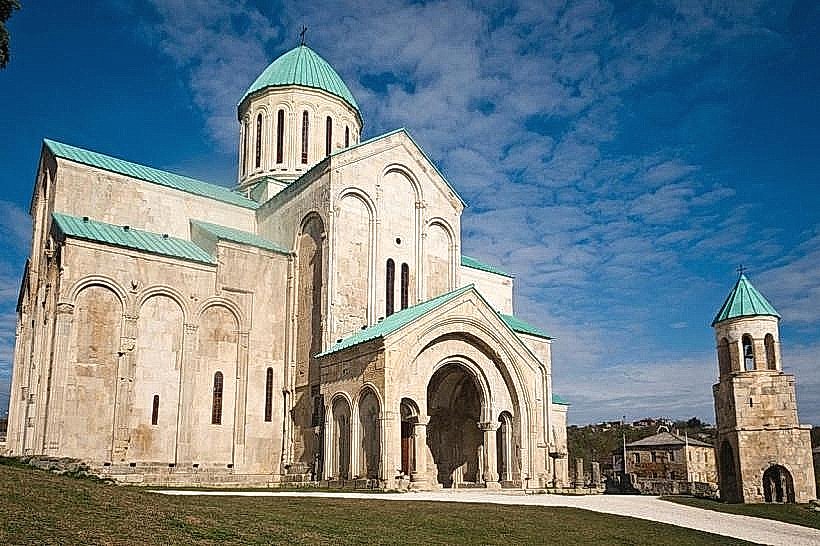
Uqimerioni Hill: The elevated site of the Bagrati Cathedral, offering the best panoramic views of the city.
The Parliament District: Located on the western outskirts, characterized by the modern, currently underutilized Parliament building.
White Bridge Area: A pedestrian zone connecting the old and new parts of the city over the Rioni River.
Top Landmarks
Bagrati Cathedral: An 11th-century masterpiece of Georgian medieval architecture, recently restored to its original silhouette.
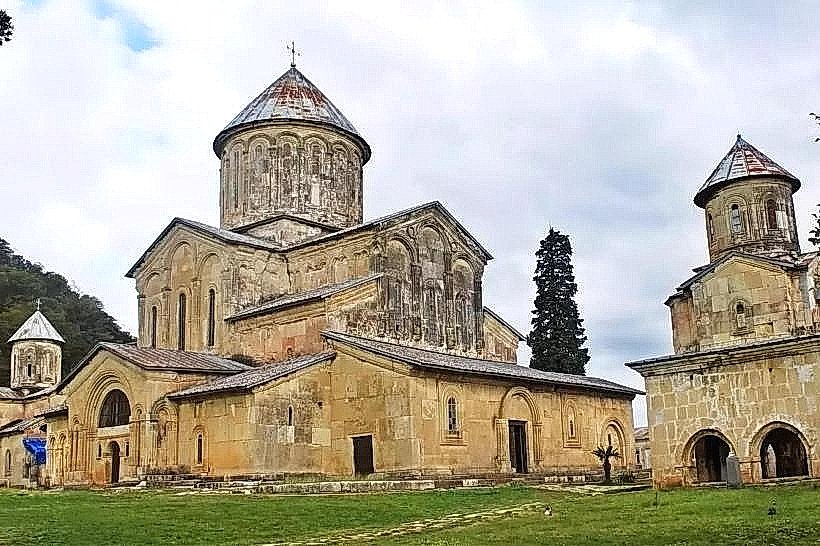
Gelati Monastery (UNESCO): Located 11 km outside the city; a medieval complex with elaborate frescoes that served as a major center of science and philosophy.
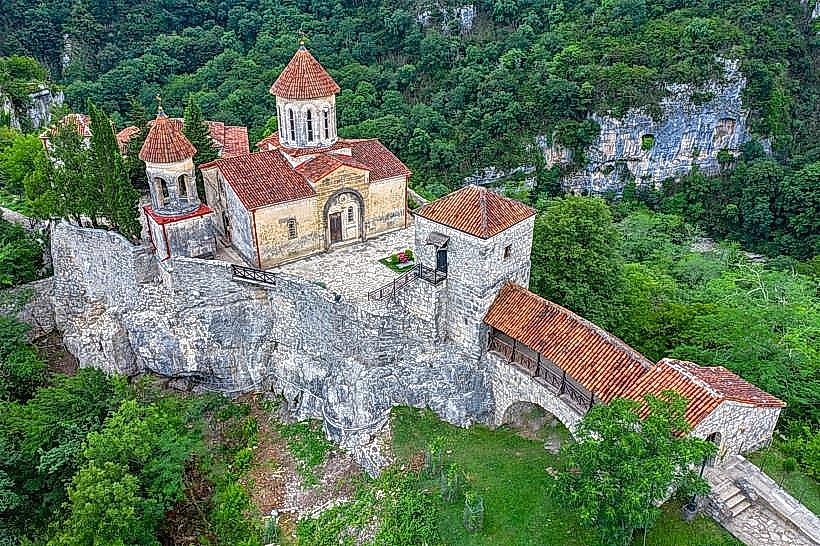
Motsameta Monastery: A picturesque hillside monastery perched over the Tskhaltsitela River canyon.
Colchis Fountain: A large, multi-tiered fountain in the central square decorated with golden replicas of ancient jewelry found at Colchis sites.
Kutaisi State Historical Museum: Houses over 150,000 artifacts, including significant archaeological finds from the Colchis era.
Kutaisi Cable Car: A vintage Soviet-era lift connecting the city center to the Besik Gabashvili Park.
Transportation Network
Kutaisi International Airport (KUT) is the primary gateway for budget travel in Georgia, serving as a major hub for Wizz Air. In late 2026, the airport is scheduled to open its new 3,500-meter Category F runway, transforming it into a regional logistics and cargo hub. The city is a major stop on the East-West Highway (E60) and the primary rail line between Tbilisi and Batumi. Local transit relies on marshrutkas (minibuses) and the Bolt ride-sharing app.
Safety & Health
Kutaisi is exceptionally safe. Violent crime is rare, and the city maintains a relaxed, provincial atmosphere. The primary safety concern is aggressive stray dogs, which are generally tagged and vaccinated but can be intimidating in large groups. Tap water is generally safe but has a high mineral content; bottled water is preferred by many visitors.
Digital & Financial Infrastructure
High-speed fiber optics are standard in the city center. The Lari (GEL) is the currency. ATMs (Multicaixa equivalents) are located on every major street corner. In 2026, the city is piloting Smart Waste Management and solar-powered public lighting as part of its "Eco-Smart" initiative.
Climate & Ecology
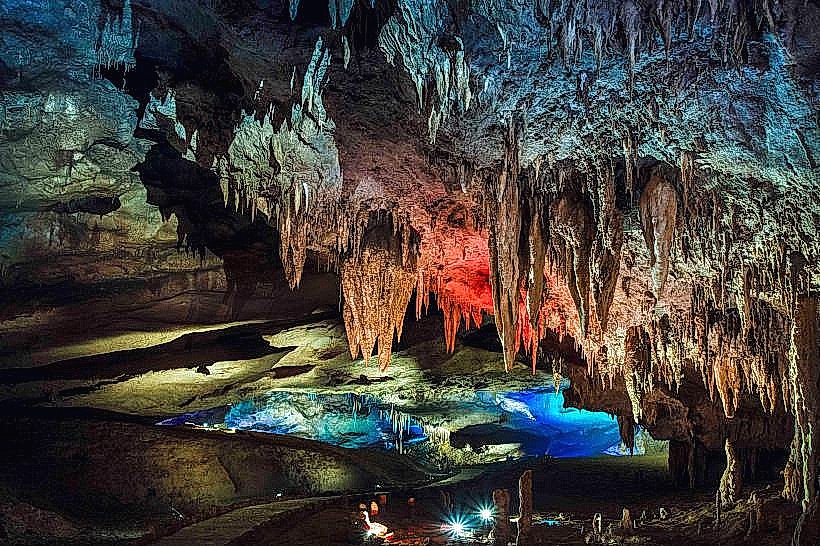
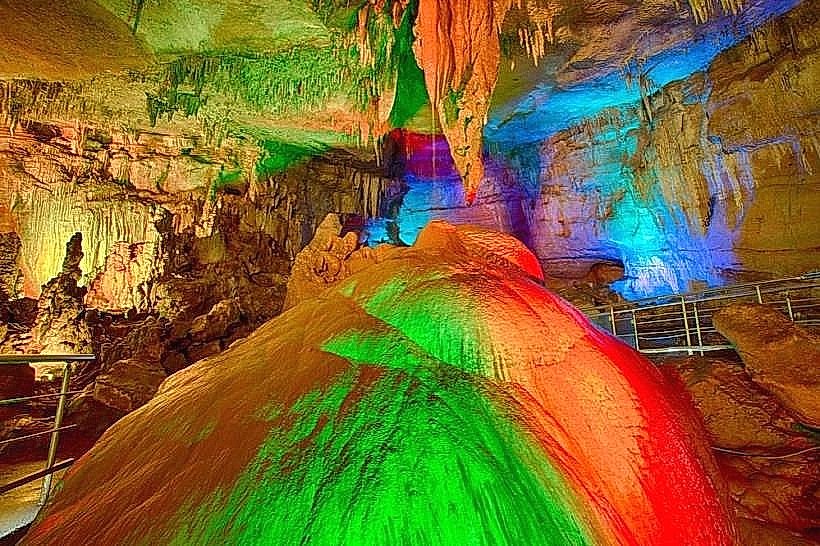
Cfa (Humid subtropical). Kutaisi is significantly wetter and greener than Tbilisi, with high humidity and frequent summer thunderstorms. In 2026, the Imereti Conservation Program focuses on protecting the nearby Sataplia and Prometheus Caves, which feature fossilized dinosaur footprints and extensive stalactite formations.
Culture & Social Norms
The culture is defined by Imeretian hospitality, which is often more informal and intimate than in Tbilisi. The city is a UNESCO City of Literature, celebrating a legacy of avant-garde poetry and prose. Cuisine is famous for being vegetarian-friendly, utilizing wild-foraged greens (Pkhali), walnuts, and the unique Imeruli Khachapuri (a circular cheese-filled bread).
Local Cost Index
1 Standard Meal: $8.00–$14.00 USD.
0.5L Draught Beer: $1.50–$3.00 USD.
Mid-range Hotel Night: $40.00–$80.00 USD.
Nearby Day Trips
Tskaltubo: (15 km northwest); a former Soviet "spa capital" with grand, decaying sanatoriums and active thermal baths.
Prometheus Cave: One of Georgia's natural wonders, featuring a 1.4 km underground walking path and boat tours.
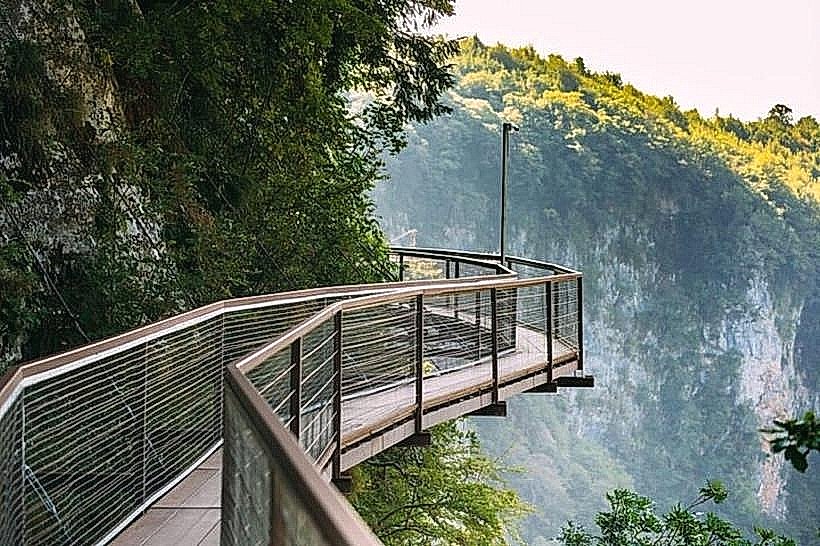
Martvili Canyon: (50 km west); famous for emerald-green water and rafting through deep limestone gorges.
Facts & Legends
Kutaisi is believed by many historians to be the site of the ancient city of Aea, the final destination of Jason and the Argonauts in their quest for the Golden Fleece. A local legend says the fleece was actually a sheepskin used to catch gold particles in the mountain rivers of the region. Another fact: the city's "White Bridge" features a bronze statue of a boy holding two hats, a reference to a local 19th-century cinematic character. In 2026, Kutaisi serves as the most accessible and culturally "raw" entry point into the heart of Georgia.