Information
City: ChiaturaCountry: Georgia
Continent: Asia
Chiatura, Georgia, Asia
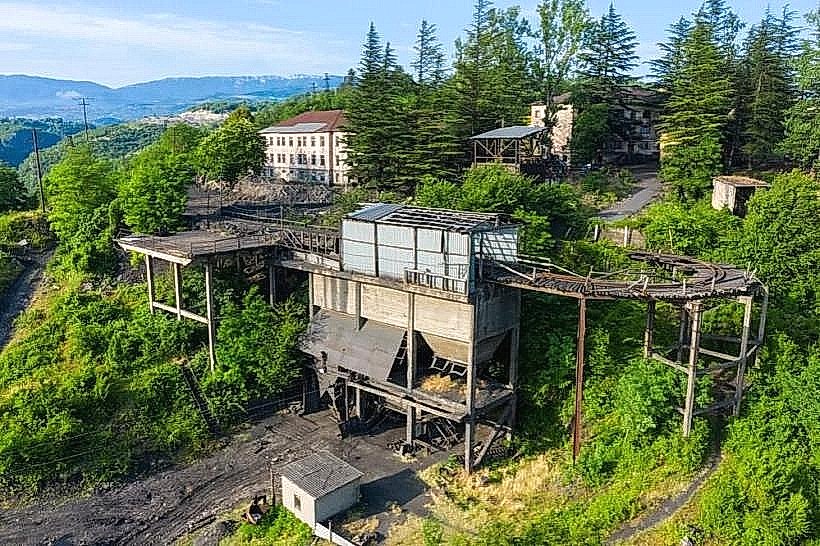
Chiatura is a mining city in western Georgia’s Imereti region, situated in the deep, narrow gorge of the Kvirila River. It is defined by its dramatic limestone cliffs, its 19th-century industrial heritage, and its world-famous network of Soviet-era cable cars. In 2026, the city is undergoing a major urban revival, transitioning from a "decaying industrial relic" to a unique destination for industrial tourism and engineering heritage.
Historical Timeline
The area has been inhabited since the Stone Age (e.g., Dzudzuana Cave). Modern Chiatura was founded in 1879 after the poet Akaki Tsereteli discovered vast manganese deposits. By 1905, the city produced 60% of the world’s manganese. A critical historical event occurred in 1954, when the first passenger cable car in the USSR was installed here to transport miners to the high cliffs. After the collapse of the Soviet Union in 1991, the city faced severe economic depression. In 2021, a total overhaul of the cable car system began, and by 2026, the new modern network is fully operational alongside restored historic lines.
Demographics & Population
The 2026 estimated population is approximately 12,500. The population is predominantly Ethnic Georgian. Georgian is the official language. The economy is still anchored by Georgian Manganese, which remains the primary employer, though Cultural and Industrial Tourism are growing sectors in the local economy.
Urban Layout & Key Districts
The city’s topography forces a vertical urban layout, with the center in the valley floor and residential districts perched on high plateaus.
The Valley Center: Home to the central cable car hub, the administrative buildings, and the drama theater.
Lezhubani, Naguti, and Sanatorium: High-altitude residential districts connected to the center by ropeways.
Industrial Zone: The northern and eastern outskirts where active manganese extraction and processing facilities are located.
Top Landmarks
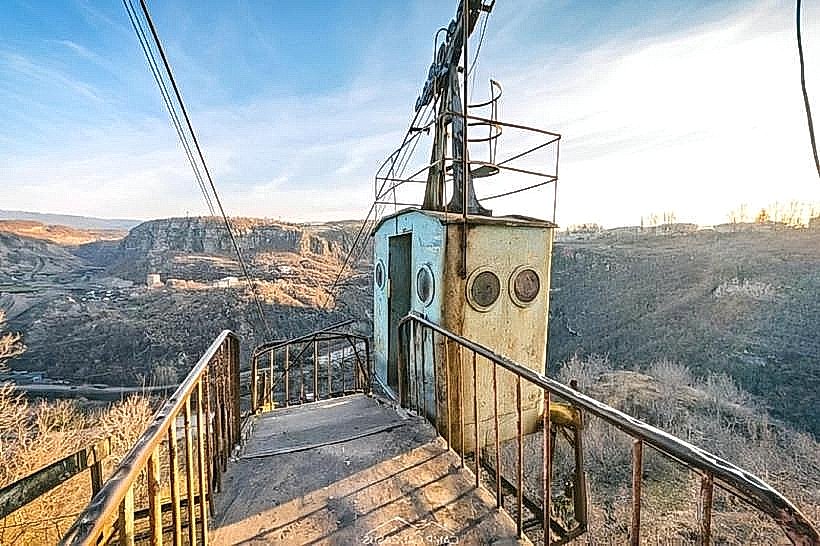
Chiatura Cable Car Network: Known as "Stalin’s Rope Roads." The system now features a mix of new high-tech gondolas (built by the French company Poma) and several restored 1950s "Iron Coffins" preserved as cultural monuments.
Katskhi Pillar: (11 km west); a 40-meter natural limestone monolith with a 9th-century church on top, accessible only to monks.
Mghvimevi Cave Monastery: (13th century); a monastery partially carved into a cliff face, featuring unique frescoes and a 19th-century bell tower.
Chiatura Drama Theater: A 100-year-old architectural gem and the cultural heart of the city.
The "Pioneer Palace": A grand, currently renovating Soviet-era youth center on the Upper Rgani plateau with a majestic colonnade and viewing platform.
Transportation Network
Chiatura is 180 km northwest of Tbilisi and 75 km east of Kutaisi.
Cable Cars: The primary mode of internal transit. In 2026, the Sashevardno line and the Perevisa line (the original "Route 25") serve as both functional transit and tourist attractions.
Marshrutka: Frequent links to Kutaisi (1.5 hours) and Tbilisi (3 hours) from the central station.
Rail: A historic rail line connects Chiatura to the Zestafoni ferro-alloy plant; passenger service is limited.
Safety & Health
Chiatura is safe for visitors, though the industrial nature of the city means travelers should watch for heavy machinery near mines. As of January 1, 2026, all international tourists must possess mandatory health insurance (30,000 GEL minimum coverage). The new cable cars are built to the highest European safety standards. Tap water is generally safe, but bottled water is common.
Digital & Financial Infrastructure
4G connectivity is stable throughout the valley. The Lari (GEL) is the currency. ATMs are located in the central district. While newer cafes and hotels accept cards, the "unfiltered" nature of the city means cash is essential for local transport and small markets.
Climate & Ecology
Cfa (Humid subtropical/Continental). The deep gorge creates a microclimate that is often cooler and mistier than the surrounding plains. In 2026, environmental initiatives are focused on rehabilitating the Kvirila River, which has historically suffered from mining runoff.
Culture & Social Norms
The culture is defined by a "mining-town" grit and a deep connection to its Soviet engineering past. Unlike Batumi or Tbilisi, Chiatura is not highly commercialized, offering a more authentic, "raw" Georgian experience. Local cuisine is standard Imeretian, with Imeruli Khachapuri and locally produced Imeretian wine being staples.
Local Cost Index
1 Standard Meal: $6.00–$11.00 USD.
Cable Car Ride: 0.50–1.00 GEL (approx. $0.20–$0.40 USD).
Mid-range Guesthouse Night: $25.00–$55.00 USD.
Facts & Legends
Legend says the monks at Katskhi Pillar originally ascended the rock using only a series of iron rungs and absolute faith. A modern fact: Chiatura’s original cable car system was the first of its kind in the world to serve as a comprehensive municipal public transport network. By 2026, Chiatura has shed its "ghost town" reputation to become a world-class case study in industrial heritage preservation.