Information
City: RustaviCountry: Georgia
Continent: Asia
Rustavi, Georgia, Asia
Rustavi is the fourth-largest city in Georgia and the administrative center of the Kvemo Kartli region. It is defined by its industrial heritage, its unique Soviet urban planning, and its proximity to the capital, Tbilisi. In 2026, the city is a vital logistics and transit node within the Middle Corridor trade route.
Historical Timeline
Rustavi has a dual history. An early phase began in the 4th–5th century BC, when it served as a major administrative center of the Kingdom of Iberia, until it was destroyed by Timur’s invasions in the 13th century. The modern city was founded in 1948 as a strategic Soviet industrial project. A critical historical event occurred in May 1944, when geologists began defining the soil for the Rustavi Metallurgical Plant, drawing workers from across Georgia. In 2026, Rustavi is transitioning from a "rust belt" industrial hub to a modernized center for international auto trade and regional transit.
Demographics & Population
The 2026 estimated population is approximately 132,000. The population is predominantly Ethnic Georgian (approx. 92%), with Azerbaijani (3.5%) and Armenian (1.5%) minorities. Georgian is the official language. The economy is heavily dominated by the Rustavi Metallurgical Plant, the Rustavi Car Market (the largest in the Caucasus), and chemical manufacturing.
Urban Layout & Key Districts
The city is bisected by the Mtkvari River and is strictly divided into two architectural eras:
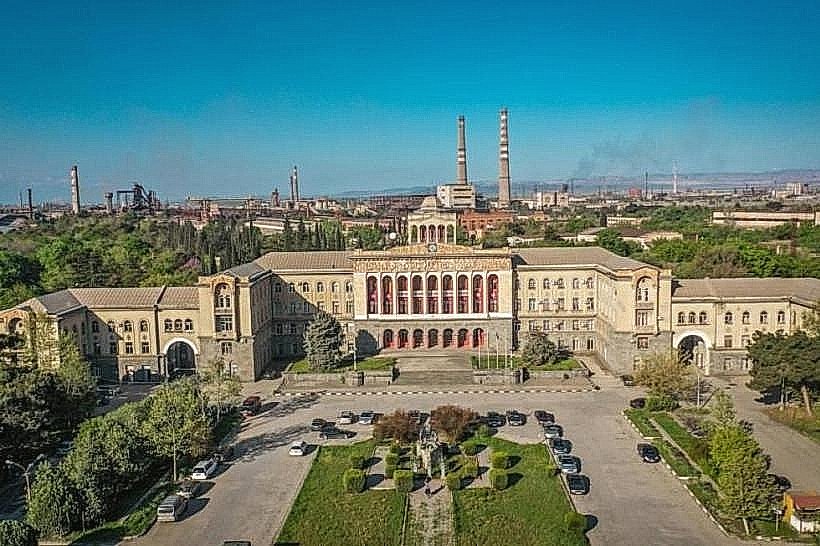
Dzveli Rustavi (Old Rustavi): Located on the left bank, it features grand Stalinist Neoclassical architecture with wide avenues, ornate facades, and lush courtyards built by German POWs.
Akhali Rustavi (New Rustavi): Located on the right bank, it is a classic Soviet "Microrayon" characterized by dense brutalist apartment blocks and wider, grid-like streets.
Rustavi International Motorpark: Situated on the outskirts, this is the premier motorsports facility in the region.
Top Landmarks
Rustavi Fortress: Ruins of the medieval 5th-to-13th-century citadel, which witnessed the city's ancient political life.
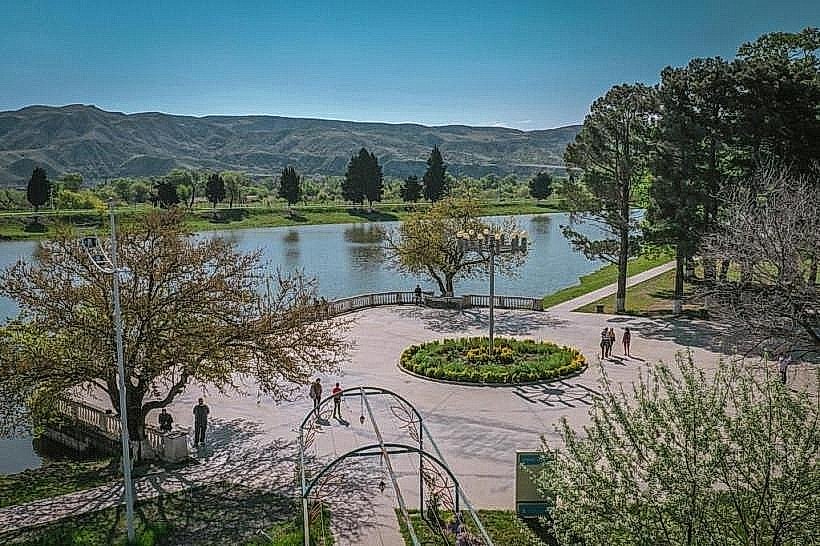
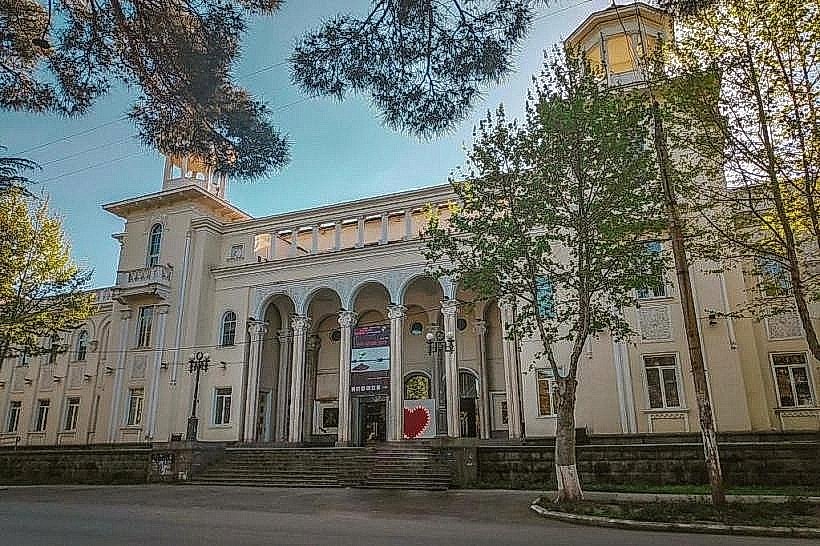
Rustavi Central Park: A massive green space (approx. 60 hectares) connecting the Old and New cities, featuring a lake and the Rustavi Drama Theater.
The "Lighthouse" (Rustavi Tower): A symbolic tall structure in the city center.
Stalinist Ensembles: The residential blocks on Megobroba Avenue, considered some of the best-preserved examples of Soviet-era Neoclassical design in Georgia.
Rustavi Car Market (AUTOPAPA): A massive 22-hectare site that serves as the secondary car trading hub for the entire Caucasus and Central Asia.
Transportation Network
Rustavi is 20 km south of Tbilisi.
Highway: The newly completed Rustavi–Red Bridge highway (part of the 2026 Middle Corridor project) provides a direct high-speed link to the Azerbaijani border.
Marshrutkas: Frequent "Yellow Vans" depart every 10–15 minutes from Tbilisi’s Didube, Isani, and Station Square (approx. 30-minute journey, 2.50 GEL).
Rail: Rustavi is a key stop on the Tbilisi–Baku railway line.
Safety & Health
The city is generally safe, though its industrial nature means air quality can be lower than in other Georgian cities. As of January 1, 2026, all international visitors must carry mandatory health insurance with a minimum coverage of 30,000 GEL for inpatient care and 5,000 GEL for emergency outpatient treatment. Failure to provide proof at the border or during a check results in a 300 GEL fine.
Digital & Financial Infrastructure
4G and 5G connectivity are robust via Magti and Silknet. The Lari (GEL) is the currency. Because of the massive car market, Rustavi has a high concentration of banking services and currency exchange offices that handle large international transactions.
Climate & Ecology
Bsk (Semi-arid/Steppe). Rustavi is significantly drier and windier than Tbilisi, with hot, dusty summers and cold, crisp winters. In 2026, the city is a focus of the "Green Rustavi" initiative, which aims to plant thousands of trees to mitigate industrial pollution and create a "green wall" between the residential sectors and the factories.
Culture & Social Norms
The culture is characterized by a "working-class" identity and a strong tradition in choral music and dance (the Rustavi Ensemble is world-famous). Social life is centered around the Central Park and the newly renovated pedestian zones in Old Rustavi. Cuisine is standard Georgian, but the city is particularly known for its outdoor barbecue culture and "roadside" eateries catering to transit drivers.
Local Cost Index
1 Standard Meal: $6.00–$12.00 USD.
Shared Minibus to Tbilisi: Approx. $1.00 USD.
Mid-range Hotel Night: $35.00–$65.00 USD.
Facts & Legends
Local legend says that under the Old Rustavi park, there is a network of secret tunnels built during the Cold War to connect the administrative buildings to the metallurgical plant. Another fact: the city's design was so prestigious during the Soviet era that it was intended to be a "model city" for the socialist worker, which is why the architecture in the Old Town is surprisingly elegant. In 2026, Rustavi remains the "Gearbox of Georgia," driving the nation's heavy industry and automotive trade.