Information
City: GoriCountry: Georgia
Continent: Asia
Gori, Georgia, Asia
Gori is a historic city in central Georgia and the regional capital of Shida Kartli. It is situated at the confluence of the Mtkvari and Liakhvi rivers. While internationally synonymous with Joseph Stalin, the city is defined by a 3,000-year history as a strategic military outpost and a gateway to some of the Caucasus' most important archaeological sites.
Historical Timeline
Archeological evidence points to human habitation as early as the Bronze Age. A critical historical event occurred in the 12th century when King David the Builder expanded the city to accommodate refugees from the Seljuk invasions. In 1920, a catastrophic earthquake destroyed much of the medieval architecture and the fortress. In August 2008, the city was a major theater of the Russo-Georgian War, suffering significant aerial bombardment and temporary occupation. In 2026, Gori serves as a central logistics node for the East-West Highway and a focal point for the "Shida Kartli Agricultural Development" initiative.
Demographics & Population
The 2026 estimated population is approximately 48,000. The population is predominantly Ethnic Georgian, with Ossetian, Russian, and Armenian minorities. Georgian is the official language. The economy is driven by Agriculture (apple and stone fruit production), Logistics, and Tourism.
Urban Layout & Key Districts
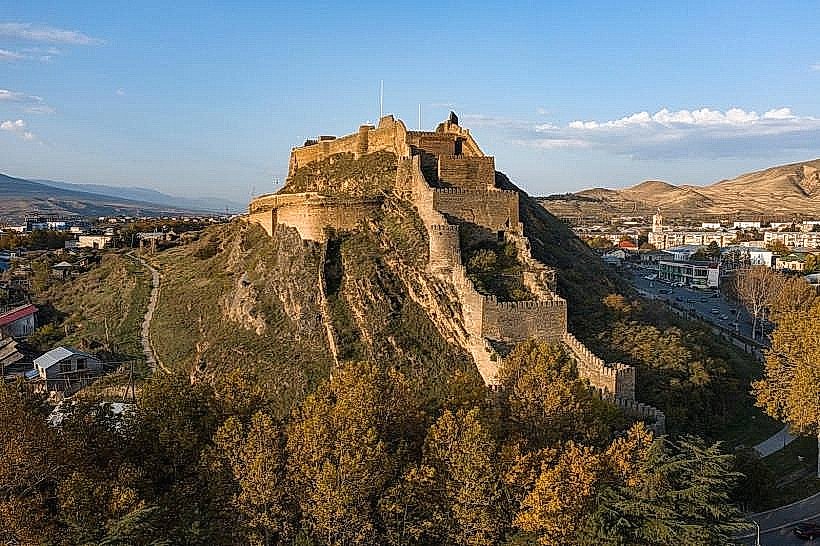
The city is built around the central rocky hill of the Gori Fortress.
City Center: Characterized by Stalinist Empire-style architecture and wide avenues, specifically Stalin Avenue.
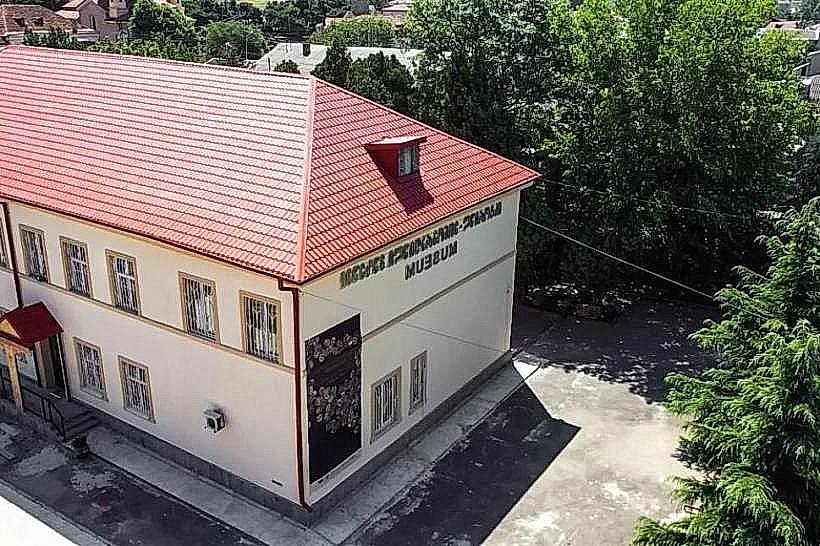
Fortress District: The historic slopes surrounding the hill, containing the Ethnographic Museum.
Kombinati: A residential and industrial district to the west, dating back to the Soviet-era textile boom.
Top Landmarks
Gori Fortress (Goris Tsikhe): A massive medieval citadel on a central hill. Archaeological layers date back to the 1st millennium BC, while the current walls are predominantly 17th-century.
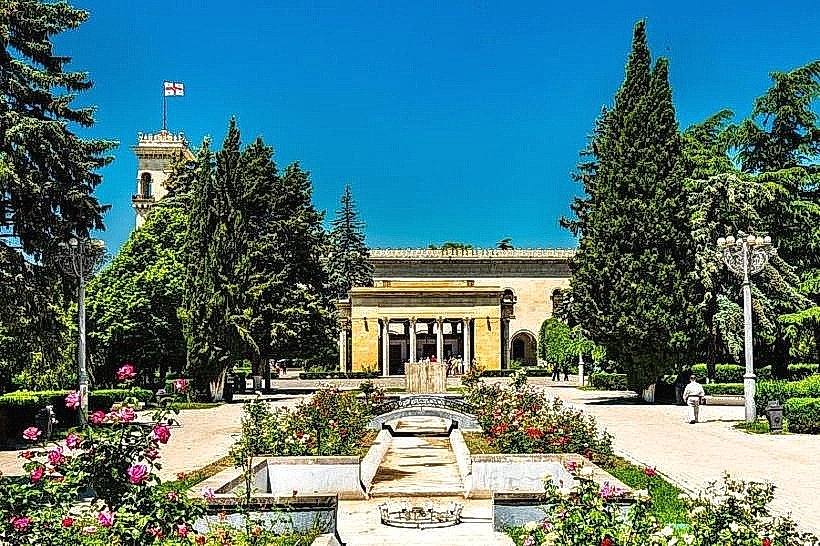
Joseph Stalin Museum: A grand complex in the "Stalinist Gothic" style. It includes the humble wooden hut where Stalin was born in 1878, his personal armored railway carriage, and his death mask.
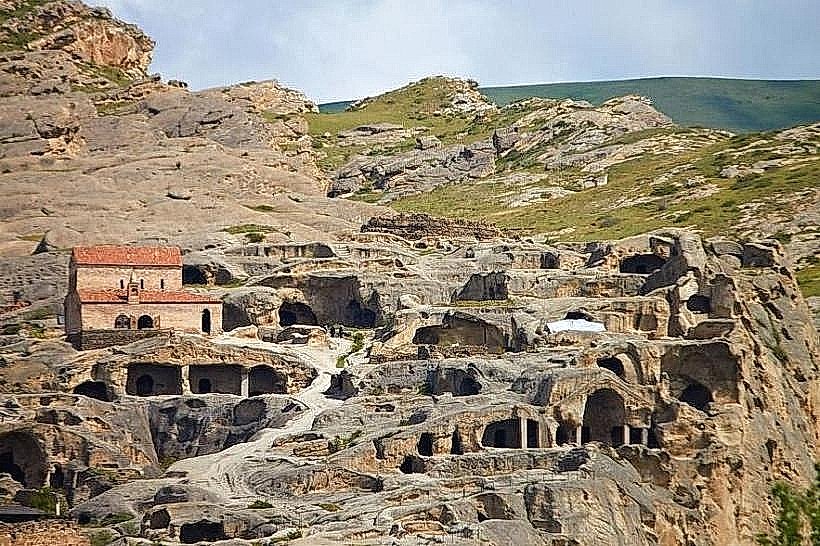
Uplistsikhe Cave Town: Located 10 km east of Gori; one of the oldest urban settlements in the Caucasus, carved into sandstone cliffs. It contains an Iron Age theater, pagan temples, and a 9th-century Christian basilica.
Ateni Sioni Church: A 7th-century tetraconch church located 10 km south in the Ateni Valley, famous for its 11th-century frescoes and unique greenish-gray stone.
Memorial of Georgian Warriors: A circle of eight massive, partially mutilated bronze statues at the foot of the fortress hill, commemorating defenders of the nation.
Transportation Network
Gori is approximately 86 km west of Tbilisi. The East-West Highway (S1) provides a direct 1.5-hour connection to the capital. The Gori Railway Station is a major stop on the Tbilisi–Batumi line. Within the city, transit is handled by marshrutkas and local taxis. Bolt and Yandex ride-sharing services are the primary digital transit options.
Safety & Health
Gori is safe for travelers. The primary safety concern is its proximity to the Administrative Boundary Line (ABL) with the occupied South Ossetia region (Tskhinvali). Travelers should avoid straying into unmarked rural areas north of the city where the boundary is not clearly defined. Tap water is safe. Gori Military Hospital is the primary regional medical facility.
Digital & Financial Infrastructure
4G and 5G connectivity are robust in the city center via Unitel and Magti. The Lari (GEL) is the currency. ATMs are concentrated around Stalin Avenue and the central market. Most restaurants and the Stalin Museum accept international card payments.
Climate & Ecology
Cfa (Humid subtropical/Continental). Gori is known for its strong winds that blow through the Liakhvi valley. In 2026, the province is a pilot site for "Climate-Resilient Orchards," aimed at modernizing the region’s massive apple and pear production in response to warming valley temperatures.
Culture & Social Norms
Gori is more conservative than Tbilisi. The city has a complex relationship with its history; while some older residents still view Stalin with a degree of local pride, the younger generation and official government policy focus on the city's role as a victim of 2008 aggression. Cuisine is famous for Gori Cutlets (spiced meat patties) and Atenuri wine, a sparkling white variety from the nearby valley.
Local Cost Index
1 Standard Meal: $6.00–$12.00 USD.
Stalin Museum Entry: Approx. $6.00 USD.
Mid-range Hotel Night: $40.00–$75.00 USD.
Facts & Legends
Gori translates to "Hill" or "Heap" in Georgian. A local legend says that the Uplistsikhe caves were carved by slaves using picks that were half-iron and half-gold; if the slave worked hard enough to wear the iron down to the gold, they earned both their freedom and the gold. Another fact: Stalin’s armored train car weighs 83 tons and was used by him to travel to the Yalta and Tehran Conferences because of his intense fear of flying. In 2026, Gori is increasingly being marketed as the "Citadel of Kartli," shifting the narrative away from its Soviet past toward its medieval and ancient roots.