Information
City: Andorra la VellaCountry: Andorra
Continent: Europe
Andorra la Vella, Andorra, Europe
Andorra la Vella serves as the capital of the Principality of Andorra and is the highest capital city in Europe (1,023m). It functions as the nation’s commercial, administrative, and judicial core, characterized by its tax-haven status, duty-free retail density, and a dramatic Pyrenean mountain backdrop.
Historical Timeline
Inhabited since the Neolithic era, the site became the center of the Parish of Andorra la Vella in the 13th century following the Paréage of 1278. The primary event shaping its modern infrastructure was the 1993 Constitution, which transitioned Andorra into a parliamentary democracy and modernized the capital's legal status. The city has since evolved from a rustic mountain town into a high-density, luxury-oriented urban center.
Demographics & Population
The population is approximately 24,000 (2026 estimate), though the contiguous urban area (including Escaldes-Engordany) houses nearly 40,000 residents. The demographic is highly international: approximately 33% are ethnic Andorrans, with Spanish (43%), Portuguese (11%), and French (7%) citizens forming the majority of the workforce.
Urban Layout & Key Districts
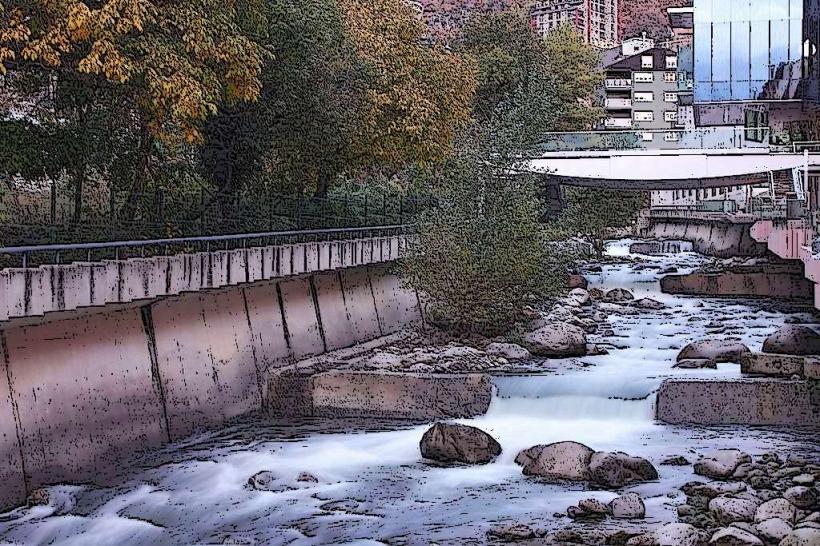
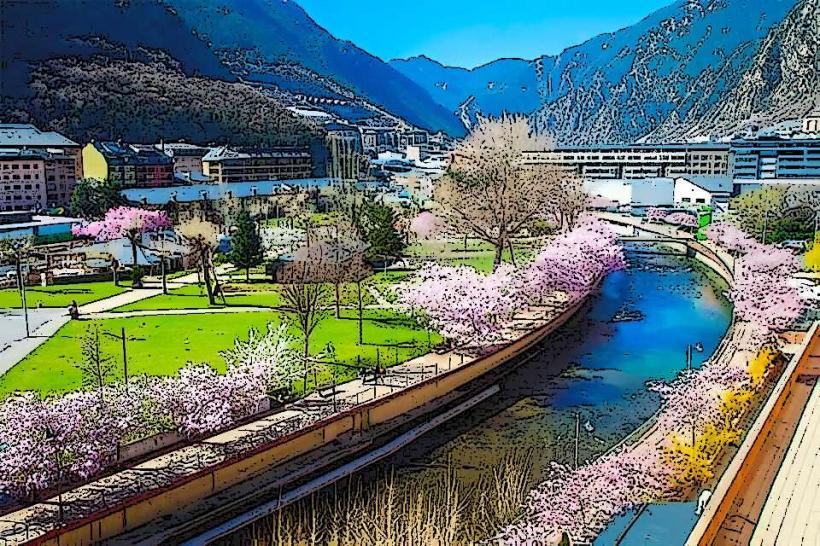
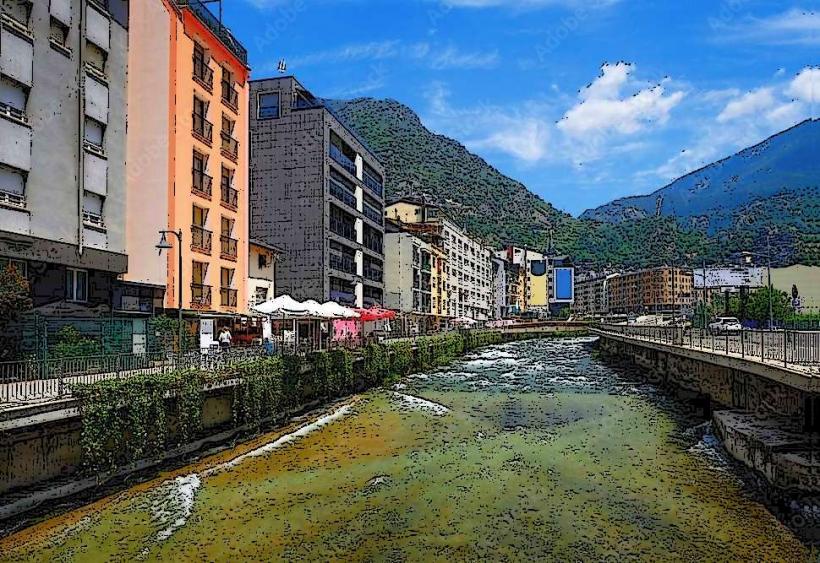
The city is situated in the Gran Valira river valley.
Barri Antic (Old Quarter): The historic core featuring stone houses and narrow streets.
Avinguda Meritxell: The primary commercial artery, famous for its high concentration of duty-free boutiques and department stores.
Escaldes-Engordany: Technically a separate parish but geographically integrated; home to the thermal spa district and the "Caldea" spire.
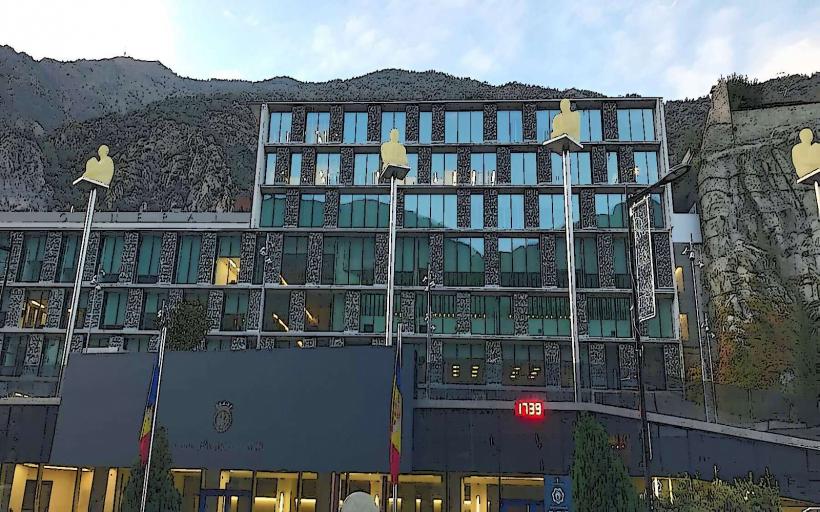
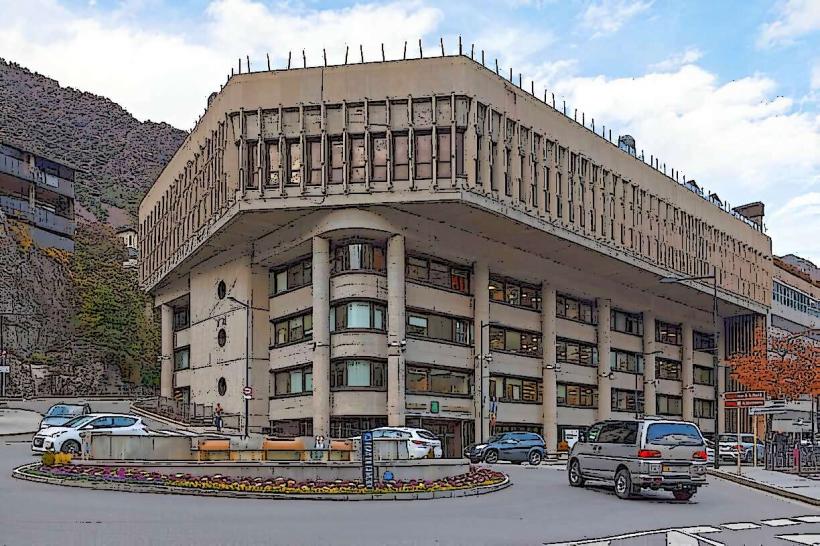
Prada Casadet: The administrative district housing government buildings and the National Auditorium.
Top City Landmarks
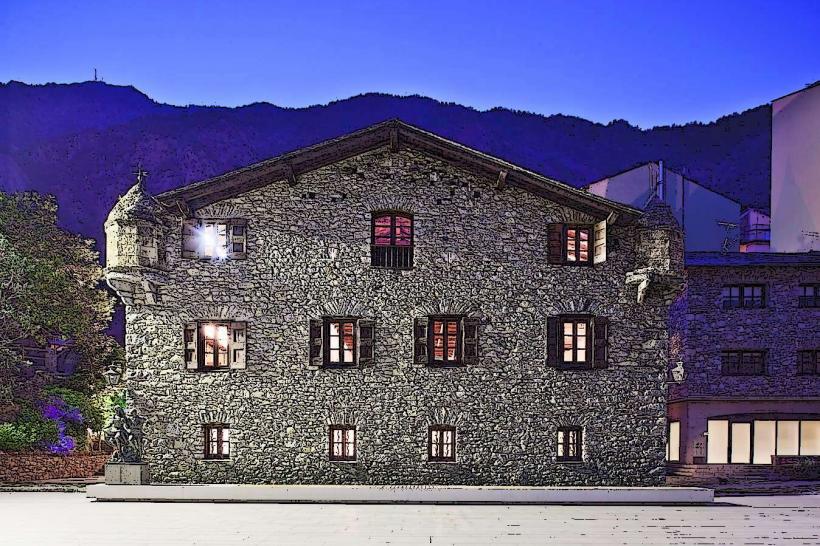
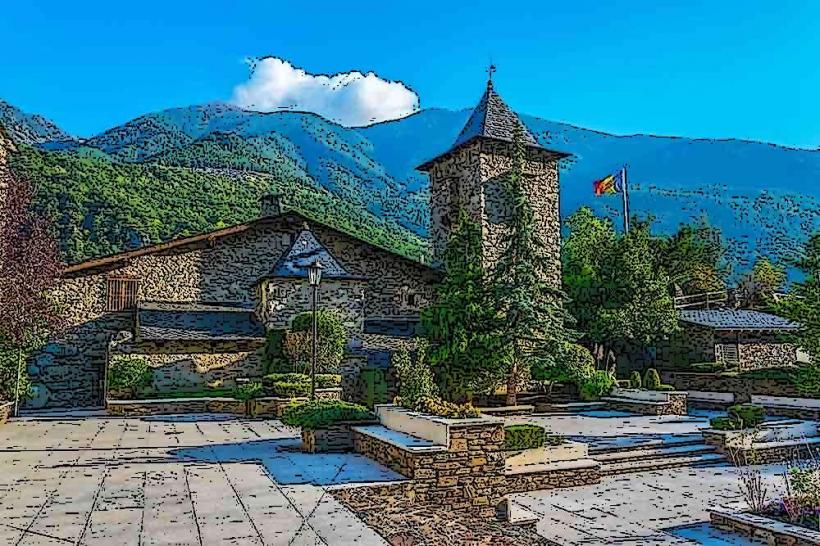
Casa de la Vall: A 16th-century fortified manor that served as the seat of the General Council (parliament) until 2011.
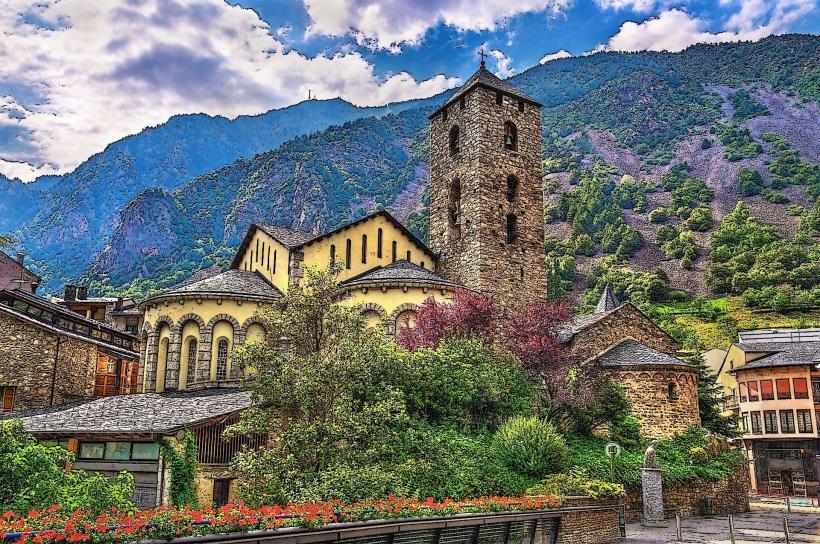
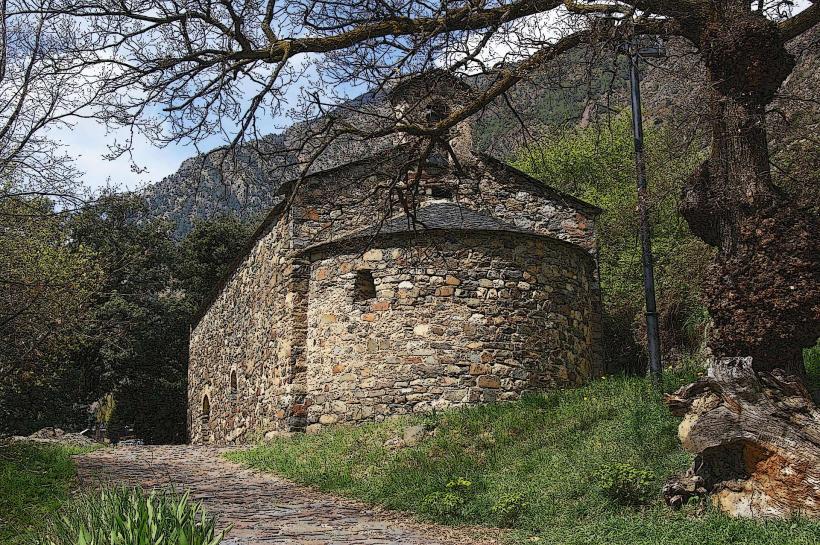
Sant Esteve Church: A 12th-century Romanesque church with a distinctive circular apse.
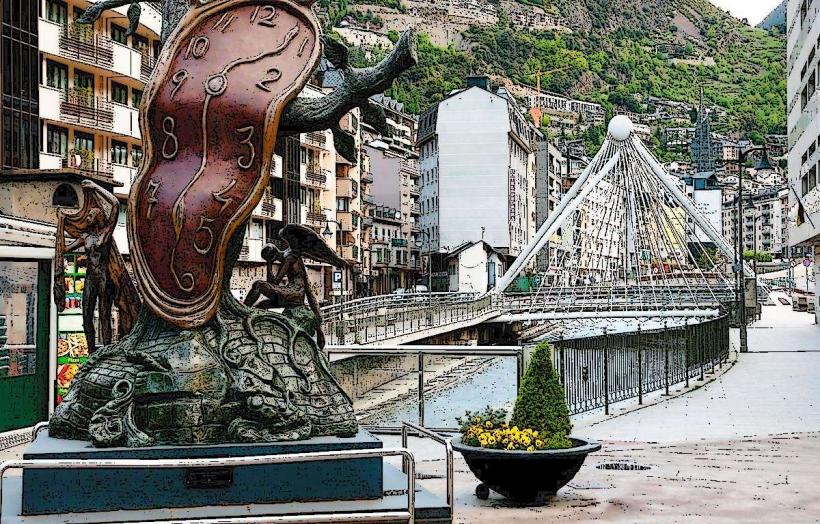
La Noblesse du Temps (The Nobility of Time): A monumental bronze sculpture by Salvador Dalí featuring a "melting clock."
Caldea: One of Europe's largest thermal spa complexes, recognized by its futuristic glass pyramid.
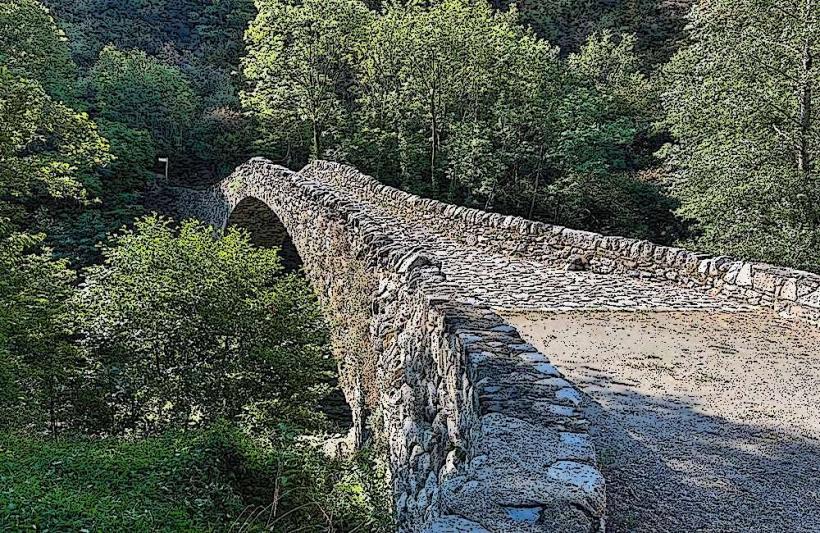
The Paris Bridge (Pont de París): A modern architectural bridge spanning the Valira river, often illuminated at night.
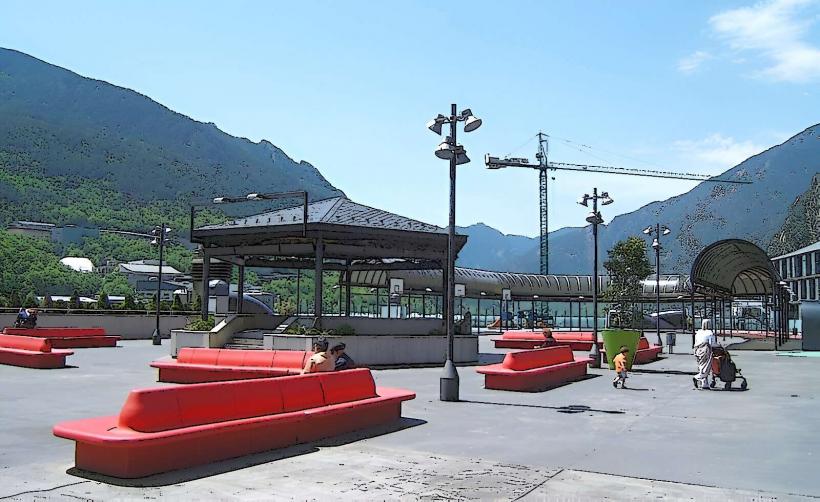
Parc Central: The city’s primary green space, designed by architect Daniel Fontova.
Transportation Network
Movement is managed by the Clipol bus network and the L1/L2/L3 national lines. Andorra has no railways or commercial airports within its borders. Access is strictly by road. The nearest major hubs are Barcelona-El Prat (BCN) (200 km) and Toulouse-Blagnac (TLS) (180 km). Frequent "Andorra Direct Bus" services connect the capital to these airports in approximately 3 hours.
Safety & "Red Zones"
The safety level is extreme. Andorra maintains one of the lowest crime rates in the world. There are no "no-go zones." Standard urban awareness is sufficient. The primary safety concerns are related to winter driving conditions on steep mountain roads surrounding the city.
Digital & Financial Infrastructure
Average internet speed is 500–1000 Mbps; the country was one of the first in the world to be entirely covered by fiber optics. The city is a major banking hub. It is virtually cashless. Cards and mobile payments are universal. While the Euro is the de facto currency, Andorra is not part of the EU or the Schengen Area, though it maintains an open border with its neighbors.
Climate & Air Quality
Temperatures range from -2°C in winter to 24°C in summer. The mountain valley location can result in rapid weather changes. Air quality is pristine due to the high altitude and lack of heavy industry.
Culture & Social Norms
The official language is Catalan, though Spanish and French are spoken by nearly everyone. Tipping is not mandatory but 5-10% is customary for table service. The culture is defined by Pyrenean traditions and a focus on mountain sports. Social life revolves around the shopping districts and the thermal spa culture.
Accommodation Zones
Stay in the Barri Antic for historic charm and proximity to government sites.
Stay on Avinguda Meritxell for immediate access to retail and dining.
Stay in Escaldes-Engordany for proximity to Caldea and luxury wellness hotels.
Local Cost Index
1 Espresso: 1.50 – 2.50 €
1 Standard Lunch (Menú del Migdia): 12.00 – 18.00 €
1 Pint of Local Beer: 5.00 – 7.50 €
1 Bus Ticket (Zone 1): 1.90 €
Nearby Day Trips
Grandvalira / Vallnord: 15–30 mins; the largest ski domains in the Pyrenees.
Madriu-Perafita-Claror Valley: A UNESCO World Heritage site accessible for high-altitude hiking.
Naturland: 20 km south; an outdoor adventure park featuring the Tobotronc, the world’s longest alpine slide.
Facts & Legends
Local tradition holds that Charlemagne founded Andorra in the year 805 as a reward for the inhabitants' help in fighting the Moors. A verified historical fact is that Andorra la Vella is the highest capital city in Europe, situated at an altitude where the air pressure is approximately 10% lower than at sea level.