Information
City: Angeles CityCountry: Philippines
Continent: Asia
Angeles City, Philippines, Asia
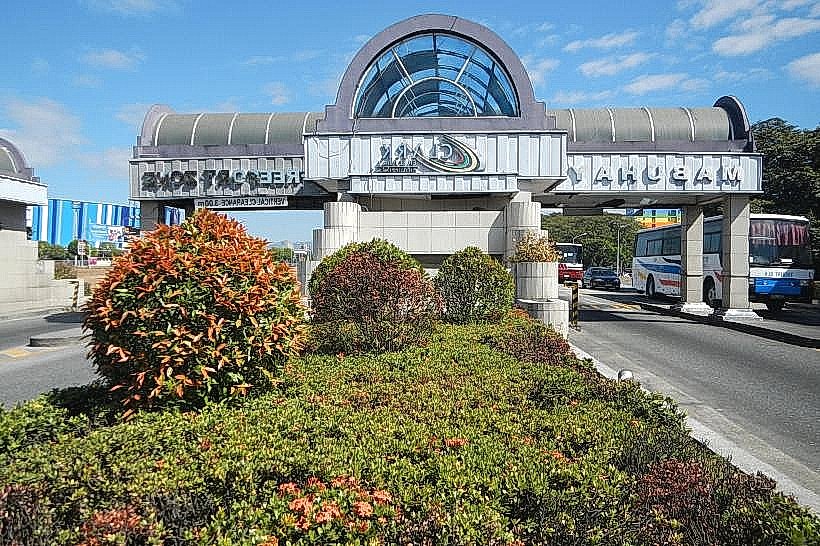
Angeles City serves as the "Entertainment Capital of Central Luzon" and a premier culinary destination. It functions as an independent, highly urbanized city within the province of Pampanga, serving as the primary commercial and logistical link to the Clark Freeport Zone.
Historical Timeline
Founded in 1796 as "Culiat," the city was renamed in 1829. Its modern urban form was dictated by the 20th-century presence of Clark Air Base, formerly the largest US military facility overseas. The primary event shaping its current trajectory was the 1991 eruption of Mount Pinatubo, which forced the US withdrawal and led to the conversion of the base into a Special Economic Zone, decoupling the city’s economy from military dependence.
Demographics & Population
The population is approximately 463,000 (2024 estimate). The demographic is predominantly Kapampangan-speaking. The city hosts a significant international expatriate population and a large transient workforce employed in the Clark Freeport. The median age is 25 years.
Urban Layout & Key Districts
The city is divided into several high-activity zones. Balibago is the entertainment and nightlife core; Fields Avenue is the primary international tourist strip; Anunas (Fil-Am Friendship Highway) serves as the "Korean Town" and upscale dining node; and the Poblacion remains the heritage and administrative center.
Top City Landmarks
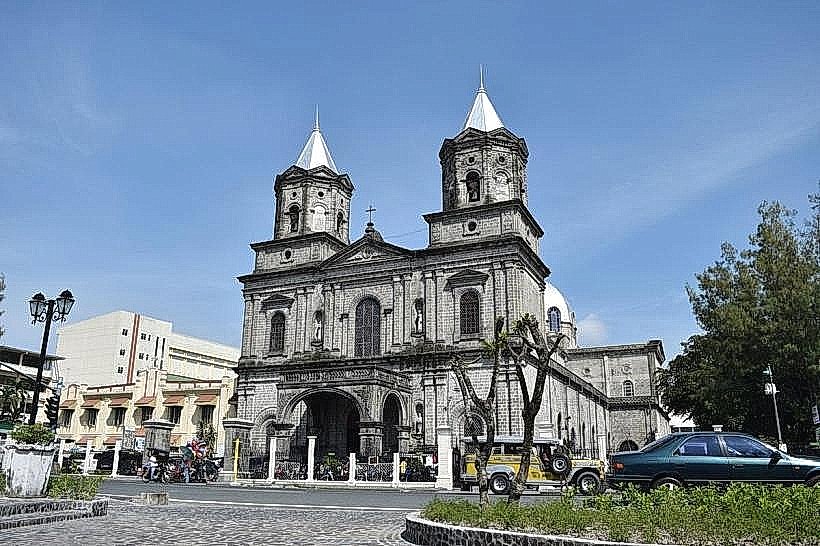
Holy Rosary Parish Church (Pisamban Maragul)
Pamintuan Mansion (Museum of Philippine Social History)
Walking Street (Fields Avenue)
Air Force City Park (Clark)
Museo ning Angeles
Transportation Network
Movement is facilitated by Jeepneys and tricycles. Angeles is a major regional hub for "Pau" (Point-to-Point) buses. Air travel is serviced by Clark International Airport (CRK). The city will be a primary station for the North-South Commuter Railway (NSCR) currently under construction. Ride-sharing via Grab is universal. Traffic density is extreme at the Checkpoint and Abacan Bridge junctions.
Safety & "Red Zones"
The safety level is moderate to high. Vigilance is required in the Balibago nightlife district regarding pickpockets and overcharging. Use only Grab-hailed vehicles for late-night transit. The city maintains a high police presence in the tourist zones of Fields Avenue.
Digital & Financial Infrastructure
Average internet speed is 50–100 Mbps; the city is a major fiber-optic hub for Central Luzon. Main carriers are Globe, Smart, and Converge ICT (which is headquartered nearby). Card acceptance is universal in malls (SM City Clark, Marquee Mall); GCash is the dominant mobile wallet. ATMs are densely packed along the Fil-Am Friendship Highway.
Climate & Air Quality
Temperatures range from 23°C to 34°C. The city is landlocked and can become significantly hotter than coastal regions. Air quality is moderate, though particulate levels are high along the McArthur Highway corridor.
Culture & Social Norms
Tipping of 10% is standard. The culture is defined by Kapampangan Gastronomy; the city is the birthplace of Sisig. Dress code is casual, but modest attire is required for the Holy Rosary Parish. Public smoking is strictly regulated under city ordinances.
Accommodation Zones
Stay in Clark Freeport Zone for high-end security, parks, and proximity to the airport.
Stay in Balibago/Fields Avenue for immediate access to nightlife and budget dining.
Stay along Fil-Am Friendship Highway for modern boutique hotels and the best culinary options.
Local Cost Index
1 Espresso: 140 PHP ($2.45 USD)
1 Standard Lunch (Sisig/Tokwa’t Baboy): 250–450 PHP ($4.40 – $7.90 USD)
1 Jeepney Ride: 13–15 PHP ($0.25 USD)
Nearby Day Trips
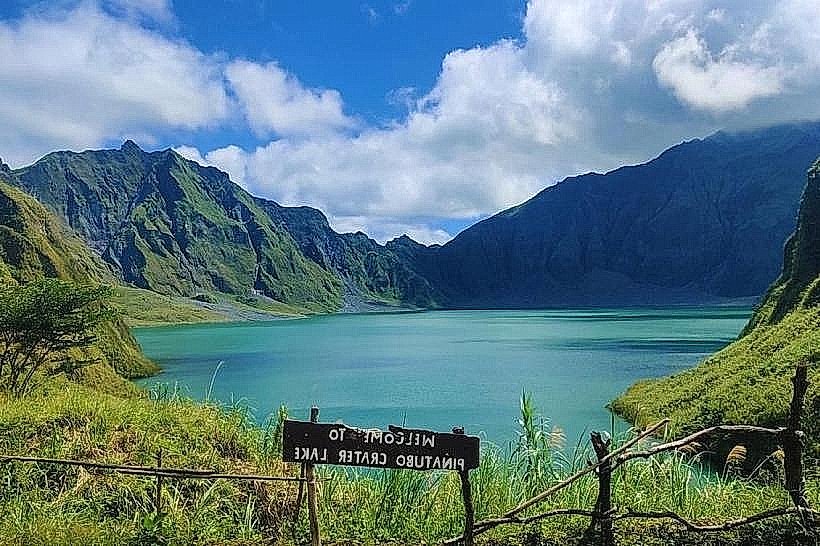
Mount Pinatubo Crater (Capas): 25 km to base camp (1 hour)
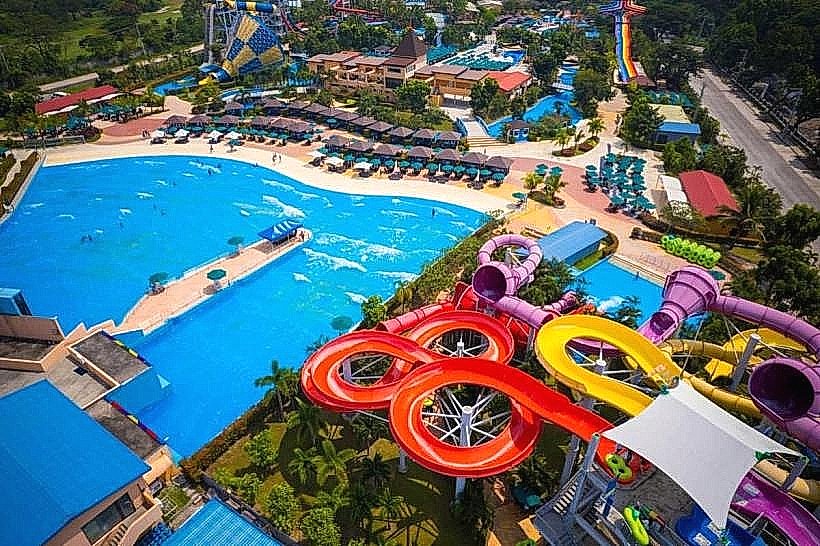
Aqua Planet (Clark): 10 km (20 minutes)
Puning Hot Spring (Sapang Bato): 15 km (30 minutes)
San Fernando (Giant Lantern Center): 15 km (30 minutes)
Facts & Legends
Angeles City is the "Sisig Capital of the Philippines," with the modern recipe credited to Lucia "Aling Lucing" Cunanan. Local legend says the bells of the Holy Rosary Church ring differently to warn of impending volcanic mudflows, while a verified historical fact is that the Pamintuan Mansion served as the seat of the Philippine Government under Gen. Emilio Aguinaldo in 1899.