Information
City: BledCountry: Slovenia
Continent: Europe
Bled, Slovenia, Europe
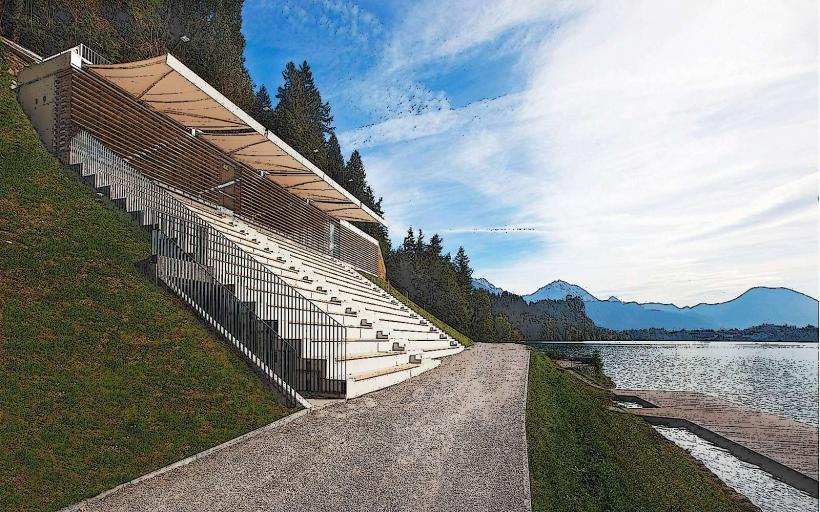
Bled functions as the primary center for alpine tourism, elite rowing sports, and diplomatic retreats in the Upper Carniola region of northwestern Slovenia. Situated at the foot of the Julian Alps, it is defined by its glacial lake, its 11th-century clifftop castle, and its status as a global symbol of Slovenian heritage.
Historical Timeline
Bled was first mentioned in 1004 when Holy Roman Emperor Henry II gifted it to the Bishop of Brixen. The primary era of governance began under the House of Habsburg, which maintained control for centuries. The primary event shaping its modern identity was the 19th-century development of hydropathy by Swiss healer Arnold Rikli, which transitioned the town into a specialized health resort for European aristocracy. Historically, it served as the summer residence for the Karađorđević dynasty and later for Yugoslav President Josip Broz Tito.
Demographics & Population
The population is approximately 8,200 (2026 estimate). The demographic profile is heavily weighted toward the service, tourism, and hospitality sectors. The town acts as a service hub for the surrounding Gorenjska region and hosts a transient daily population of tourists that frequently triples the local headcount.
Urban Layout & Key Districts
The town is organized around the eastern and northern shores of Lake Bled.
Old Core (Grad): A specialized historic zone centered around the parish church and the base of the castle cliff.
Mlino: A specialized southern lakeside district; the traditional starting point for pletna boat trips to the island.
Bled Center: The specialized commercial and administrative hub featuring the main hotels, casino, and park.
Selo pri Bledu: A specialized residential and agricultural borough on the southern outskirts.
Top City Landmarks
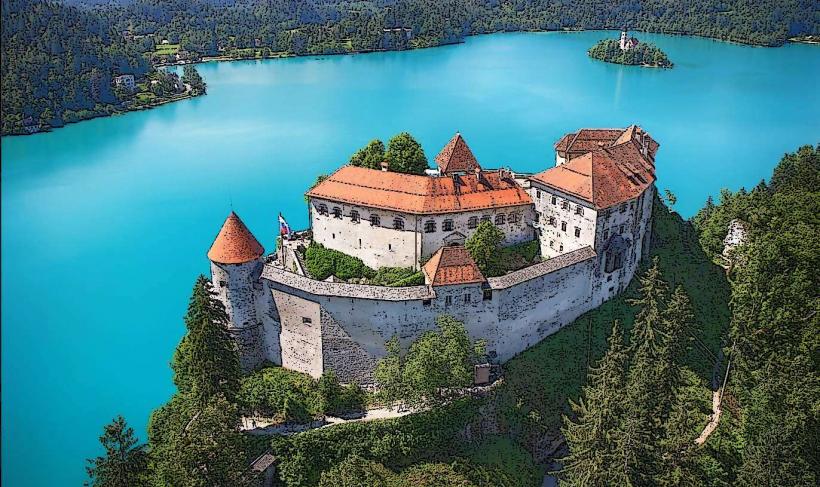
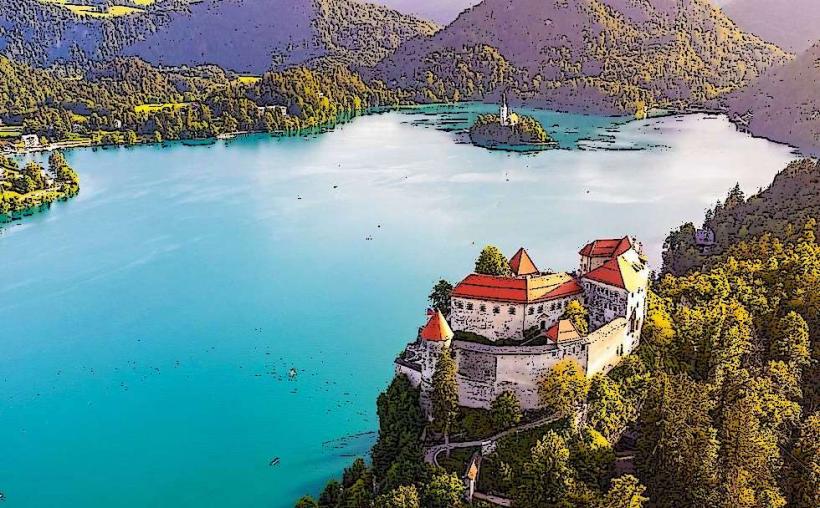
Bled Castle (Blejski grad): A specialized medieval fortress perched on a 130-meter precipice; it features a museum, a printing press using a Gutenberg replica, and a wine cellar.
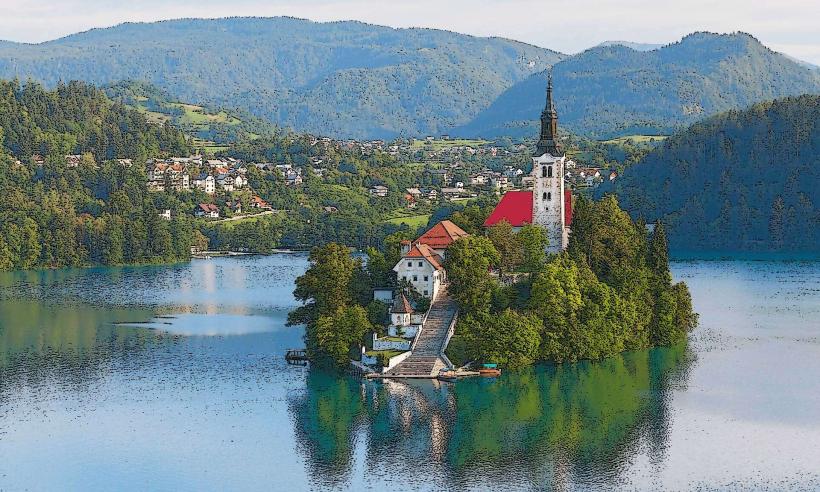
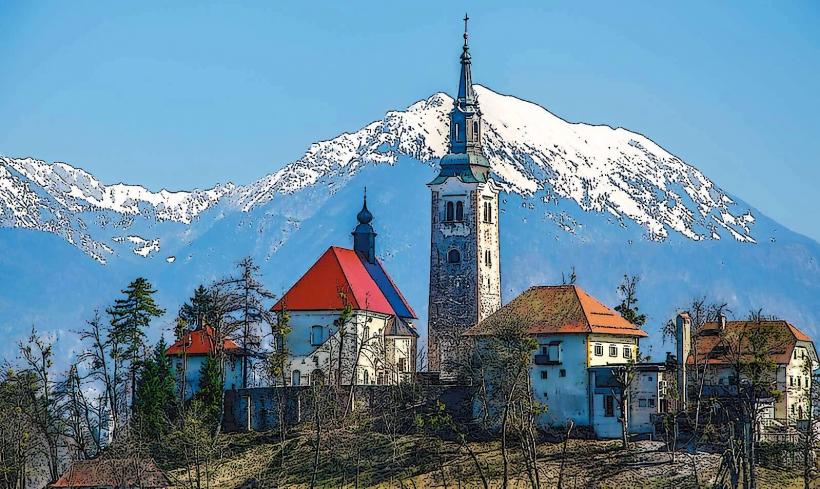
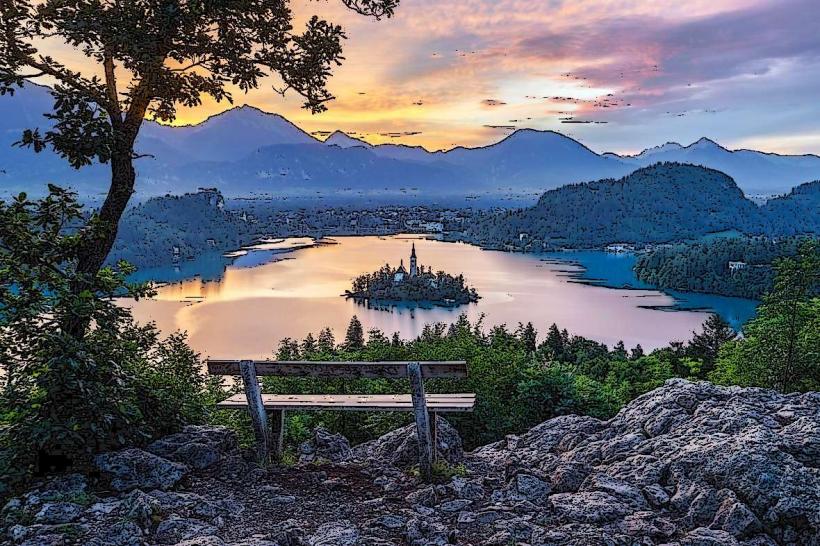
Bled Island (Blejski otok): A specialized tear-shaped island housing the Pilgrimage Church of the Assumption, featuring a 99-step stone staircase and a "wishing bell."
The Vintgar Gorge: A specialized 1.6 km karst canyon located 4 km north of the town, featuring wooden walkways, bridges, and the 13-meter Šum waterfall.
Vila Bled: A specialized mid-century architectural landmark; once Tito's summer residence, it represents the pinnacle of Slovenian socialist-era luxury design.
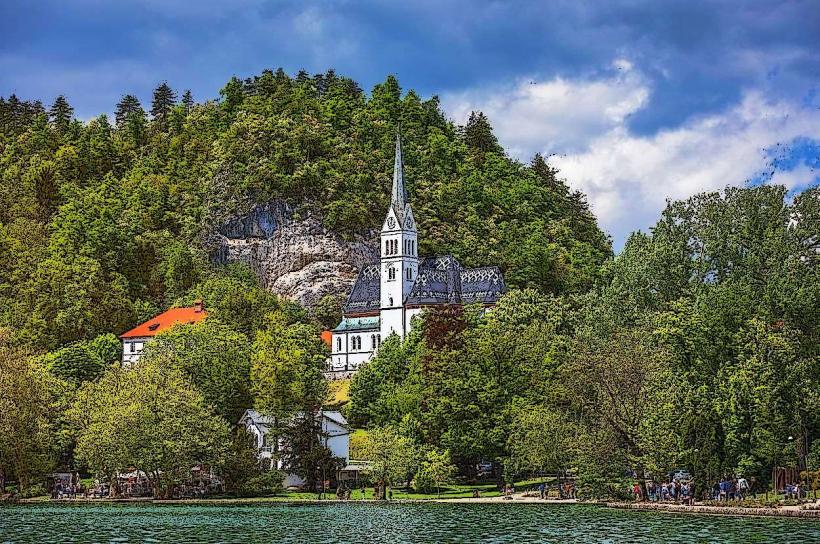
St. Martin's Parish Church: A specialized Neo-Gothic landmark (1905) featuring preserved frescoes and a high-steepled tower dominating the town center.
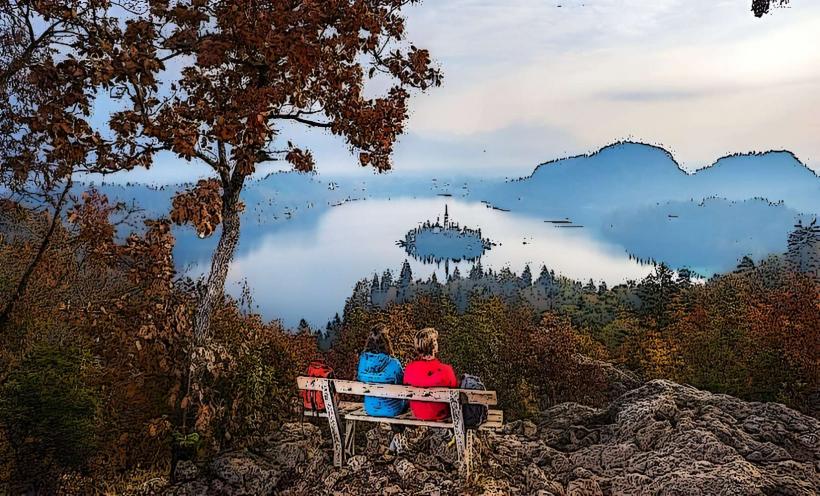
Straža Hill: A specialized recreational area offering summer tobogganing and a panorama of the lake and the Karavanke mountains.
Transportation Network
Bled is a primary node in the Gorenjska transit corridor.
Railway Access: Served by two specialized stations: Bled Jezero (on the scenic Transalpina line toward Nova Gorica) and Lesce-Bled (on the main line to Ljubljana and Villach).
Pletna Boats: A specialized mode of water transport; traditional wooden, flat-bottomed boats propelled by a standing rower using the "stehrudder" technique.
Public Transit: A specialized shuttle bus network operates during peak seasons to reduce vehicle traffic in the lakeside zone.
Road Links: Connected to the A1 motorway via the Lesce exit. As of 2026, the town utilizes a specialized traffic management system to prioritize pedestrians and cyclists.
Safety & "Red Zones"
The general safety level is exceptionally high. Bled is statistically one of the safest tourist destinations in Europe. There are no "red zones." The primary safety considerations involve lake swimming regulations and mountain hiking preparedness.
Digital & Financial Infrastructure
The town is a leader in Sustainable Tourism Digitalization and High-End Hospitality Management. Internet speeds average 300–800 Mbps. 5G is universal in the urbanized core. In 2026, the town uses specialized digital platforms for managing island visitor quotas and environmental lake metrics.
Climate & Air Quality
Bled has a mild sub-alpine climate. Protected by mountains, it lacks strong winds. Average temperatures range from -1°C in January to 25°C in July. Air quality is exceptionally high, designated as a "climatic health resort" zone.
Culture & Social Norms
Social norms are characterized by alpine hospitality and a strong emphasis on environmental preservation. Tipping (10%) is standard. The primary cultural event is Bled Days (July) and the International Rowing Regatta.
Local Cost Index
1 Espresso: €2.80
1 Pint of Local Beer: €4.00–€6.00
1 Standard Lunch: €15.00–€25.00
1 Bled Cream Cake (Kremšnita): €5.50–€8.00
Nearby Day Trips
Lake Bohinj: 25 mins away; a larger, specialized glacial lake located within the Triglav National Park.
Triglav National Park: 20 mins away; a specialized alpine wilderness featuring Slovenia's highest peak (2,864 m).
Radovljica: 10 mins away; a specialized medieval town known for its apiculture (beekeeping) museum and chocolate festival.
Facts & Legends
Bled is the site where the Bled Cream Cake (Kremna rezina) was standardized in 1953; over 15 million have been sold. Legend states that the lake was created by fairies who flooded a valley to punish local shepherds for letting their sheep graze on the fairies' dancing grass. A verified fact is that the town has hosted the World Rowing Championships four times. Historically, the island was once the site of a temple dedicated to Živa, the Slavic goddess of love and fertility.