Information
City: BrailaCountry: Romania
Continent: Europe
Braila, Romania, Europe
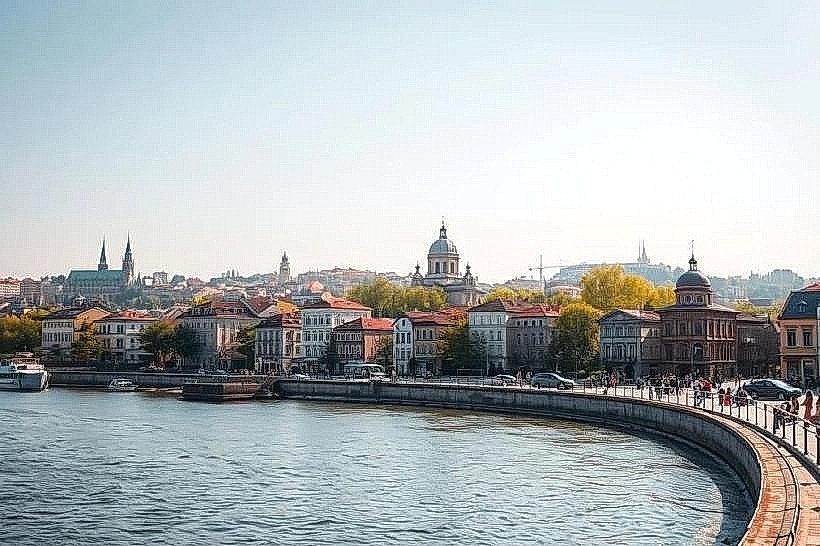
Brăila serves as a major inland port on the Danube River and the administrative capital of Brăila County in eastern Romania. It functions as a significant agricultural and industrial hub, supporting large-scale grain trade and mechanical component manufacturing near the strategic junction of the Danube and the Brăila Bridge.
Historical Timeline
Brăila was first documented in 1368, though it developed as a significant trading post under the Principality of Wallachia. It was annexed by the Ottoman Empire in 1538 and functioned as a fortified kaza (stronghold) until 1829, when it returned to Wallachian rule following the Treaty of Adrianople. The most significant architectural and political reconstruction occurred in the 1830s under Russian administration, which oversaw the systematic demolition of the Ottoman citadel and the implementation of a modern, radial-concentric urban plan modeled after Odessa. The primary event shaping the current urban form was this 19th-century master plan, which created the distinctive semi-circular street layout radiating from the Danube.
Demographics & Population
The population within city limits is approximately 154,600 (based on 2021 census data), with a metropolitan area reaching roughly 200,000. The top three ethnic demographics are Romanian (97.5%), Romani (1.4%), and Russian-Lipovans (0.8%). The median age of the population is 44.5 years.
Urban Layout & Key Districts
Brăila is organized in a unique fan-shaped pattern, with all major streets curving parallel to the Danube or radiating from the riverfront. Centrul Vechi (Historic Center) is the cultural core, centered around Trajan Square. The Faleza (Promenade) is the recreational district extending along the riverbank to the east. The northern sector (Vidin and Progresul) contains heavy industrial zones, while the southern sector (Viziru) is the primary high-density residential district.
Top City Landmarks
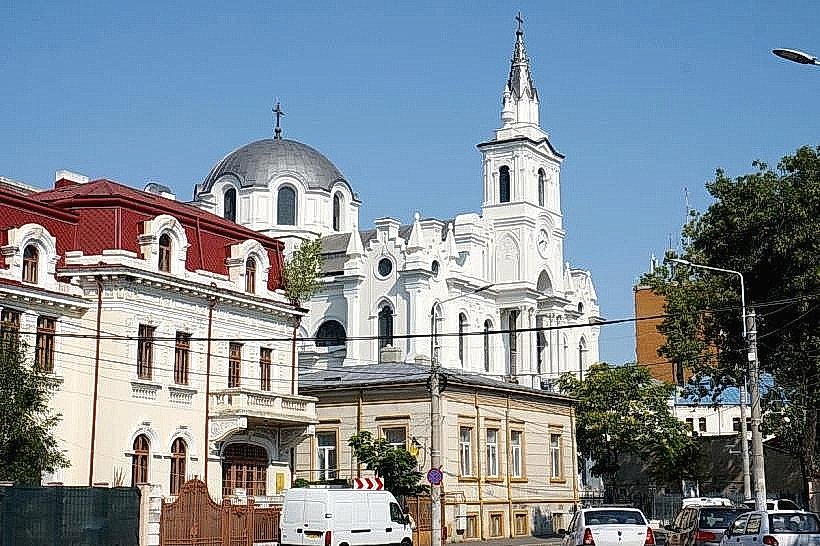
Saint Archangels Michael and Gabriel Church (a former Ottoman mosque)
The Public Clock (an 11.5-meter historic horologe)
The Water Castle (Castelul de Apă)
Nicolae Bălcescu County Museum
Transportation Network
Movement within Brăila is facilitated by a reliable tram network (primarily Lines 21, 24, and 25) and a series of minibus and bus routes; there is no Metro system. Bolt and Uber are the primary ride-sharing apps, though coverage is lower than in Bucharest. Official taxis are painted yellow and must display the tariff (approx. 3.50–4.00 RON/km) on the front doors. Traffic density is moderate, with peak congestion occurring at the entries to the Brăila Bridge and along Calea Călărașilor during 07:30–08:30 and 16:30–17:30.
Safety & "Red Zones"
Brăila is generally safe for travelers during daylight hours. The neighborhoods of Brăilița and Radu Negru are noted for higher rates of petty crime and poor infrastructure; these areas should be avoided at night. Common scams involve "unauthorized guides" near the Danube promenade and counterfeit cigarette sales near the central market.
Digital & Financial Infrastructure
Average internet speed is 130 Mbps via fiber-optic networks. Main mobile carriers are Orange, Digi Mobil, and Vodafone. Card acceptance is high in the city center, supermarkets, and hotels; however, cash (RON) is strictly required for the Lacu Sărat tram and the central agricultural markets. ATMs are densely located along Calea Călărașilor and near the Trajan Hotel.
Climate & Air Quality
Temperatures range from -5°C to 3°C in winter (January) and 18°C to 31°C in summer (July). The city is subject to "Crivăț" (strong, cold northeasterly winds) during winter, causing significant wind chill. Air quality is generally high, though high humidity from the Danube and nearby wetlands can exacerbate heat stress in August.
Culture & Social Norms
The standard tipping rate is 10% in restaurants and cafes. Handshakes are the standard formal greeting. Dress code is casual, but modest clothing is required for the Holy Archangels Church. Public smoking is prohibited in all indoor venues and at bus/tram stops. Brăila is historically known for its "cosmopolitan" etiquette, a legacy of its 19th-century Greek and Jewish merchant classes.
Accommodation Zones
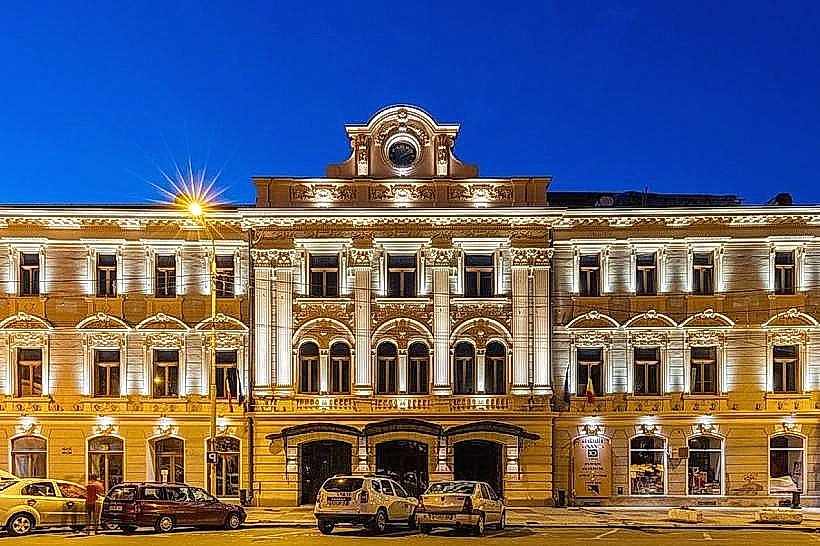
Stay near Trajan Square: Recommended for immediate access to historical architecture, the theater, and central administrative buildings.
Stay near Lacu Sărat (5 km from center): Recommended for travelers seeking a quiet resort atmosphere and access to therapeutic salt baths.
Local Cost Index
1 Espresso: 11 RON ($2.40)
1 Standard Lunch: 42 RON ($9.15)
1 Tram/Bus Ticket: 3 RON ($0.65)
Nearby Day Trips
Galați (Neighboring Port City): 20 km (approx. 25 minutes)
Lacu Sărat (Salt Lake Resort): 5 km
Small Island of Brăila Natural Park: Accessible by ferry from the promenade
Facts & Legends
A verified historical oddity is that the Church of the Holy Archangels Michael and Gabriel is the only Orthodox church in Romania without domes, as it was converted from an Ottoman mosque built during the 17th century. An urban legend persists regarding a network of deep "Ottoman cellars" (hrube) beneath the old center, which were allegedly used for secret ammunition storage and are rumored to connect several historical buildings directly to the Danube riverbank.