Information
City: BristolCountry: United Kingdom
Continent: Europe
Bristol, United Kingdom, Europe
Bristol is a major city and unitary authority in South West England, situated on the River Avon. It is a center for aerospace, creative media, and marine technology, recognized as the "birthplace of the jet engine."
Visual Characteristics
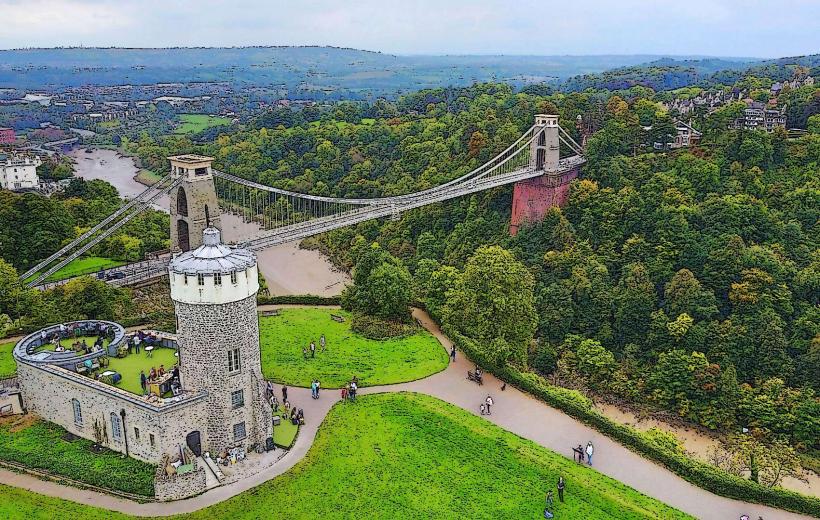
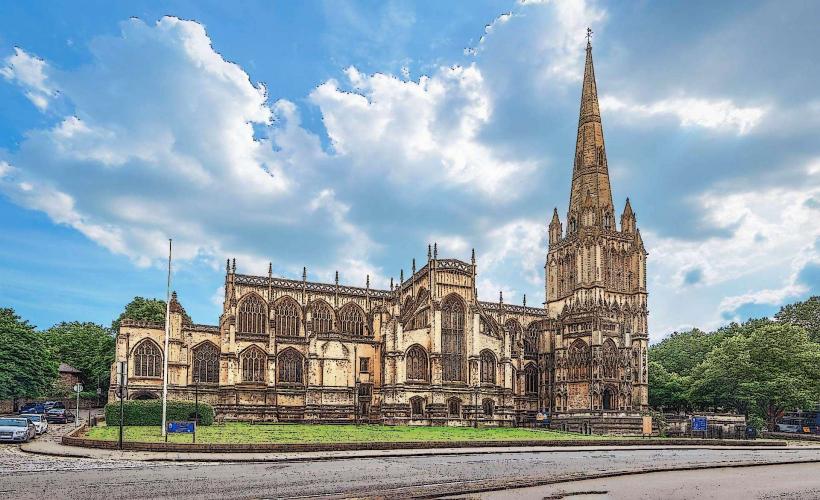
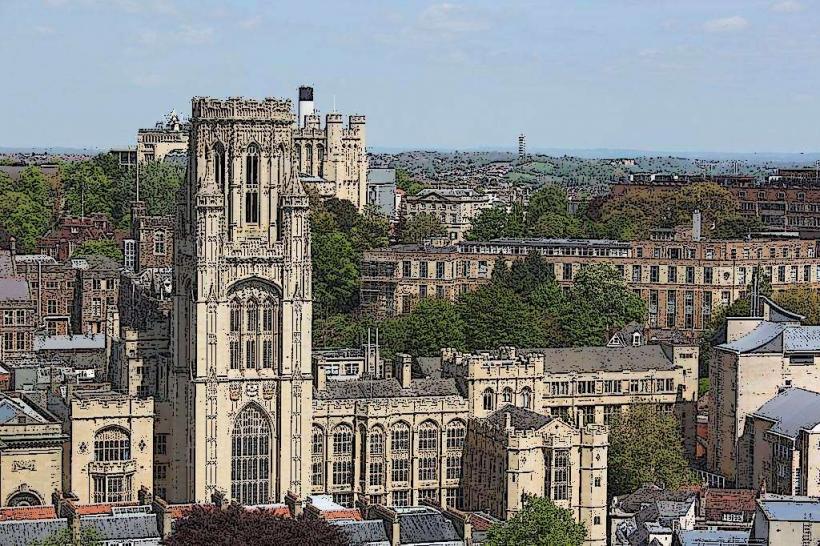
The urban landscape is defined by dramatic changes in elevation and colorful terraced housing. The Clifton Suspension Bridge, designed by Isambard Kingdom Brunel, is the primary visual anchor, spanning the Avon Gorge. The architecture is a high-density mix of medieval masonry, red-brick industrial warehouses in the Harbourside, and Brutalist post-war structures. The skyline features the Gothic St Mary Redcliffe church and the modern Cabot Circus complex.
Location & Access Logistics
Bristol is located 190 kilometers west of London and 70 kilometers east of Cardiff. It is served by Bristol Airport (BRS), 13 kilometers southwest. Bristol Temple Meads is the primary rail hub, providing high-speed GWR links to London Paddington (1 hour 20 minutes) and regional services. The city has an extensive bus network (First Bus) and the Bristol Ferry Boat service for harbor transit. Vehicle access is via the M4 and M5 motorways; the city operates a Clean Air Zone (CAZ) in the core. Parking is concentrated in the Cabot Circus and Trenchard Street lots.
Historical & Ecological Origin
Granted a Royal Charter in 1155, Bristol became a leading port for transatlantic trade and exploration (John Cabot's voyage to North America in 1497). Geologically, the city sits on a complex mix of limestone, sandstone, and coal measures. The Avon Gorge was carved by the River Avon through a limestone ridge. The "Floating Harbour," completed in 1809, was an engineering solution to the river's high tidal range, creating an 80-acre non-tidal basin that remains a central ecological feature.
Key Highlights & Activities
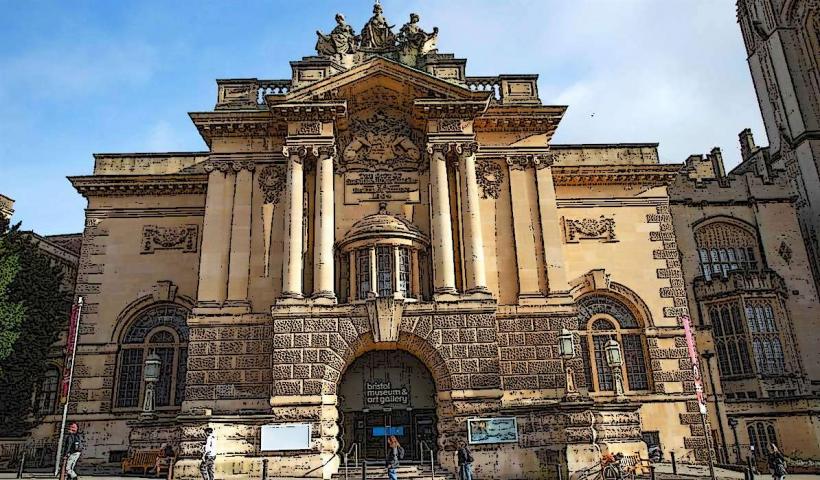
The SS Great Britain, the first iron-hulled steamship, is permanently docked in its original dry dock as a museum. The M Shed documents the social and industrial history of the city. Clifton Village and the Downs provide high-elevation green spaces. The Bristol Museum & Art Gallery houses significant natural history and archaeological collections. Street art is a primary cultural draw, as Bristol is the home of Banksy; high-density murals are concentrated in the Stokes Croft and Bedminster districts.
Infrastructure & Amenities
The city center is equipped with public restrooms in the Cabot Circus shopping center and at the Harbourside. 5G cellular coverage is universal. The "Tier" e-bike and e-scooter sharing system is the primary micro-mobility provider. Drinking water fountains are located along the Harbourside and at College Green. Retail is concentrated in the Broadmead and Cabot Circus districts. Dining is densest in the St Nicholas Market and along the Gloucester Road, known for independent eateries.
Best Time to Visit
The climate is temperate oceanic, often milder than eastern England. May through September is optimal for outdoor festivals and harbor activities, with temperatures between 18°C and 23°C. The Bristol International Balloon Fiesta in August is the city’s largest cultural event. Photography of the Clifton Suspension Bridge is best at sunset from the Clifton Observatory.
Facts & Legends
Bristol was the first UK city to be named European Green Capital (2015). A local historical oddity: the "Bristol Pound" was one of the world's most successful local currencies until it transitioned to digital. Legend of the "Giant Goram" and "Vincent" holds that the Avon Gorge was created by two giants competing for the love of a woman; Goram accidentally cut the gorge while digging a channel for the river.
Nearby Landmarks
Clifton Suspension Bridge: 2.0km West of center
SS Great Britain: 1.0km Southwest of center
St Nicholas Market: Central hub
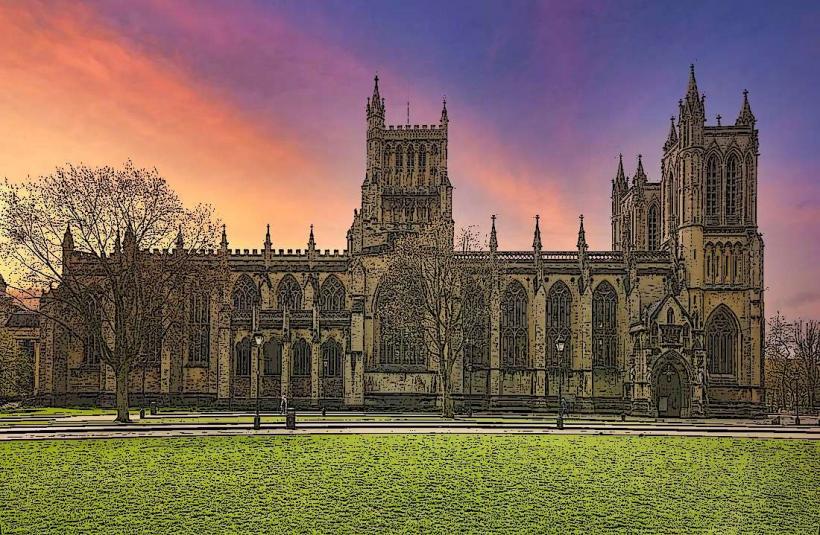
Bristol Cathedral: 0.4km West of center
Cabot Circus: 0.5km Northeast of center