Information
City: CardiffCountry: United Kingdom
Continent: Europe
Cardiff, United Kingdom, Europe
Cardiff is the capital of Wales, situated on the south coast of the country on the Bristol Channel. It is the primary political, commercial, and cultural center of Wales and has transformed from a 19th-century industrial coal port into a modern service-sector hub.
Visual Characteristics
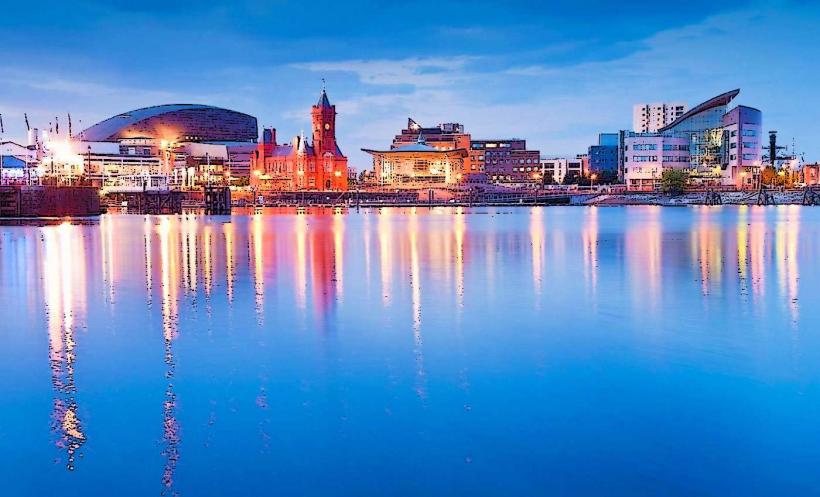
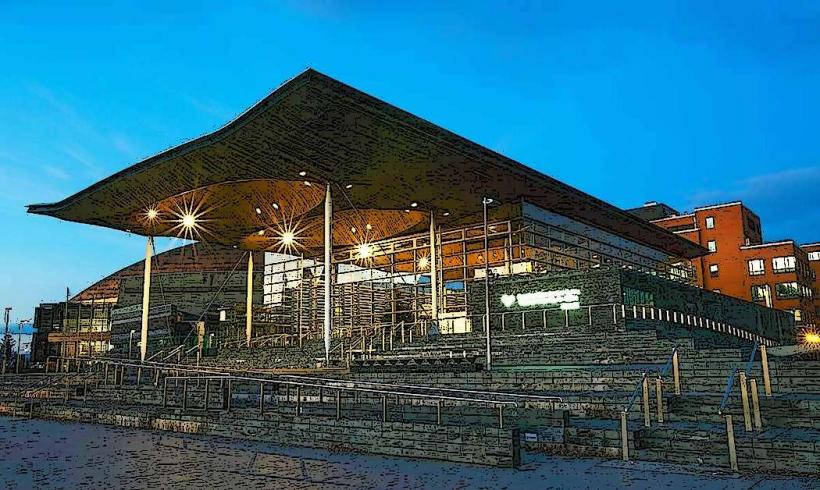
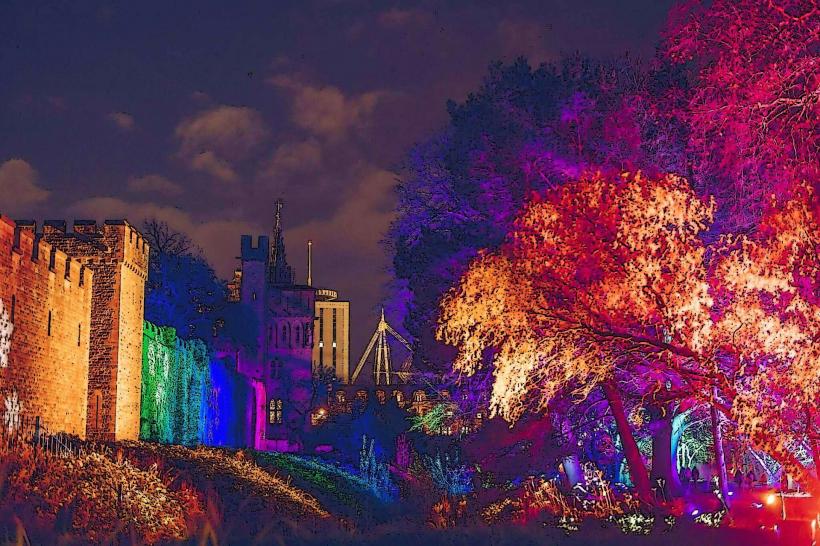
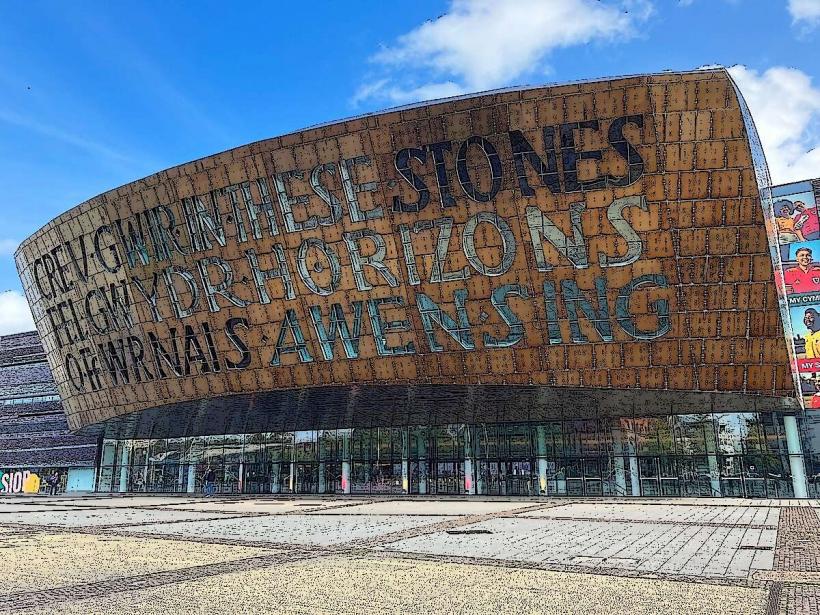
The urban landscape is defined by the contrast between the historic city center, dominated by the stone fortifications of Cardiff Castle, and the modern glass-and-steel development of Cardiff Bay. A key visual anchor is the Wales Millennium Centre, featuring a copper-colored facade and bilingual Celtic lettering. The architecture in the center is characterized by high-density Edwardian and Victorian shopping arcades, alongside the Brutalist and modern structures of the Principality Stadium.
Location & Access Logistics
Cardiff is located 240 kilometers west of London and 70 kilometers west of Bristol. It is served by Cardiff Airport (CWL), 19 kilometers west. Cardiff Central is the primary rail terminal, providing high-speed GWR links to London Paddington (1 hour 50 minutes) and regional services across the South Wales Main Line. The city utilizes a "PlusBus" integrated transit system. Vehicle access is via the M4 motorway; parking is concentrated in multi-story lots at St David’s Dewi Sant and the North Road.
Historical & Ecological Origin
Founded as a Roman fort on the River Taff, Cardiff grew exponentially in the 19th century as the Bute family developed the docks to export Welsh coal. Geologically, it sits on the coastal plain of the Severn Estuary. The city’s ecology was fundamentally altered by the construction of the Cardiff Bay Barrage (completed 1999), which converted a tidal salt marsh into a 200-hectare freshwater lake, creating a new habitat for waterfowl and facilitating waterfront redevelopment.
Key Highlights & Activities
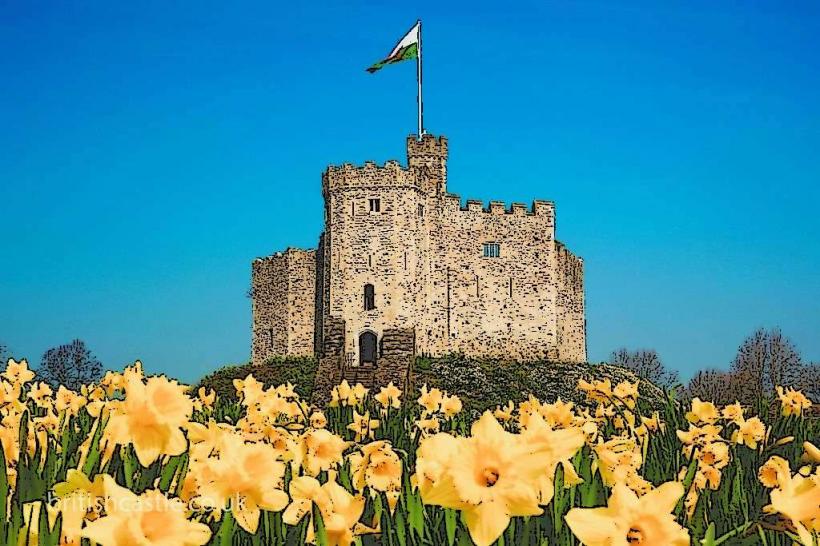
Cardiff Castle features a mix of Roman foundations, a Norman keep, and opulent Gothic Revival interiors. The National Museum Cardiff houses globally significant Impressionist art and natural history collections. The Principality Stadium is a primary destination for international rugby and football. Cardiff Bay offers boat tours and the Senedd (Welsh Parliament) building. The St Fagans National Museum of History, an open-air museum, provides high-density reconstructions of Welsh life across different eras.
Infrastructure & Amenities
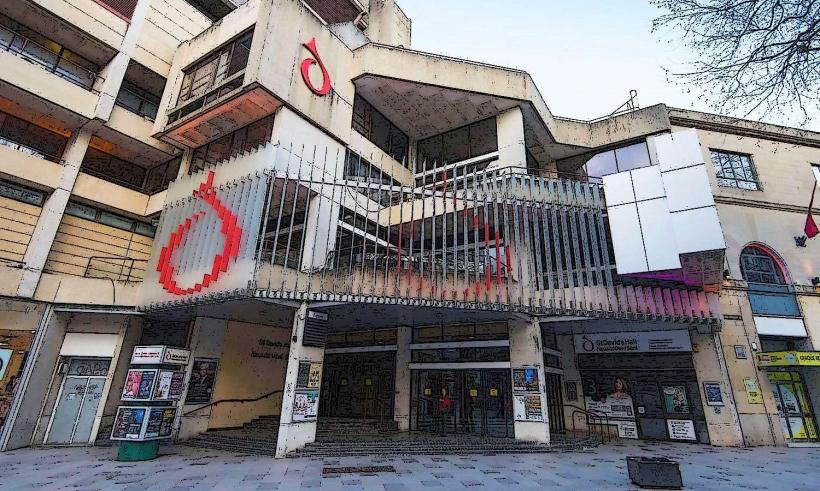
The city center is heavily pedestrianized and equipped with public restrooms in the St David’s shopping center and Queen Street. 5G cellular coverage is universal. The "Nextbike" sharing system provides automated bicycle rentals. Drinking water fountains are available in Bute Park and the city center. Retail is concentrated in the St David’s Dewi Sant complex and the historic arcades (e.g., Castle Arcade, Royal Arcade). Dining is high-density on St Mary Street and in the Pontcanna district.
Best Time to Visit
The climate is temperate oceanic, frequently influenced by Atlantic weather systems. May through September is optimal for outdoor events and visiting Bute Park, with temperatures between $17^{\circ}\text{C}$ and $22^{\circ}\text{C}$. Match days during the Six Nations Championship (February/March) result in extreme pedestrian density. Photography of the Millennium Centre is best at twilight when the facade is illuminated.
Facts & Legends
Cardiff has more green space per person than any other UK core city. A local historical oddity: the "Animal Wall" outside Cardiff Castle features stone carvings of exotic animals that have become a city mascot. Legend holds that the castle is haunted by the 2nd Marquess of Bute; sightings are frequently reported in the library and the nursery suite.
Nearby Landmarks
Cardiff Castle: Central hub (North end of High St)
Principality Stadium: 0.3km West of center
Wales Millennium Centre: 1.8km South (Cardiff Bay)
National Museum Cardiff: 0.5km Northeast of center
St David’s Dewi Sant: Main retail hub