Information
City: CotonouCountry: Benin
Continent: Africa
Cotonou, Benin, Africa
Cotonou serves as the primary economic hub and de facto administrative capital of Benin, housing the presidency and most government ministries despite Porto-Novo being the official capital. It is located on the coastal strip between Lake Nokoué and the Atlantic Ocean.
Historical Timeline
Cotonou originated as a small fishing village ("Kutonou") under the Kingdom of Dahomey. It was formally founded around 1830 by King Ghezo and grew as a center for the palm oil and cotton trades. Following a treaty with King Glele in 1878, the territory was ceded to France. The construction of the deep-water port in 1908 transformed the settlement into the nation’s dominant urban center.
Demographics & Population
As of 2026, the population of Cotonou's metro area is estimated at approximately 780,000, while the larger urban agglomeration (including adjacent Abomey-Calavi) exceeds 2.5 million. The city is a major melting pot of ethnic groups, including the Fon, Adja, and Yoruba, as well as a significant community of European and Lebanese expatriates.
Urban Layout & Key Districts
Haie Vive: The upscale residential and commercial district popular with expatriates, containing numerous restaurants, boutiques, and the Fondation Zinsou.
Zongo: A central, multicultural neighborhood (Hausa for "foreigner") known for its vibrant street life and the Grande Mosquée.
Cadjehoun: Home to the international airport and several government administrative buildings.
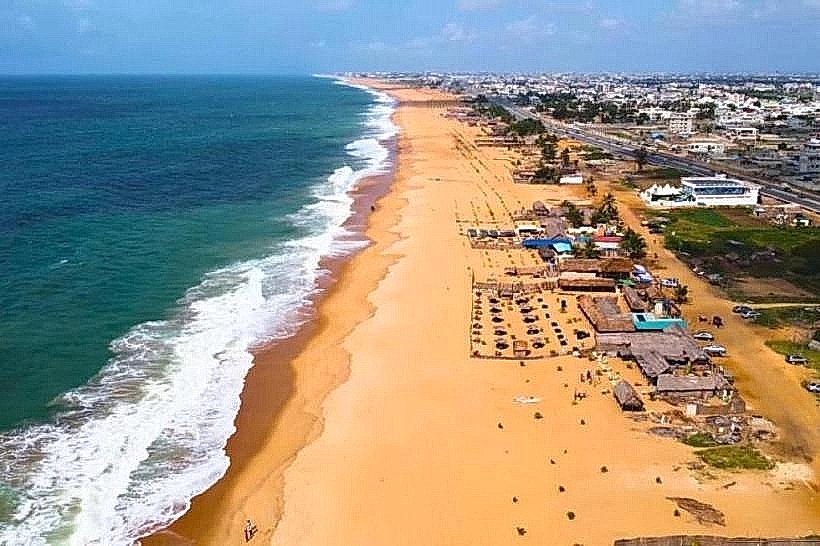
Fidjrossè: A coastal district famous for its beaches and nightlife.
Ganvié: Often called the "Venice of Africa," this stilt village is located on Lake Nokoué, just north of the city proper.
Top City Landmarks
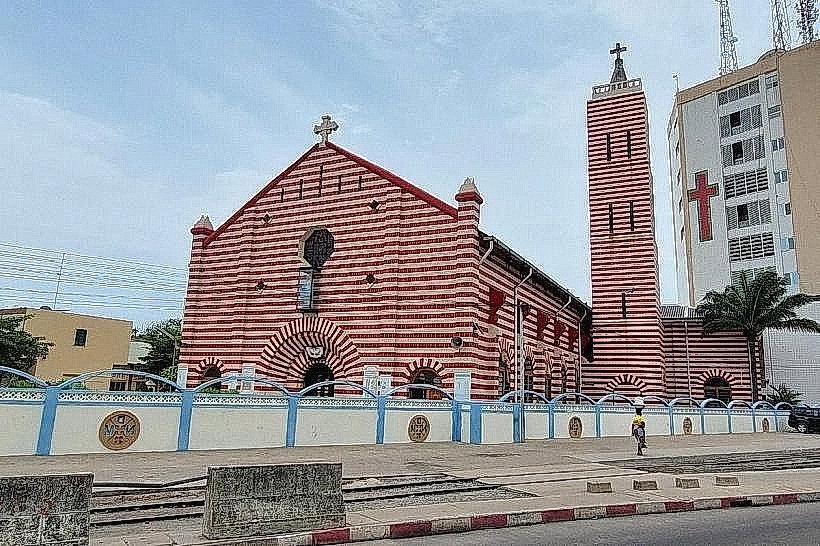
Cotonou Cathedral (Notre Dame des Apôtres): Noted for its distinct burgundy and white striped tile facade.
Amazon Statue: A 30-meter bronze monument unveiled in 2022 to honor the legendary Dahomey Amazons.
Dantokpa Market: One of the largest open-air markets in West Africa, covering over 20 hectares.
Fondation Zinsou: A premier museum showcasing contemporary African art.
Etoile Rouge (Red Star): A massive roundabout and monument serving as a relic of Benin's Marxist-Leninist past.
Place des Martyrs: A North Korean-built monument dedicated to those who resisted colonialism and mercenary attacks.
Transportation Network
Movement within Cotonou is dominated by Zémidjans (motorcycle taxis), colloquially known as "Zems." They are easily identified by their drivers' yellow shirts.
Air: Cotonou Cadjehoun International Airport (COO) is the primary gateway to the country.
Port: The Autonomous Port of Cotonou is a critical transit point for landlocked neighbors like Niger and Burkina Faso.
Rail: The Benin-Niger railway connects Cotonou to Parakou in the north.
Road: The city is a major stop on the Trans-African Highway coastal route.
Safety & "Red Zones"
Travelers should exercise a high degree of caution.
Civil Unrest: Following a thwarted coup in December 2025 and January 2026 elections, the political environment remains sensitive. Avoid demonstrations and large gatherings.
Crime: Violent crime is common, particularly at night. Avoid walking alone on beaches or in the vicinity of Dantokpa Market after dark.
Northern Borders: Most foreign offices advise against all travel to Benin's northern borders (Atakora and Alibori departments) due to the threat of terrorism and kidnapping.
Digital & Financial Infrastructure
Internet speeds in Cotonou typically range from 20–50 Mbps; 4G/LTE is standard, with 5G rollout continuing in commercial districts. The currency is the CFA Franc (XOF).
Exchange Rate: Approximately 1 USD = 552 XOF (January 2026).
Payments: Cash is king in markets. Mobile money (MTN/Moov) is ubiquitous for local transactions. High-end hotels and restaurants in Haie Vive accept international credit cards.
Climate & Air Quality
Cotonou has a tropical wet and dry climate with two rainy seasons (April–July and September–October). In January 2026, the city is affected by the Harmattan, a dry, dusty wind from the Sahara that can significantly reduce visibility and air quality. Average temperatures hover around 30°C.
Culture & Social Norms
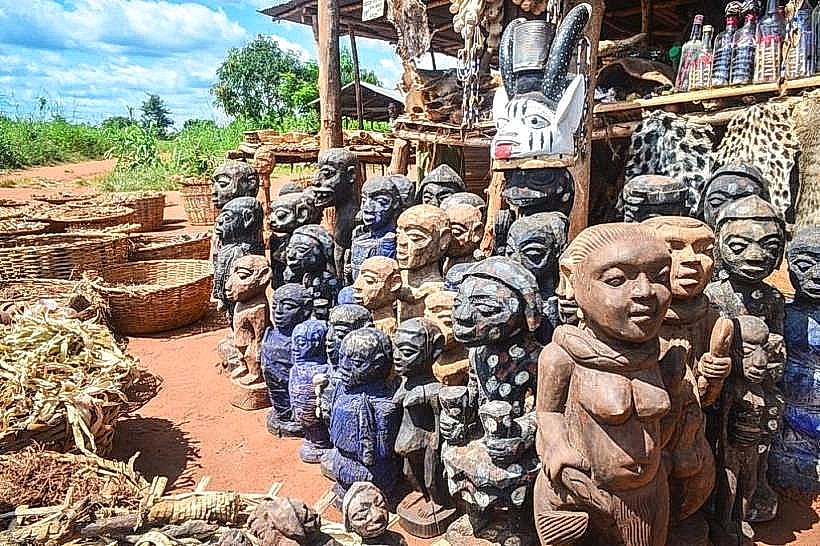
Benin is the birthplace of Voodoo, and while Cotonou is a modern metropolis, traditional beliefs remain deeply integrated into daily life. Modest dress is generally preferred, especially when visiting religious sites or traditional neighborhoods. French is the official language, though Fon is the most widely spoken local tongue.
Local Cost Index
1 Espresso: 1,200 XOF ($2.15)
1 Standard Lunch: 4,500 XOF ($8.15)
1 Short "Zem" Ride: 300–500 XOF ($0.55–$0.90)
1 Liter of Petrol: 650 XOF ($1.18)
Facts & Legends
Legend says Cotonou's name comes from the Fon phrase "Ku-To-Nu," meaning "at the mouth of the river of death," originally referring to the lagoon's treacherous waters. Despite its industrial nature, the city is famous for its "Zero Carbon" urban forestry efforts in recent years, attempting to reclaim land from coastal erosion that has moved the shoreline inland by 400 meters over the last 40 years.