Information
City: DijonCountry: France
Continent: Europe
Dijon, France, Europe
Dijon is the capital of the Côte-d'Or department and the Bourgogne-Franche-Comté region in eastern France. Historically, it was the seat of the powerful Dukes of Burgundy, serving as a major European center of art, science, and wealth during the late Middle Ages.
Visual Characteristics
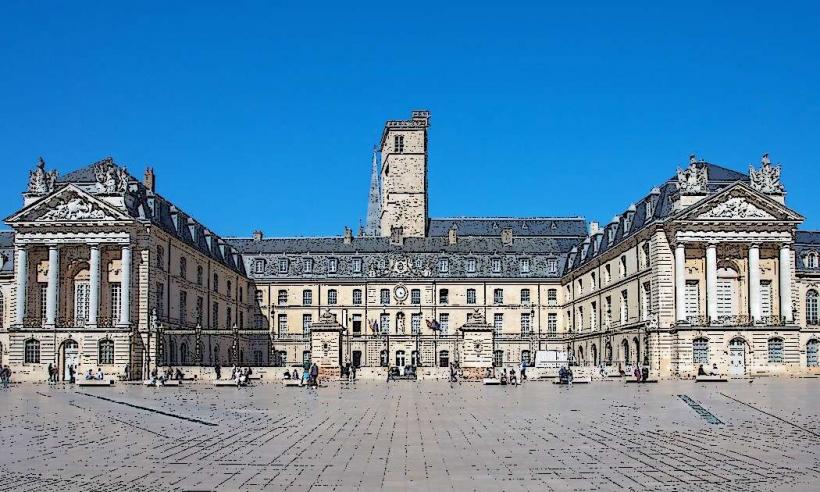
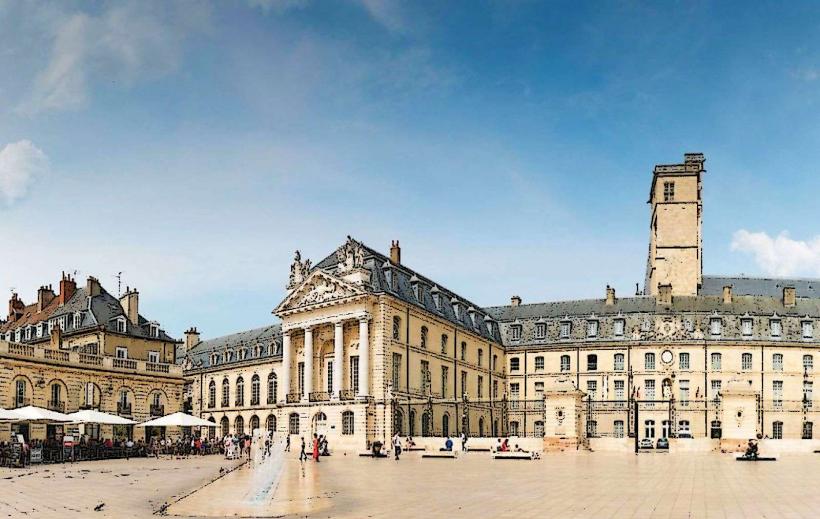
The city center is defined by "Toits Bourguignons"-roofs covered in glazed terracotta tiles arranged in geometric patterns of green, yellow, black, and red. The architecture is a dense mix of Romanesque, Gothic, and Renaissance styles, utilizing light-colored Burgundian limestone. The Palais des Ducs features a sweeping semicircular plaza (Place de la Libération), while the surrounding streets contain over 100 private mansions (hôtels particuliers) with ornate stone courtyards.
Location & Access Logistics
Dijon is located 310 kilometers southeast of Paris and 190 kilometers north of Lyon. It is a major rail junction; the Gare de Dijon-Ville provides TGV connections to Paris in 1 hour and 35 minutes and to Zurich in 2 hours and 30 minutes. The Divia transit network operates two tramway lines (T1 and T2) and an extensive bus system. The city is the northern gateway to the "Route des Grands Crus" vineyard corridor.
Historical & Ecological Origin
Founded as a Roman station (Divio) on the road from Lyon to Mainz, the city achieved its peak influence under the Valois Dukes of Burgundy (1363–1477). Geologically, it sits on the transition zone between the Paris Basin and the Saône Plain, at the foot of the Côte d'Or limestone escarpment. The Ouche River and the Canal de Bourgogne intersect the southern and western portions of the city, facilitating historic trade in timber and wine.
Key Highlights & Activities
The "Parcours de la Chouette" (Owl Trail) is a pedestrian route marked by brass plaques in the pavement leading to 22 historic sites. Visitors can climb the 46-meter Tour Philippe le Bon for a 360-degree view of the city. The Musée des Beaux-Arts, located inside the ducal palace, houses the monumental marble tombs of the Dukes of Burgundy. Exploring the medieval Rue des Forges allows for observation of high-Gothic civil architecture.
Infrastructure & Amenities
The historic core is largely pedestrianized and equipped with public restrooms near Place Grangier and the central market. 5G cellular coverage is universal. The "DiviaVélodi" bike-sharing system provides short-term rentals at numerous automated stations. The Halles Centrales, a 19th-century metal and glass market designed with influence from Gustave Eiffel, is the primary hub for regional products including mustard, gingerbread, and blackcurrant liqueur (crème de cassis).
Best Time to Visit
The climate is semi-continental, with hot summers and cold winters. May through September is optimal for weather, with temperatures between 18°C and 26°C. Photography of the glazed-tile roofs is best from the Tour Philippe le Bon in the mid-morning. The "Foire Gastronomique," one of the largest food fairs in France, occurs annually in November and attracts high-density crowds.
Facts & Legends
Dijon is the birthplace of Gustave Eiffel, the engineer of the Eiffel Tower. A local historical oddity: while the city is famous for Dijon mustard, most of the mustard seeds are now imported from Canada, though the traditional manufacturing process remains protected. Legend holds that rubbing the stone owl (La Chouette) carved into the north side of Notre-Dame Church with your left hand while making a wish will bring good luck.
Nearby Landmarks
Palais des Ducs et des États de Bourgogne: Central hub
Church of Notre-Dame: 0.1km North of Palace
Cathédrale Saint-Bénigne: 0.5km West
Musée des Beaux-Arts: Inside the Palace
Jardin des Sciences (Botanic Garden): 1.0km West