Information
City: EsquipulasCountry: Guatemala
Continent: North America
Esquipulas, Guatemala, North America
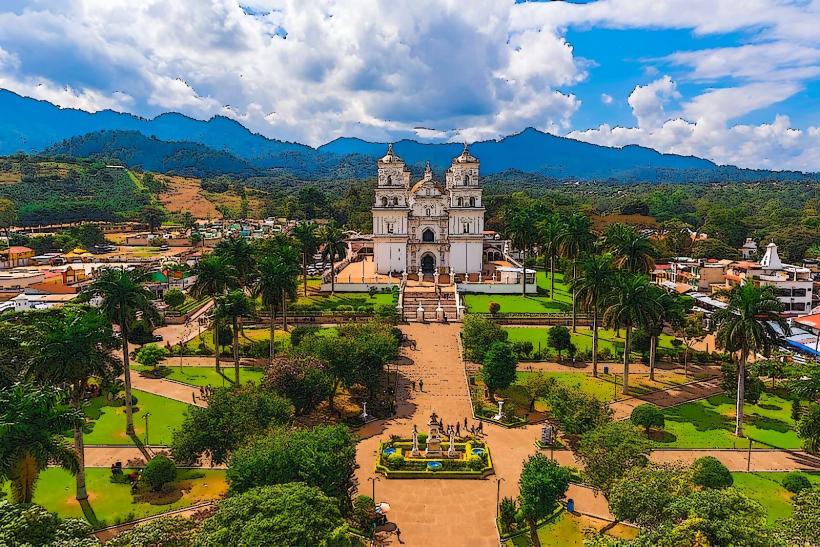
Esquipulas is the religious capital of Central America and the most significant pilgrimage site in the region. It is situated in the Chiquimula Department near the "Trifinio" border where Guatemala, Honduras, and El Salvador meet.
Historical Timeline
The city was founded as Santiago de Esquipulas in 1525. Its primary era of governance and international prominence began in 1759 with the completion of the Basilica to house the "Black Christ," a 1594 cedar carving by Quirio Cataño. A globally significant political event occurred here in 1986 and 1987, when the city hosted the Esquipulas Peace Agreement summits, which provided the framework for ending civil wars across Central America. The 1759 consecration of the Basilica is the primary event that transitioned the town from a rural outpost to a regional spiritual hub.
Demographics & Population
The population of the municipality is approximately 60,000, with the urban core housing roughly 32,000. The demographics are predominantly Mestizo (94%) and Ch'orti' Maya (4%). The median age of the population is 23.6 years.
Urban Layout & Key Districts
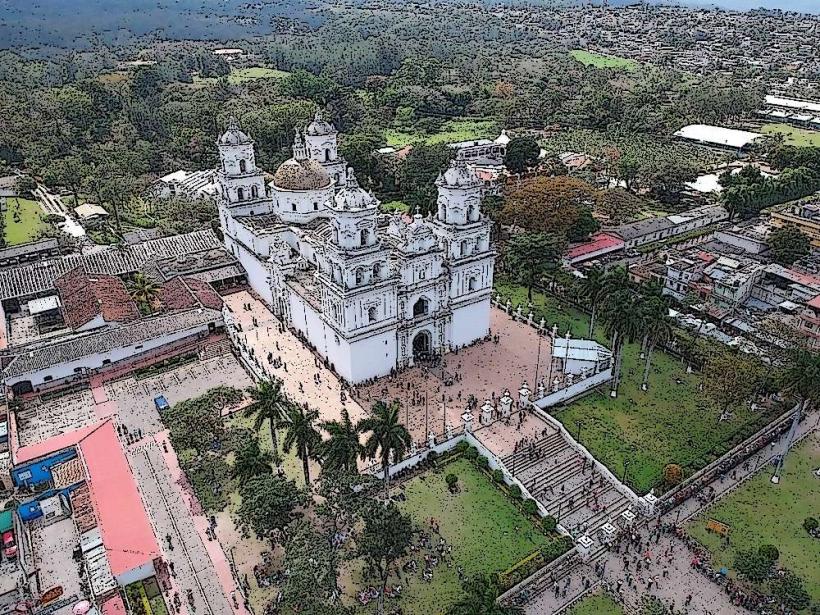
The city is organized around a central north-south axis leading to the Basilica.
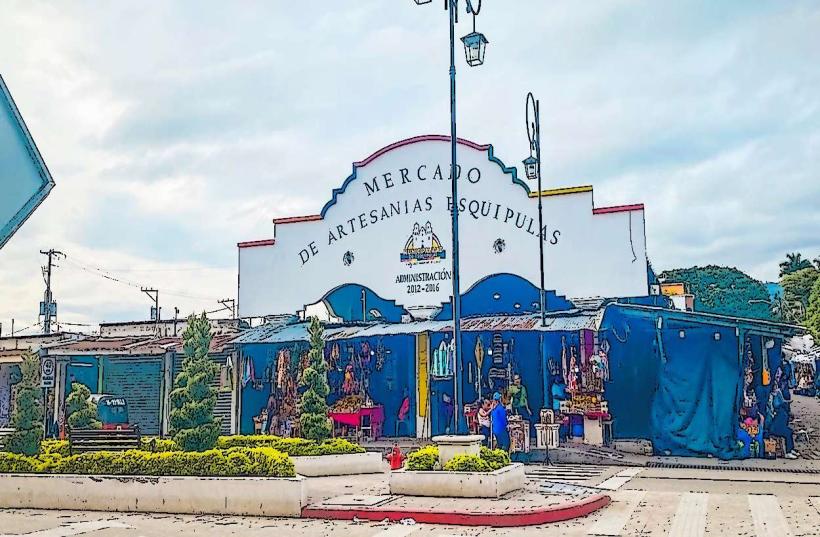
The Basilica District: The southern end of the city, containing the sanctuary and the "Calle Real" shopping area.
Zona 1 (Centro): The administrative and commercial center located north of the Basilica.
Barrio San Sebastián: One of the oldest residential sectors with colonial-style structures.
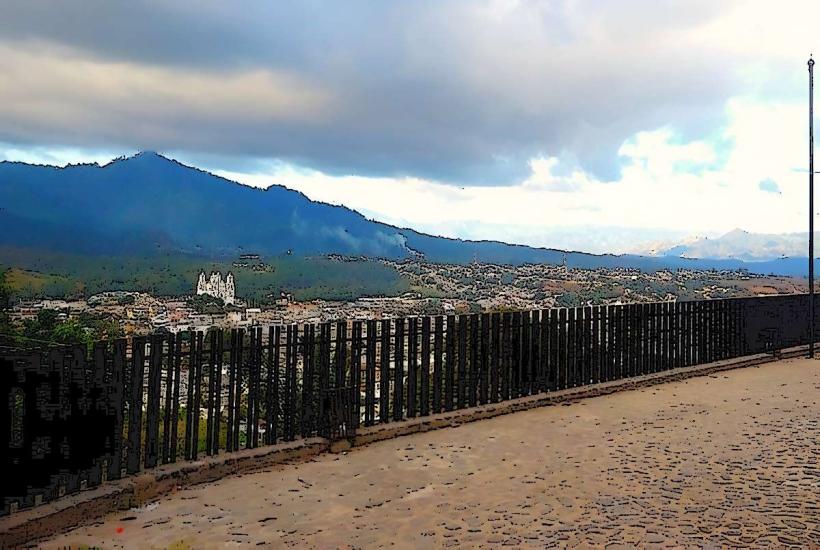
The Mirador: An elevated area to the south providing panoramic views of the valley.
Top City Landmarks
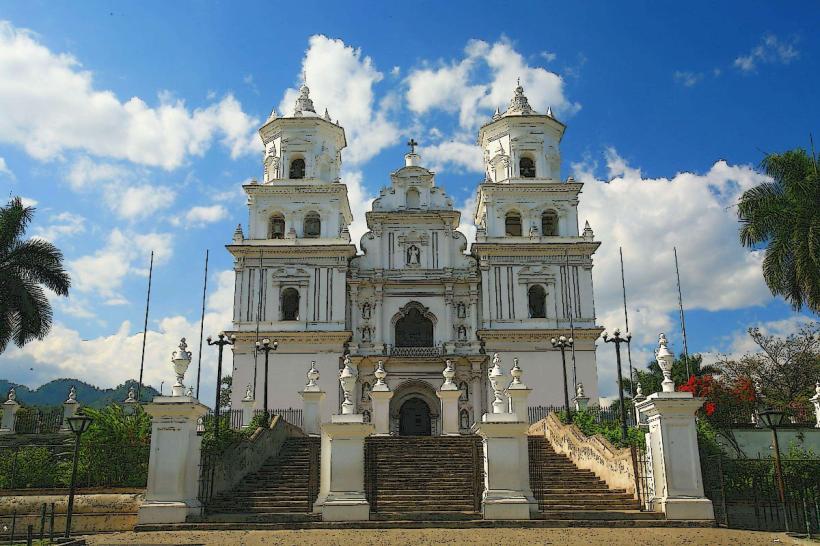
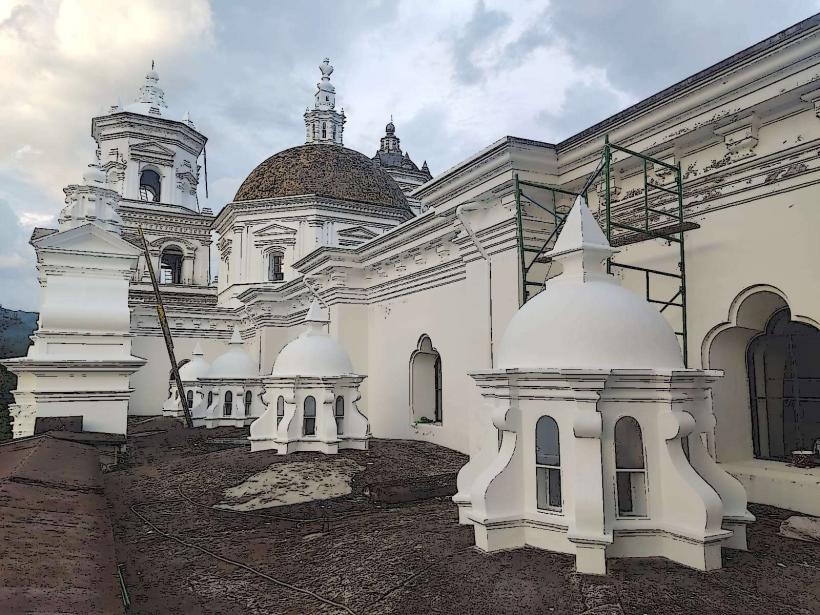
Basilica of Esquipulas: A massive white Baroque sanctuary featuring four bell towers.
The Black Christ (Cristo Negro): The revered 16th-century statue located within the Basilica.
Stone of the Conquest (Piedra de la Conquista): A historic marker related to the Spanish arrival.
The Aqueduct: Colonial-era ruins of the city's water system.
Cueva de las Minas: A series of caves and former silver mines located south of the city.
Transportation Network
Movement within the town is conducted via tuk-tuks and private taxis. There is no metro or city bus system. Inter-city transit is dominated by "Rutas Orientales" buses connecting to Guatemala City and Chiquimula. Uber is non-functional. Traffic density is extreme during the "Novena" (January 6–15) and Holy Week, as hundreds of thousands of pilgrims arrive by bus and private vehicle.
Safety & "Red Zones"
The general safety level is high within the central pilgrimage area. There are no designated "red zones," but visitors should avoid the rural border roads toward Honduras and El Salvador after dark. Common scams involve "fake miracle relics" sold on the streets and aggressive panhandling near the Basilica gates.
Digital & Financial Infrastructure
Average internet speed is 35 Mbps. Main mobile carriers are Tigo and Claro. Card acceptance is moderate in large hotels and restaurants, but cash (Quetzales) is mandatory for church offerings and market purchases. ATMs (5B and BI) are located in the commercial center and near the main hotels.
Climate & Air Quality
The climate is subtropical. Temperatures range from 16°C at night to 30°C during the day. Air quality is generally high, though heavy diesel exhaust from pilgrim buses can create smog during major festivals. The primary weather risk involves seasonal landslides on the CA-10 highway during the rainy season (June–October).
Culture & Social Norms
Tipping of 10% is standard in restaurants. Greetings are formal; "Buenas" is the standard verbal greeting. Strict Rule: Respectful behavior and modest dress (no shorts or sleeveless shirts) are required when entering the Basilica. Many pilgrims enter the church on their knees; do not obstruct their path. Public consumption of alcohol is discouraged near religious sites.
Accommodation Zones
Basilica Perimeter: Recommended for immediate access to the sanctuary and religious activities.
North Commercial Zone: Recommended for quieter stays and proximity to the main bus terminals.
Local Cost Index
1 Espresso: Q18.00 ($2.30)
1 Standard Lunch (Typical Plate): Q45.00 ($5.80)
1 Tuk-Tuk Trip: Q10.00 ($1.30)
Nearby Day Trips
The Trifinio Biosphere: 15 km (Tri-border nature reserve).
Chiquimula: 50 km (Departmental capital).
Copán Ruinas (Honduras): 100 km (2.5 hours via the El Florido border).
Metapán (El Salvador): 45 km (1 hour).
Facts & Legends
A verified historical oddity is that the "Black Christ" was originally made of light-colored cedar; centuries of smoke from millions of candles and incense (copal), along with the oils from pilgrims' hands, turned the wood to its iconic dark ebony color. A local legend says that the Cueva de las Minas was the site where the Christ statue was hidden during times of conflict, and that the cave walls still "sweat" holy water that can cure ailments. Residents also claim that those who make the pilgrimage with a pure heart will hear the Basilica bells ring in a specific tone reserved for "true believers."