Information
City: GatlinburgCountry: USA Tennessee
Continent: North America
Gatlinburg, USA Tennessee, North America
Gatlinburg is an independent city in Sevier County, situated at the entrance to the Great Smoky Mountains National Park. Known as the "Gateway to the Smokies," it is defined by its high-density mountain tourism, its status as a premier honeymoon and wedding destination, and its identity as a base camp for outdoor recreation in the most visited national park in the United States.
Historical Timeline
Inhabited by the Cherokee people for millennia. Primary governance eras include its early 19th-century settlement as White Oak Flats and its 1945 incorporation as a city. A critical historical event was the 1934 establishment of the Great Smoky Mountains National Park, which transitioned the town from a remote logging community into a global tourism hub. In 2016, the city was significantly impacted by the Great Smoky Mountains wildfires, a catastrophic event that led to a massive rebuilding effort and modern infrastructure upgrades.
Demographics & Population
The permanent population is approximately 3,700, though the city frequently hosts over 40,000 visitors per day. The demographics are White (85%), Hispanic or Latino (9%), and Black or African American (2%). The economy is almost exclusively driven by tourism, hospitality, and seasonal retail.
Urban Layout & Key Districts
Gatlinburg is geographically constrained by steep mountain terrain, resulting in a dense, linear layout.
The Strip (Parkway): The primary commercial artery, featuring miles of high-density walkable attractions, themed restaurants, and "moonshine" distilleries.
Great Smoky Mountains National Park Entrance: Located at the southern terminus of the Parkway, providing immediate access to the Sugarlands Visitor Center.
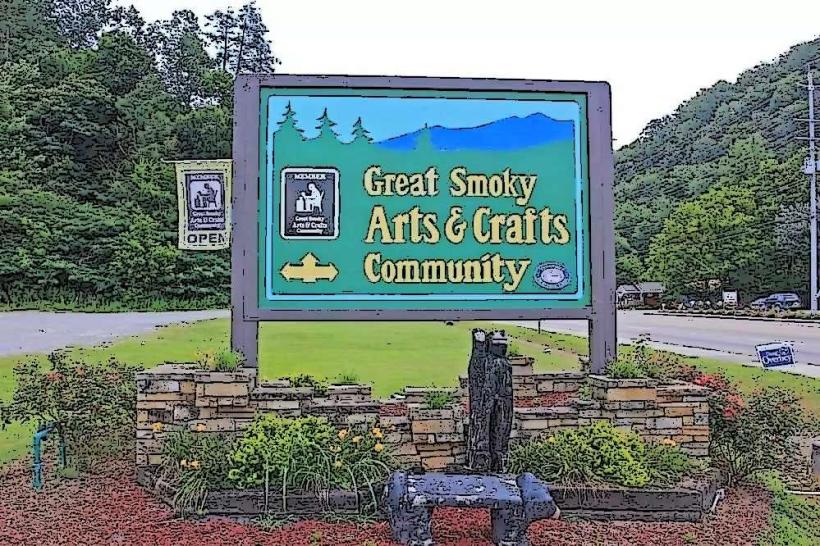
Glades Road (Arts & Crafts Community): An 13-km (8-mile) loop northeast of downtown featuring the largest independent organization of artisans in the U.S.
Ober Mountain: Accessible via aerial tramway; a mountain-top ski area and amusement park overlooking the city.
Top City Landmarks
Great Smoky Mountains National Park: Access point for over 800 miles of hiking trails and scenic overlooks.
Gatlinburg SkyPark: Home to the SkyBridge, the longest pedestrian cable bridge in North America.
Anakeesta: An outdoor family theme park featuring a canopy walk and mountain coaster accessible via chairlift.
Ripley’s Aquarium of the Smokies: Regularly ranked as one of the best aquariums in the U.S., featuring a 340-foot underwater tunnel.
Gatlinburg Space Needle: A 407-foot observation tower offering 360-degree views of the Smokies.
Ober Mountain Aerial Tramway: One of the largest aerial tramways in the world, connecting the Parkway to the mountain resort.
Transportation Network
Movement is heavily pedestrian-oriented along the Parkway. The city operates the Gatlinburg Trolley (free transit system) to mitigate extreme traffic. The city is accessed via US-441, which connects to Pigeon Forge and I-40. Commercial air service is via McGhee Tyson Airport (TYS) in Knoxville, 70 km west. Traffic density is extreme during summer, autumn leaf-peeping season, and winter holidays.
Safety & "Red Zones"
The general safety level is high. Property crime, specifically "theft from auto" at trailhead parking lots, is the primary issue. There are no designated "red zones." The primary hazards are environmental: Black bears are frequently active in residential and tourist areas; strict food-storage regulations are enforced. Wildfire risk remains a critical concern during drought conditions.
Digital & Financial Infrastructure
Internet speeds average 400+ Mbps with fiber availability in the downtown core via Charter Spectrum. Main mobile carriers are Verizon and AT&T, though signal strength is highly variable in the mountainous areas outside the Parkway. Card acceptance is universal. ATMs are concentrated along the Parkway.
Climate & Air Quality
Temperatures range from -3°C to 9°C in winter and 18°C to 30°C in summer. The "Smoky" appearance is caused by natural hydrocarbons released by the dense vegetation. Air quality is generally high but can be affected by regional ozone during peak summer humidity.
Culture & Social Norms
The standard tipping percentage is 20–25%. A friendly "Southern" greeting is the standard. Dress codes are "Mountain-Casual" (hiking gear and boots are standard in all establishments). The city is culturally defined by its Appalachian heritage, its world-famous distilleries, and its high-volume, "kitsch-commercial" entertainment style.
Accommodation Zones
The Parkway: Recommended for those seeking walkable access to attractions and nightlife.
Roaring Fork / Chalet Village: Recommended for mountain cabin rentals and seclusion.
Arts & Crafts Community: Recommended for quiet stays near local galleries.
Local Cost Index
1 Espresso: $4.50 (USD)
1 Moonshine Tasting: $5.00 (Standard nominal fee).
1 National Park Entry: $0.00 (Free, but a $5.00 Daily Parking Tag is required for stops >15 mins).
Nearby Day Trips
Pigeon Forge: (10 km north; home to Dollywood).
Clingmans Dome: (35 km south; highest point in Tennessee).
Cherokee, NC: (55 km south; via Newfound Gap Road).
Facts & Legends
Gatlinburg is the site of more weddings per year than any other city in the South except Las Vegas. Historically, it was a neutral territory during the Civil War due to its extreme isolation. A local legend involves the "Spearfinger," a Cherokee legend of a mountain-dwelling figure. Another legend concerns "The Lost Gold of the Smokies," rumored caches of colonial or Confederate gold hidden in the limestone caves surrounding the Roaring Fork motor nature trail.