Information
City: GeorgetownCountry: USA Delaware
Continent: North America
Georgetown, USA Delaware, North America
Georgetown is the county seat of Sussex County, positioned at the geographic center of Delaware’s southernmost county. It serves as a critical administrative and judicial hub, as well as a major center for the region's agricultural and poultry processing industries.
Historical Timeline
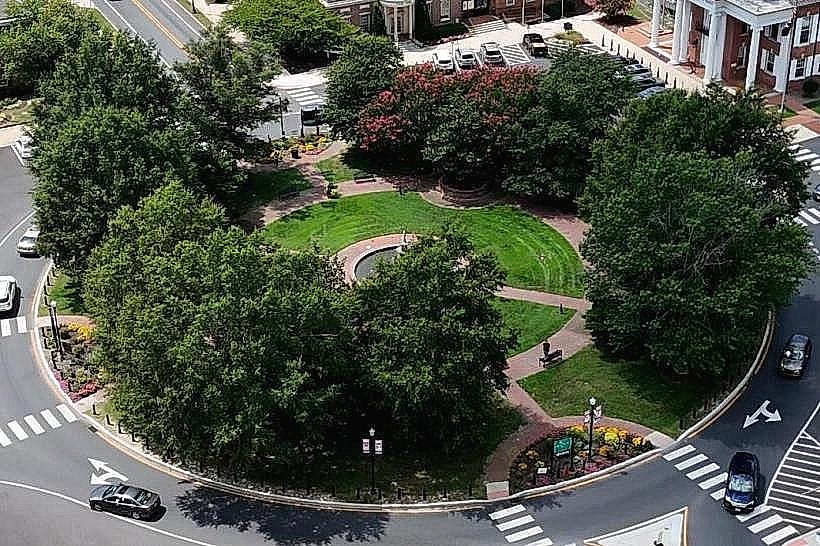
The town was founded in 1791 specifically to serve as the county seat, after residents complained that the former seat in Lewes was too difficult to reach from western parts of the county. It was laid out in a circular pattern around a central park. The primary event shaping the current urban form was the 19th-century decision to maintain "The Circle" as the focus of all legal and civic life, preventing the typical linear development seen in other regional towns.
Demographics & Population
The total population is approximately 7,571. Ethnic demographics are Hispanic or Latino (53.4%), White (26.8%), and Black or African American (14.2%). The median age is 30.6 years.
Urban Layout & Key Districts
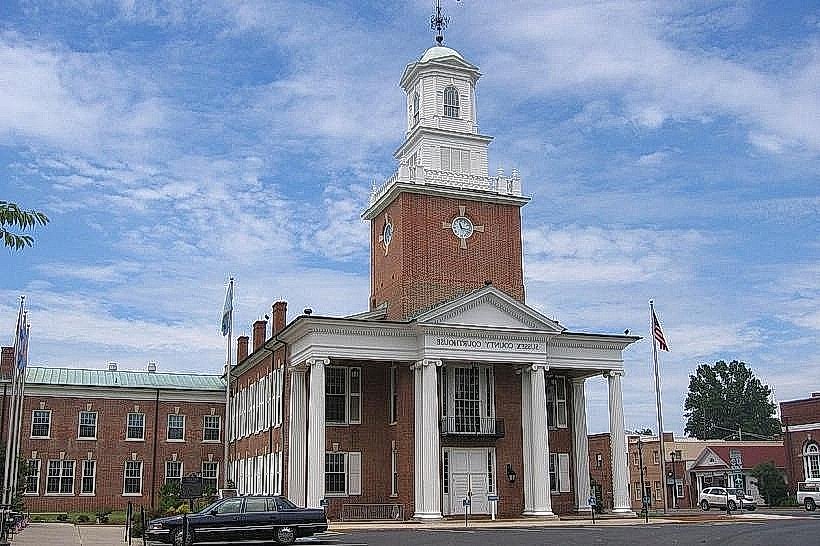
The town is designed as a circle with a one-mile radius. The Circle (Central) is the focal point, containing the courthouse and municipal buildings. The East Market Street corridor serves as the primary historic and commercial district, while the outlying areas are characterized by industrial zones (poultry processing) and residential subdivisions.
Top City Landmarks
The Circle (Historic District)
Marvel Museum (Historic carriages and buildings)
Treasures of the Sea Exhibit (at Delaware Tech)
Georgetown Air Services (Historic terminal)
Transportation Network
Movement is primarily conducted via private vehicle. DART First State provides bus service via Route 206 (connecting to Lewes/Rehoboth) and Route 303 (connecting to Dover). There are no metro or tram systems. Delaware Coastal Airport is located within town limits for private and charter aviation. Ride-sharing (Uber/Lyft) has moderate availability. Traffic density is moderate but peaks significantly during the biennial "Return Day" festival.
Safety & "Red Zones"
The general safety level is moderate. While the historic and administrative centers are safe during the day, standard urban vigilance is advised at night in residential areas south of Market Street due to higher rates of property crime compared to surrounding rural towns.
Digital & Financial Infrastructure
Average internet speed is 300 Mbps via Comcast Xfinity or Mediacom. Mobile coverage is comprehensive within the town circle but can be weaker in surrounding agricultural zones. Card acceptance is universal. Delaware has no state sales tax. Major banks and ATMs are clustered directly around The Circle.
Climate & Air Quality
Temperatures range from -2°C to 6°C in winter and 20°C to 30°C in summer. Air quality is fair; the presence of large-scale poultry processing facilities can occasionally impact local air quality and odors depending on wind direction. Weather risks include high winds and heavy precipitation from coastal storms.
Culture & Social Norms
Tipping of 18–20% is standard. The culture is a unique blend of formal legal professionalison (around the courthouse) and a vibrant, multicultural Hispanic community. Georgetown is famous for "Return Day," a 200-year-old tradition held two days after Election Day where winners and losers of political races parade together and literally "bury the hatchet" in a bed of sand.
Accommodation Zones
Stay near The Circle for access to historic landmarks and government offices. Modern hotel chains are located primarily along the US Route 113 corridor on the town's western edge.
Local Cost Index
1 Espresso: USD 4.00
1 Standard Lunch: USD 15.00
1 Bus Ticket: USD 2.00
Nearby Day Trips
Lewes, DE (25 km)
Rehoboth Beach, DE (30 km)
Trap Pond State Park (20 km)
Milton, DE (15 km)
Facts & Legends
Georgetown's layout is one of the few examples of a planned circular town in the United States. A local verified historical oddity is that the town was named after George Mitchell, the commissioner who led the effort to relocate the county seat. Local lore involves the "Judge's Ghost," a spectral figure said to haunt the old courthouse halls, occasionally rearranging legal documents left overnight.