Information
City: HuancayoCountry: Peru
Continent: South America
Huancayo, Peru, South America
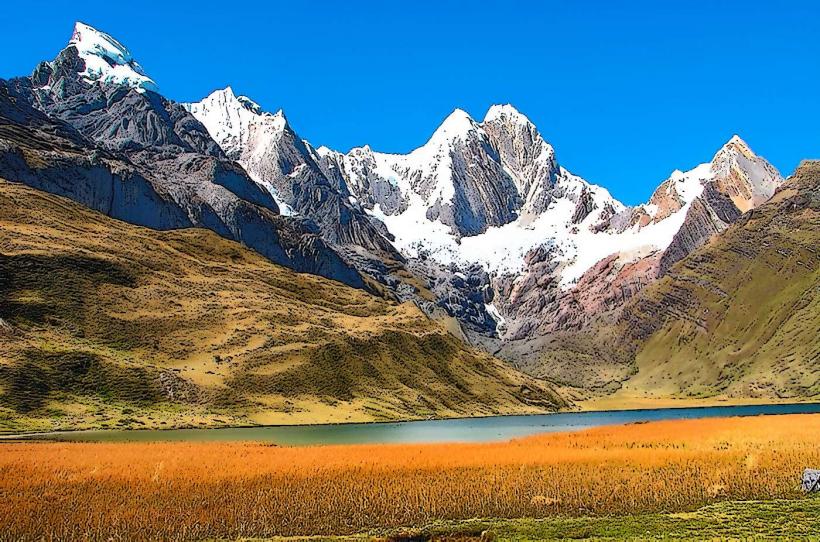
Huancayo is the capital of the Junín Region and the primary commercial hub of the central Peruvian Andes. Situated in the fertile Mantaro Valley at an elevation of 3,259 m, it is known as the "Unconquerable City" (Ciudad Incontrastable) and serves as a major center for Quechua culture, high-altitude agriculture, and traditional crafts.
Historical Timeline
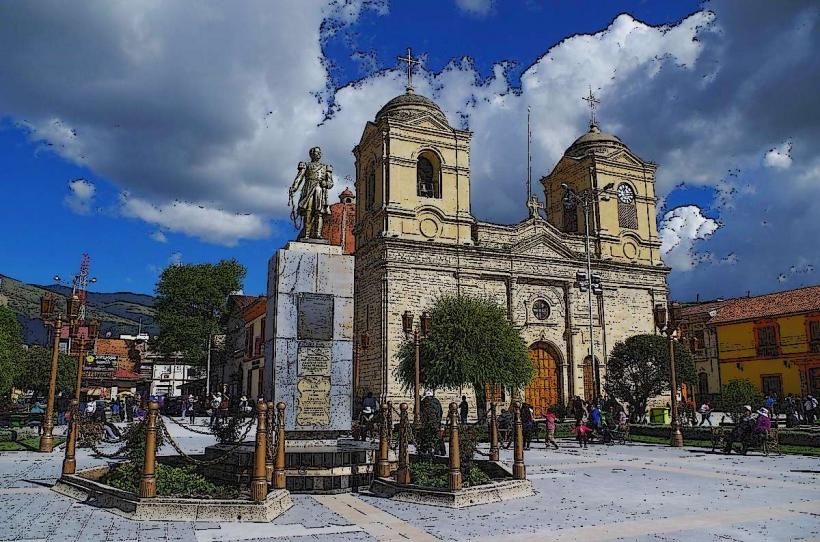
The region was the heartland of the Huanca people, a powerful ethnic group that fiercely resisted Inca expansion before being integrated into the empire. The Spanish city was founded in 1572 by Jerónimo de Silva. Huancayo played a critical role in the War of Independence and the War of the Pacific. In 1839, it served as the provisional capital of Peru, and in 1854, President Ramón Castilla signed the historic decree abolishing slavery in the city's main plaza.
Demographics & Population
The metropolitan population is approximately 550,000. The demographic is predominantly of Huanca-Quechua descent. The city is the economic engine of central Peru, driven by large-scale commerce, mining logistics, and the production of trout, artichokes, and dairy.
Urban Layout & Key Districts
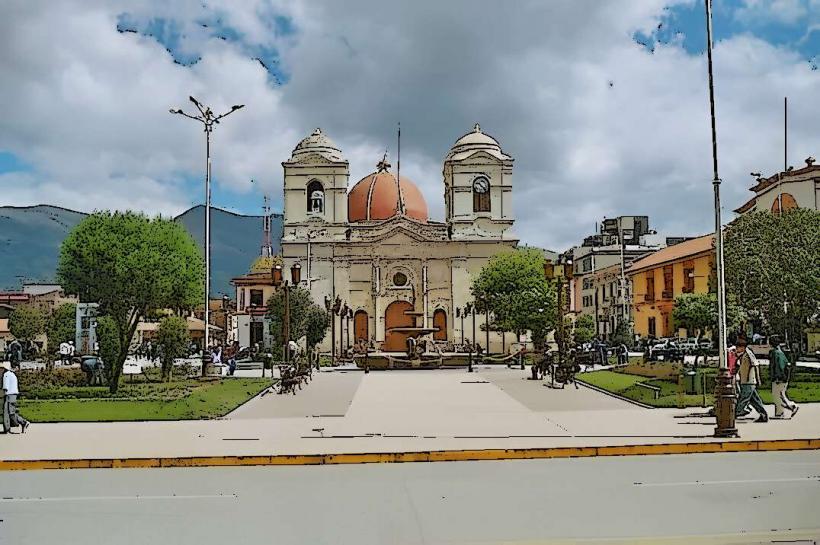
City Center: Anchored by the Plaza de la Constitución, the primary civic space named after the 1839 Constitution signed here.
El Tambo: The most populous and modern residential/commercial district, home to major universities and shopping malls.
Chilca: A traditional southern district known for its industrial heritage and artisanal workshops.
San Jerónimo de Tunán: A satellite town famous for its master silver filigree artisans.
Hualhuas: A neighboring village specializing in traditional weaving and textile production.
Top Landmarks
Plaza de la Constitución: The city's main square, featuring the Cathedral and a monument to the abolition of slavery.
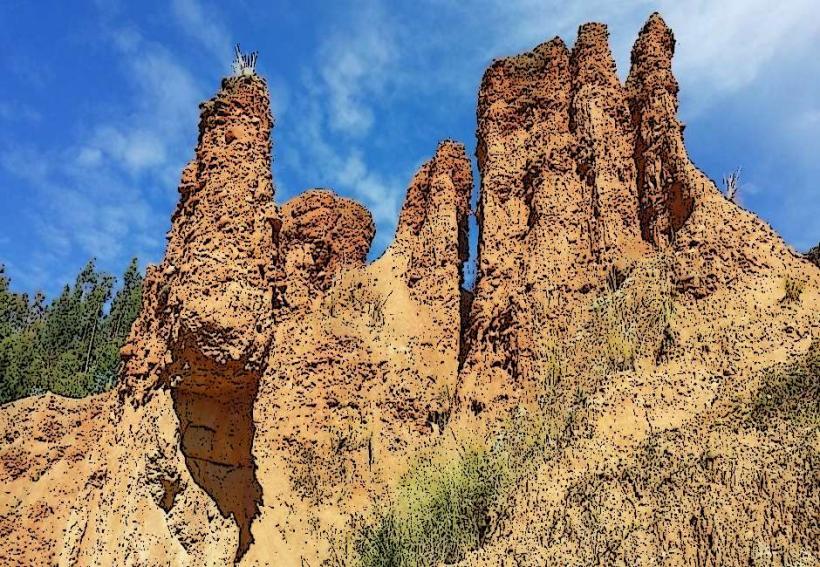
Torre Torre: Large geological formations of eroded red clay and sandstone towers located $2$ km from the center, offering panoramic views of the Mantaro Valley.
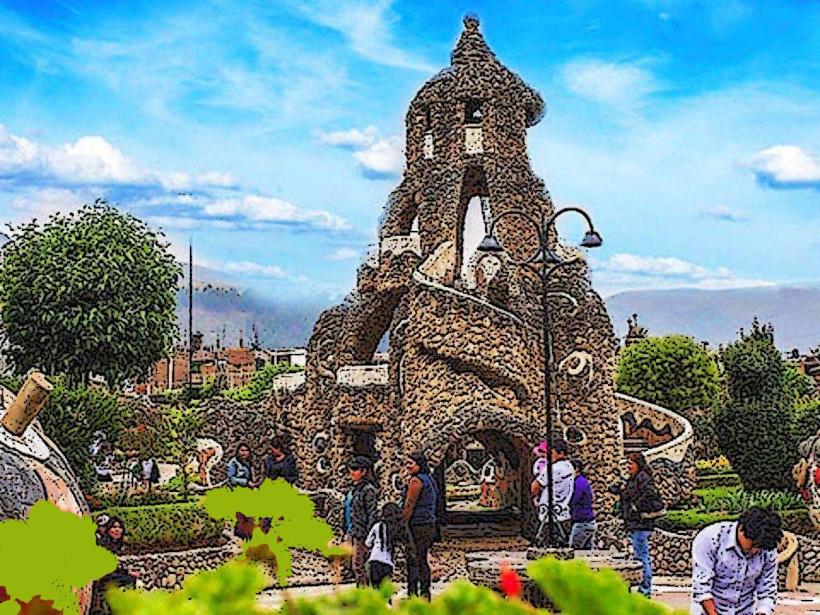
Parque de la Identidad Huanca: A meticulously designed park built using local stone, dedicated to Huanca culture and folklore.
Cerrito de la Libertad: A hilltop park providing a view of the entire city, featuring a small zoo and recreational areas.
Convent of Santa Rosa de Ocopa: Located 25 km away; a historic Franciscan missionary center with a world-renowned colonial library.
Transportation Network
Air: Francisco Carle Airport (JAU) in Jauja, located 45 minutes away, is the primary air link to Lima.
Rail: The Ferrocarril Central Andino connects Huancayo to Lima. It is one of the highest railways in the world, though passenger service is limited to specific tourist dates.
Road: Situated on the Central Highway. Bus travel from Lima takes approximately $7$–$9$ hours.
Local: Relies on a dense network of taxis and "colectivos." The city is a major terminal for transport into the central jungle (Chanchamayo).
Safety & Health
Altitude: At 3,259 m, visitors should acclimatize for 24 hours. Muña or Coca tea is recommended for mild symptoms.
Traffic: Traffic is dense and chaotic, especially in the city center. Air quality can be moderate due to vehicle emissions trapped in the valley.
Crime: Petty theft occurs in crowded markets like the Feria Dominical. Use app-based taxis for night travel.
Digital & Financial Infrastructure
5G is active in El Tambo and the Historic Center. The currency is the Peruvian Sol (PEN). ATMs are abundant in the city center and malls like Open Plaza. Contactless payment is standard in supermarkets and malls, but cash is required for artisanal markets and local transport.
Culture & Social Norms
Feria Dominical: The Sunday Market on Avenida Huancavelica is one of the largest in Peru, stretching over a kilometer and selling everything from livestock to master-grade handicrafts.
Huaylarsh: The iconic traditional dance of the region, characterized by vigorous foot-stomping (zapateo).
Cuisine: The city is the origin of Papa a la Huancaína (potatoes in spicy cheese sauce). Other specialties include Trucha Frita (fried trout), Pachamanca, and Patachi (a nutrient-dense wheat soup).
Local Cost Index (PEN)
1 Plate of Papa a la Huancaína: S/ 10.00–S/ 18.00
1 Taxi (City Center): S/ 6.00–S/ 10.00
1 Entry to Ocopa Convent: S/ 5.00
Facts & Legends
Legend says the Mantaro Valley was once a massive lake inhabited by a rainbow-colored serpent; the god Huallallo Carhuancho dried the lake to create land for the Huanca people. A geographic fact: Huancayo is the highest city in the world to have a professional football stadium meeting international standards for high-altitude play. Historically, the city’s name comes from the Quechua word Wankayuq, meaning "The place with the sacred stone."