Information
City: Idaho FallsCountry: USA Idaho
Continent: North America
Idaho Falls, USA Idaho, North America
Idaho Falls is the seat of Bonneville County and the largest city in Eastern Idaho. It serves as a vital regional hub for healthcare, retail, and travel, situated along the Snake River on the western edge of the Rocky Mountains.
Historical Timeline
The city originated as Eagle Rock in 1864, following the construction of a timber frame bridge over the Snake River to serve the Montana Gold Rush. It was renamed Idaho Falls in 1891 to promote the region’s agricultural potential via irrigation. The city's trajectory shifted permanently in 1949 when the National Reactor Testing Station (now the Idaho National Laboratory, or INL) was established in the high desert to the west. This transformed the city into a global center for nuclear research and engineering, attracting a highly educated workforce.
Demographics & Population
The 2026 estimated population is 68,430. The primary ethnic demographics are White (79.2%), Hispanic or Latino (15.4%), and Two or More Races (3.2%). The median age is 33.4 years. The city has a strong religious and cultural influence from the Church of Jesus Christ of Latter-day Saints.
Urban Layout & Key Districts
Downtown: The historic core featuring the city's highest concentration of local galleries, theaters, and specialty dining near the river.
Snake River Landing: A modern, multi-use development south of downtown featuring waterfront parks, office spaces, and high-end residential units.
The West Side: Primarily home to the Idaho National Laboratory administration offices and the Idaho Falls Regional Airport.
17th Street Corridor: The city's primary commercial artery, containing the Grand Teton Mall and major retail chains.
Top City Landmarks
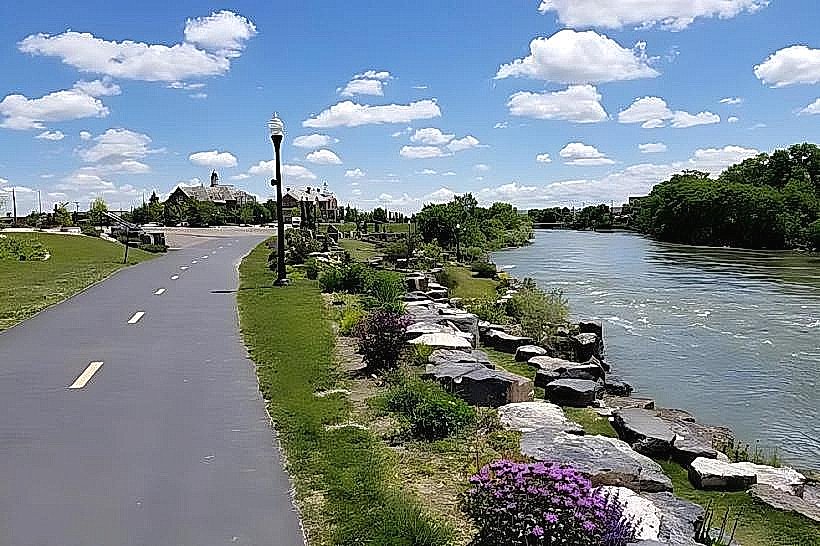
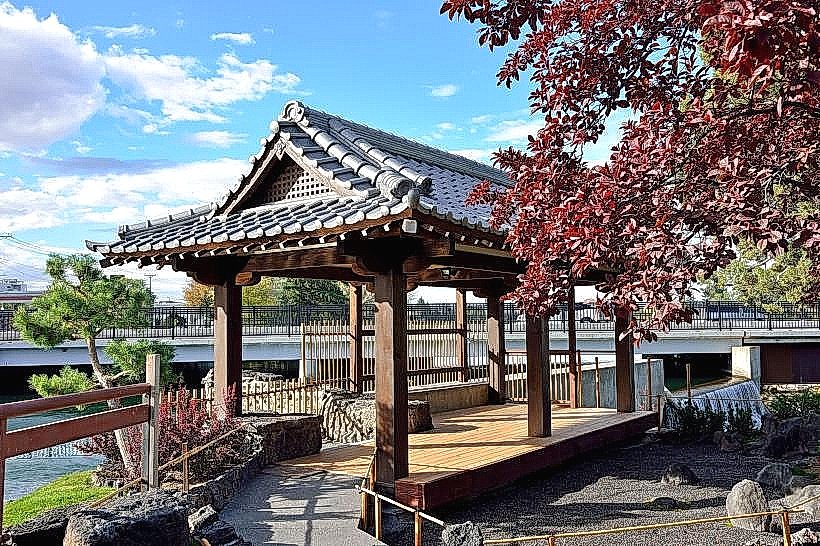
Idaho Falls River Walk (Greenbelt): A 14-km paved trail system following both sides of the Snake River.
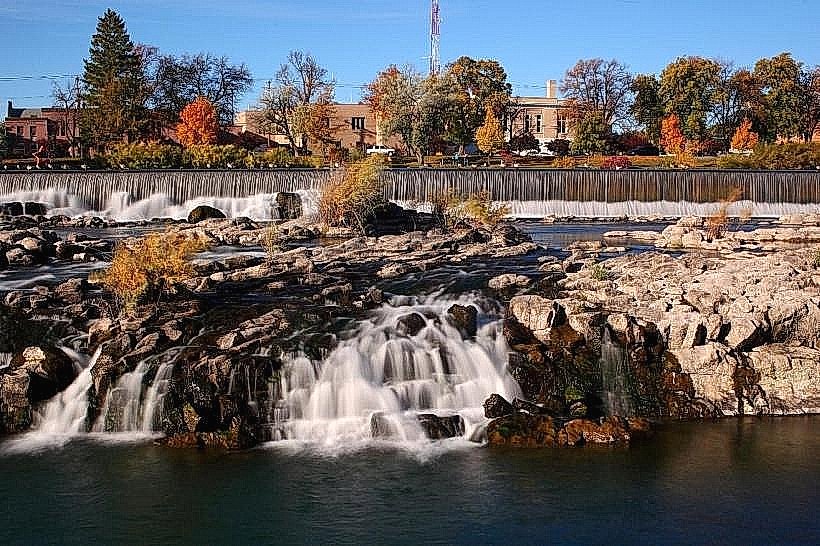
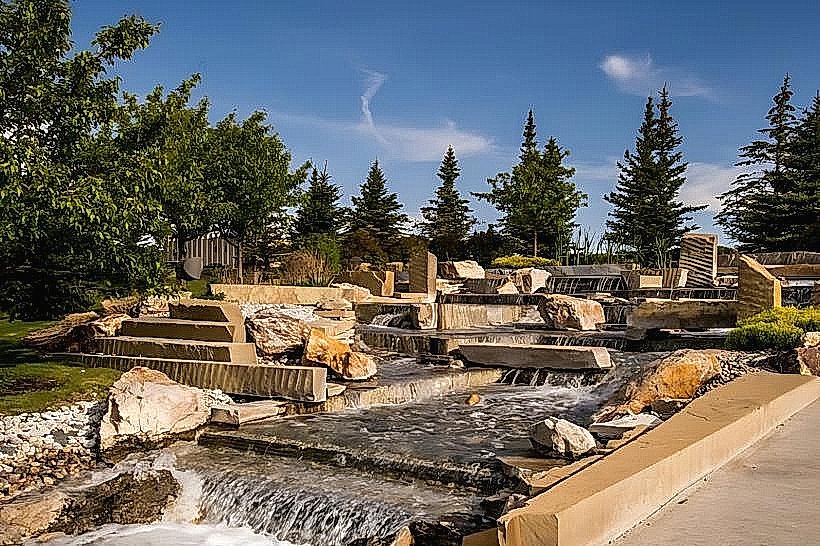
The Falls: The namesake of the city, located in the downtown core; the falls are technically a concrete diversion dam built for hydroelectric power.
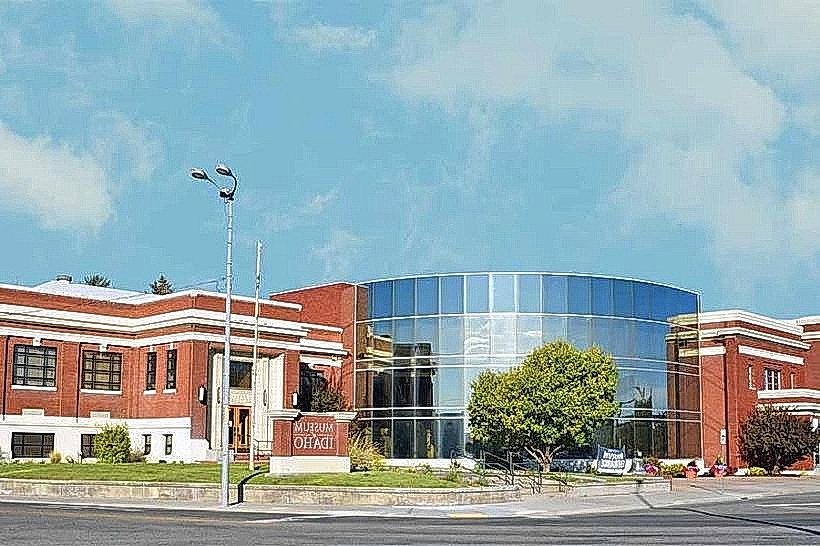
Museum of Idaho: A premier regional museum specializing in Idaho’s history and rotating world-class science exhibits.
Idaho Falls Idaho Temple: A prominent white-cast stone structure of the LDS Church overlooking the river.
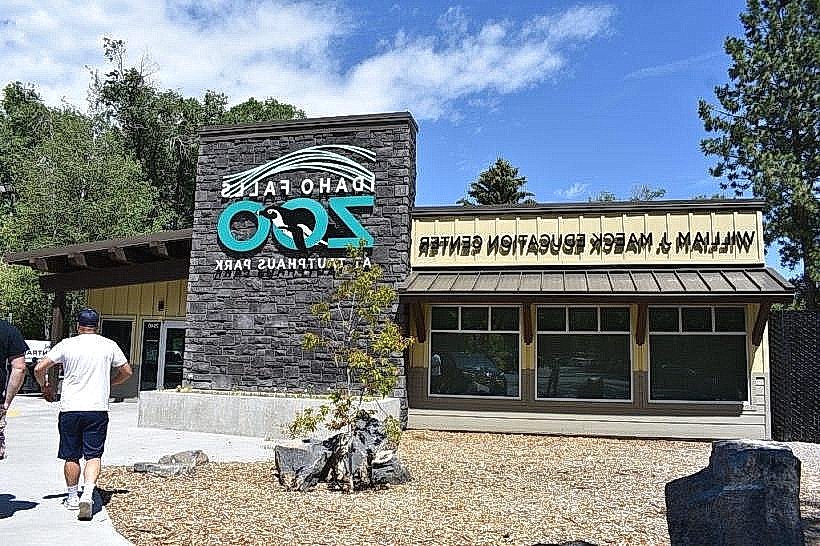
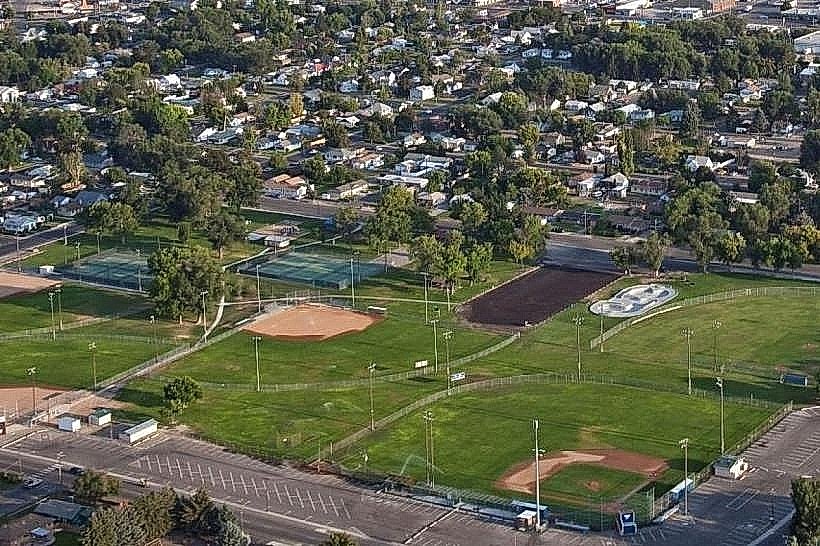
Tautphaus Park: One of the city's oldest parks, housing the Idaho Falls Zoo and an ice arena.
Transportation Network
Internal movement is served by GIFT (Greater Idaho Falls Transit), a micro-transit system that replaced traditional fixed-route buses. The city is a major highway junction for I-15 and US-20. Idaho Falls Regional Airport (IDA) provides non-stop flights to major western hubs. Traffic is moderate, though the 17th Street and Hitt Road corridors experience significant peak-hour congestion.
Safety & "Red Zones"
The general safety level is high. Property crime (theft from vehicles and retail shops) is the primary statistical issue. There are no designated "red zones." Standard urban vigilance is recommended in the neighborhoods immediately west of the downtown core after dark.
Digital & Financial Infrastructure
Average internet speeds reach 1 Gbps via fiber providers like Idaho Falls Fiber (municipal) and SilverStar. Mobile coverage is robust for Verizon and AT&T; T-Mobile signal is stable but can be impacted by the rural topography outside city limits. Card acceptance is 100%. Major institutions include Westmark Credit Union and Idaho Central Credit Union.
Climate & Air Quality
The climate is high-altitude semi-arid. Summers (June–August) are warm and very dry, ranging from 11°C to 31°C. Winters (December–February) are cold and snowy, ranging from -11°C to -1°C. Wind is a constant factor due to the city's location in the Snake River Plain. Air quality is typically "Good," though it is subject to regional wildfire smoke in late summer.
Culture & Social Norms
Tipping of 18–20% is standard. The culture is a blend of scientific-intellectualism (due to the INL) and traditional Western values. Dress code is casual. Alcohol is sold in grocery stores; spirits are sold in state-run liquor stores. Sunday operations for local businesses in the downtown core may be limited.
Accommodation Zones
River Walk/Downtown: Stay here for scenic views and walking access to the Museum of Idaho and local dining.
I-15 / West Broadway: Stay here for proximity to the airport and national hotel chains.
Local Cost Index
Espresso: $4.50
Standard Lunch: $15.00
Museum Admission: $15.00
Nearby Day Trips
Grand Teton National Park: 145 km (1.75 hours).
Yellowstone National Park (West Entrance): 175 km (2 hours).
Craters of the Moon National Monument: 135 km (1.5 hours).
Jackson Hole, WY: 140 km (1.75 hours).
Facts & Legends
Idaho Falls is home to the world's first nuclear power plant to provide electricity for an entire town (the EBR-I, located in the nearby desert). A local legend involves "The Sinking of the Snake River Bridge," an event in 1867 where the bridge collapsed under the weight of a massive herd of cattle. Historically, the city is unique for its municipal fiber network, which was one of the first in the region to utilize existing utility infrastructure to provide gigabit speeds to residents.