Information
City: Kostanjevica na KrkiCountry: Slovenia
Continent: Europe
Kostanjevica na Krki, Slovenia, Europe
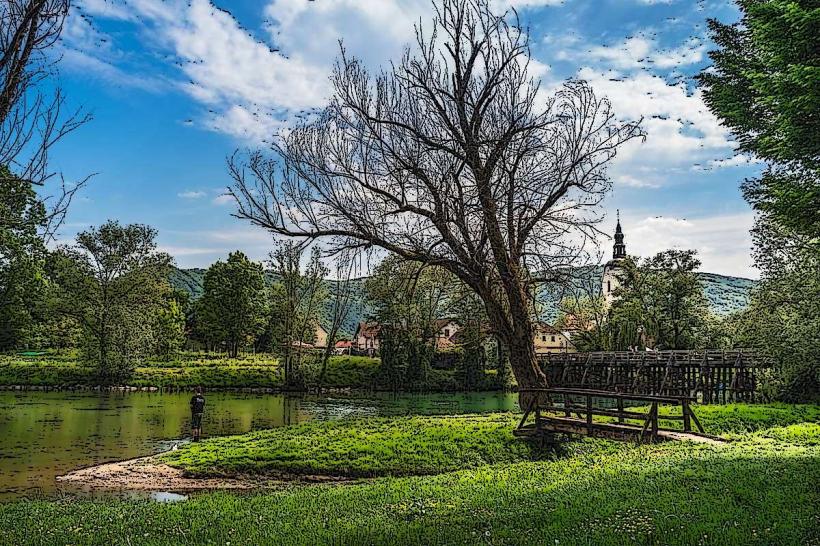
Kostanjevica na Krki is the smallest city in Slovenia and its only urban center situated entirely on a river island. It is located in the southeastern part of the country within the Krka Valley, positioned at the foot of the Gorjanci Hills.
Historical Timeline
The town was founded in 1224 by the Carinthian Duke Bernhard von Spanheim and quickly became an important administrative and judicial center. It was governed by the Cistercian Abbey and later the Habsburg Monarchy. The most significant architectural reconstruction occurred after the Ottoman raids in the 15th and 16th centuries, which led to the reinforcement of the island's defensive character. The primary event shaping the current urban form was the deliberate 13th-century planning of the town on a man-made island created by diverting the Krka River.
Demographics & Population
The municipality has a total population of approximately 2,413 residents, with the island town itself housing roughly 700 people. The demographic is almost exclusively ethnic Slovene (97%). The median age is 44.2 years.
Urban Layout & Key Districts
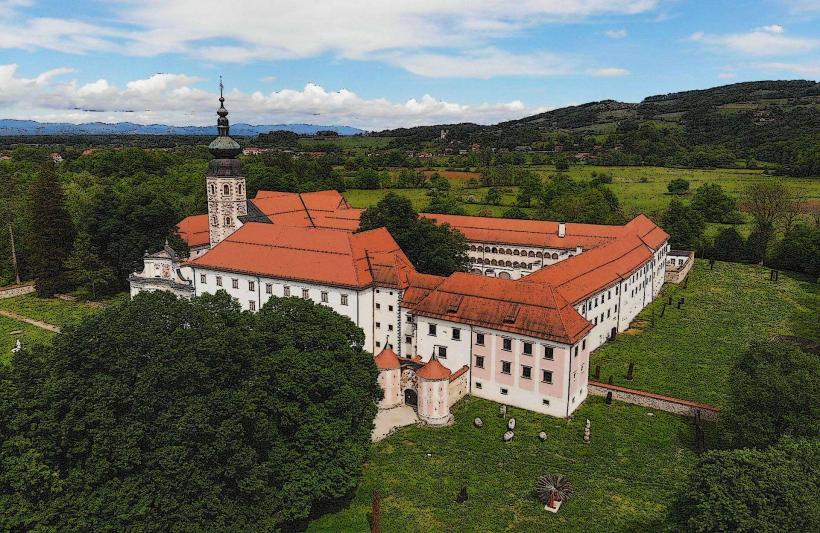
The city is organized linearly along two parallel streets running the length of the oval island. The Island Core is the historic and cultural center, accessible via three wooden bridges. Zaboršt is the district located on the northern bank of the Krka, while the Cistercian Monastery area is situated approximately 1.5 km south of the island.
Top City Landmarks
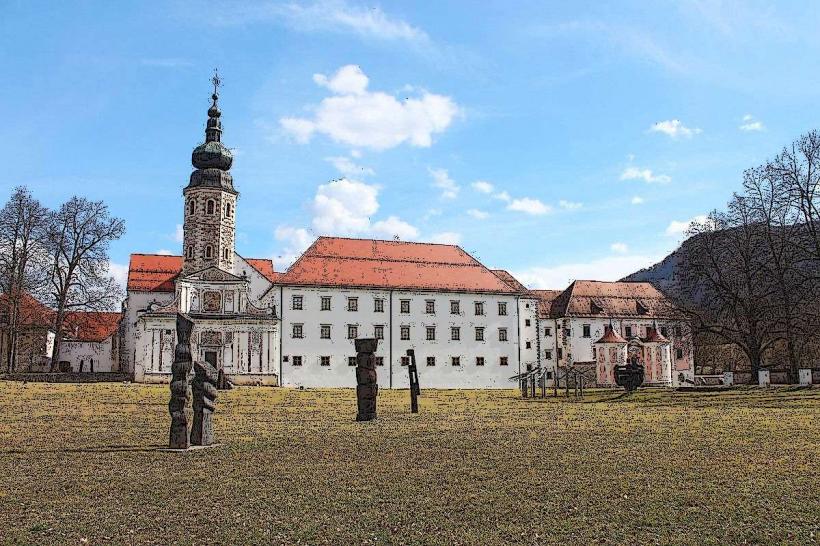
Božidar Jakac Art Museum (housed in the former Cistercian Monastery)
Forma Viva (International outdoor sculpture park)
Church of Saint James (13th-century architectural site)
Kostanjevica Cave (Karst cave system near the town)
The Wooden Bridges (Historic oak structures crossing the Krka)
Transportation Network
Navigation within the island town is exclusively pedestrian and bicycle-friendly. Regional buses connect the town to Novo Mesto and Krško. There is no metro, tram, or railway station within the town (the nearest station is in Krško, 15 km away). Ride-sharing apps do not operate; local transport is limited to private vehicles or pre-arranged taxis from neighboring municipalities. Traffic density is extremely low, with the island being a restricted traffic zone.
Safety & "Red Zones"
The safety level is absolute. There are no neighborhoods or "red zones" to avoid. Crime is statistically negligible. The primary safety risk is related to seasonal flooding of the Krka River, which can occasionally restrict access to the island bridges.
Digital & Financial Infrastructure
Average internet speeds are 60-80 Mbps. Main mobile carriers are Telekom Slovenije and A1. Card acceptance is moderate; larger restaurants and the art museum accept cards, but local cafes and small shops frequently require cash. There is one ATM located near the primary bridge entrance.
Climate & Air Quality
Temperatures range from -3°C to 5°C in January and 15°C to 28°C in July. The town experiences high humidity due to its island location and surrounding wetlands. Air quality is pristine, benefiting from the lack of heavy industry and proximity to the Gorjanci forests.
Culture & Social Norms
Tipping is not mandatory but 10% is standard for restaurant service. The greeting is a formal handshake. The town is known as the "Venice of Lower Carniola" (Dolenjske Benetke), and social life is heavily influenced by the Krka River, including traditional boating. Smoking is prohibited in indoor public spaces.
Accommodation Zones
Stay on the Island for a historic atmosphere and immediate walking access to the riverbanks. Stay near the Božidar Jakac Museum for proximity to the sculpture park and a more rural, secluded environment.
Local Cost Index
1 Espresso: €1.50 ($1.65)
1 Standard Lunch: €12.00 ($13.20)
1 Bus Ticket (to Novo Mesto): €3.10 ($3.41)
Nearby Day Trips
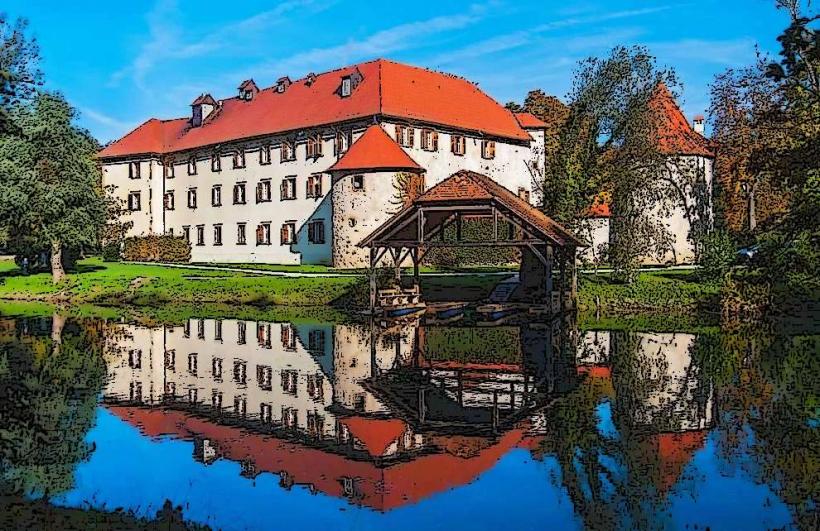
Otočec Castle: 18 km
Pleterje Carthusian Monastery: 10 km
Čatež Thermal Spa: 25 km
Novo Mesto: 22 km
Facts & Legends
Local legend tells of a massive fish that lives beneath the island and supports the town on its back; it is said that if the fish ever turns over, the entire town will sink into the Krka. Historically, the town’s "Pranger" (pillory) remains one of the few preserved in the region, reflecting the city's medieval judicial autonomy and the strict laws enforced by the Cistercian monks who once ruled the valley.