Information
City: KuantanCountry: Malaysia
Continent: Asia
Kuantan, Malaysia, Asia
Kuantan is the state capital of Pahang and the largest city on the East Coast of Peninsular Malaysia. Situated near the mouth of the Kuantan River and facing the South China Sea, it serves as the regional center for government, maritime trade, and the petrochemical industry.
Historical Timeline
The city's modern foundations were established in the mid-19th century, originally as a small settlement on the banks of the Teruntum River. Kuantan replaced Pekan as the state capital of Pahang in 1955 due to its superior geographic position and maritime access. Since the 1970s, the development of the Kuantan Port and the nearby Gebeng Industrial Estate has transformed it into a major economic engine for the East Coast Economic Region (ECER).
Demographics & Population
The population is approximately 550,000. The demographic is majority Malay ($>65\%$), with significant Chinese ($25\%$) and Indian minorities. The economy is heavily diversified, supported by the Malaysia-China Kuantan Industrial Park (MCKIP), palm oil processing, and tourism.
Urban Layout & Key Districts
City Centre: A grid-based commercial area housing the East Coast Mall, Kuantan City Mall, and the Sultan Ahmad Shah State Mosque.
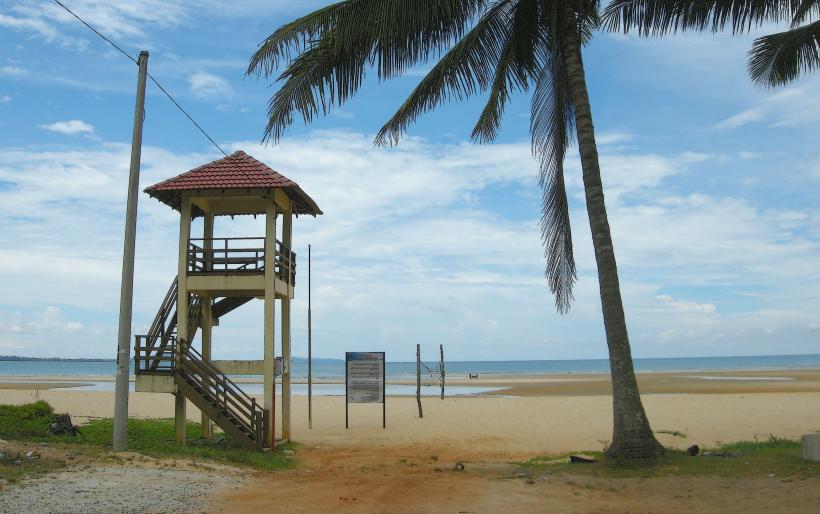
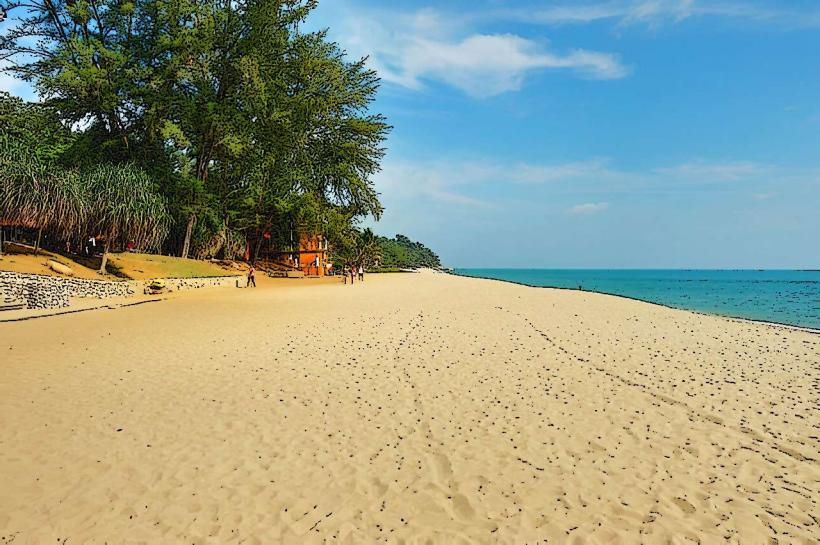
Teluk Cempedak: The city's premier beach and recreation district, located 5 km from the center.
Gebeng: A massive industrial zone north of the city, dominated by petrochemical plants and the Kuantan Port.
Beserah: A traditional fishing village known for its distinct heritage and coastal atmosphere.
Indera Mahkota: A modern administrative and residential township housing government offices and universities.
Top Landmarks
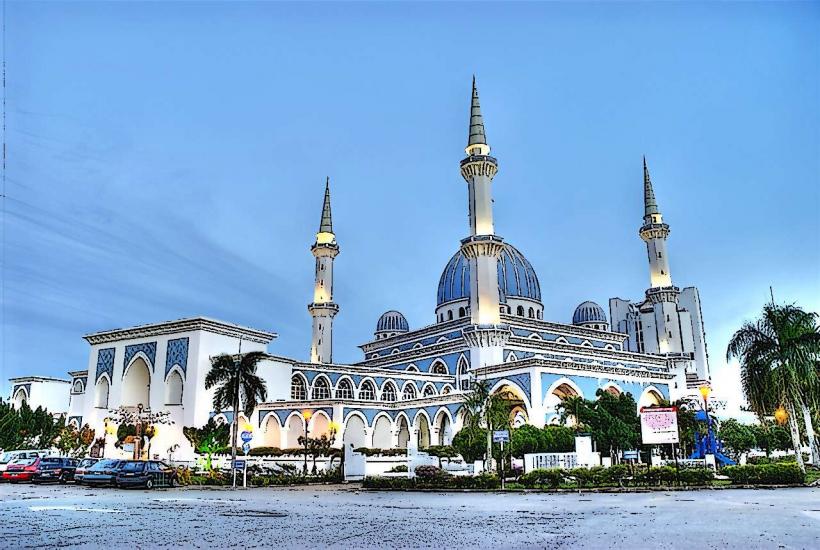
Sultan Ahmad Shah State Mosque: An iconic mosque with four minarets and a prominent blue dome, acting as the city's central landmark.
Teluk Cempedak (Palm Beach): A popular white-sand beach with a raised wooden walkway connecting to hidden coves.
Menara Kuantan 188: The second-tallest observation tower in Malaysia ($188$ m), offering panoramic views of the Kuantan River and the city.
Gua Charas: A limestone cave temple located 25 km from the city, featuring a reclining Buddha statue.
Sungai Pandan Waterfall: A large multi-tiered waterfall and forest park popular for swimming and picnics.
Transportation Network
Air: Sultan Ahmad Shah Airport (KUA) provides connections to Kuala Lumpur and Singapore.
Road: Linked to Kuala Lumpur via the East Coast Expressway (LPT), a drive of approximately 3 hours.
Rail: Currently a transit point for the Jungle Railway (inland). The East Coast Rail Link (ECRL), scheduled for full operation in 2026, connects Kuantan to the Klang Valley via high-speed rail.
Public Transit: Served by Rapid Kuantan buses and Grab.
Safety & "Red Zones"
Monsoon Flooding: From November to February, Kuantan is highly susceptible to severe flash floods. Coastal areas face dangerous swells and strong undercurrents.
Industrial Hazards: The Gebeng area is a heavy industrial zone; exercise caution during transits near high-volume chemical processing plants.
Traffic: Peak hour congestion is significant on the main artery connecting the city center to Teluk Cempedak.
Digital & Financial Infrastructure
5G coverage is universal across the city center, Indera Mahkota, and Gebeng. The currency is the Malaysian Ringgit (MYR). ATMs are abundant in the major malls. Contactless payment is standard in urban retail, though cash is preferred at the Beserah fish markets and local warungs.
Climate & Air Quality
Equatorial climate: hot and humid ($24^\circ\text{C}$ to $33^\circ\text{C}$). The city receives some of the highest rainfall in Malaysia during the year-end monsoon. Air quality is generally moderate, though it can be impacted by transboundary haze during the dry season (June–August).
Culture & Social Norms
Fishery Heritage: Beserah remains famous for its traditional method of using water buffalo to haul fish from boats to the shore, though this is now largely a cultural demonstration.
Social Environment: More conservative than Kuala Lumpur; modest dress is recommended when visiting government buildings or inland residential areas.
Cuisine: Renowned for Ikan Bakar (charcoal-grilled fish) at Tanjung Lumpur, Satar (grilled fish cakes), and salted fish.
Local Cost Index (MYR)
1 Seafood Dinner (Tanjung Lumpur): RM 35.00–RM 60.00
1 Ticket for Menara Kuantan 188: RM 15.00–RM 30.00
1 Grab Ride (City to Beach): RM 8.00–RM 14.00
Nearby Day Trips
Sungai Lembing: A historic tin-mining town 45 minutes inland, famous for its "Rainbow Waterfall" and colonial mines.
Pekan: The Royal Town of Pahang, 45 minutes south, featuring the Sultan Abu Bakar Museum and royal palaces.
Facts & Legends
Legend says the city’s name comes from a specific type of boat used by the early settlers from Sumatra, or from the Kuantan tribe. A geographic fact: Kuantan is the most significant port on the eastern seaboard of the Malay Peninsula, serving as the "Gateway to the East." Historically, the city was a strategic prize during WWII, falling to Japanese forces in late 1941 after the sinking of the HMS Prince of Wales and HMS Repulse off its coast.