Information
City: Likiep AtollCountry: Marshall Islands
Continent: Australia
Likiep Atoll, Marshall Islands, Australia
Likiep Atoll is a coral atoll of 65 islands in the Ratak (Sunrise) Chain of the Marshall Islands. It is defined by its unique architectural heritage, its history as a former plantation estate, and its status as the best-preserved example of 19th-century colonial influence in the archipelago.
Historical Timeline
Inhabited for two millennia by Marshallese navigators. A critical historical event occurred in 1877 when the atoll was purchased from local chiefs by Anton DeBrum, a Portuguese trader, and his partners. They established a successful Copra (dried coconut meat) plantation and ship-building industry. Unlike other atolls, Likiep developed a distinct "plantation manor" culture. It was later occupied by Germany (1885) and Japan (1914) before U.S. forces arrived in 1944. In 2005, the Likiep Village Historic District was placed on the UNESCO World Heritage Tentative List.
Demographics & Population
The 2026 estimated population is approximately 450. The residents are predominantly Marshallese, many of whom are direct descendants of the original DeBrum settlers, maintaining a distinct cultural identity. The economy is subsistence-based, centered on Fishing, Copra, and Handicrafts.
Urban Layout & Key Districts
The atoll consists of a 424-square-kilometer lagoon.
Likiep Islet: The main population center located on the southeast rim; it contains the historic village and the airstrip.
The DeBrum Estate: A centralized area on Likiep Islet featuring the remnants of colonial-style wooden houses and warehouses.
Plantation Islets: Numerous smaller islands around the reef used for coconut cultivation.
Top Landmarks
DeBrum House: The historic residence of the DeBrum family, featuring high ceilings and colonial carpentry rare in Micronesia.
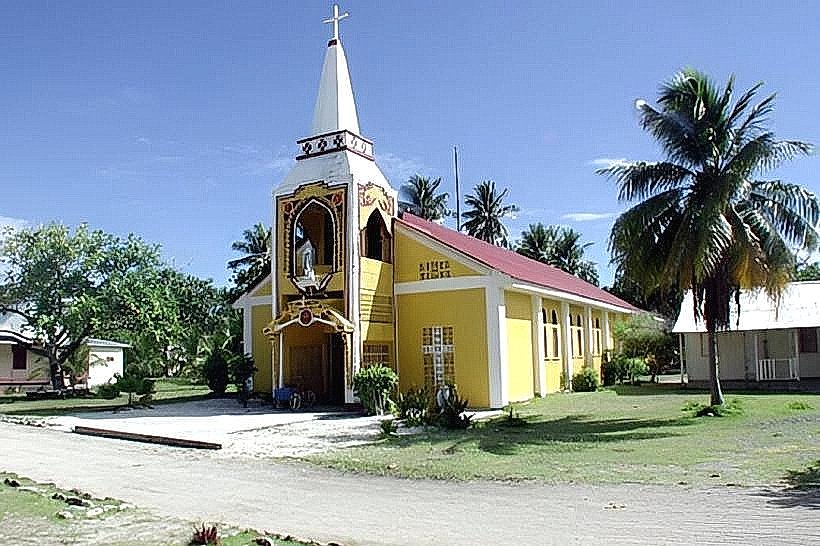
Likiep Church: A central landmark of the community, reflecting the deep influence of Catholic missionaries.
Traditional Shipyards: Sites where the atoll’s famous traditional boat-building skills are still practiced.
The Lagoon Reefs: Known for having some of the highest coral diversity and health in the Ratak Chain.
Transportation Network
Movement is almost entirely by foot or small motorboats. Likiep Airport (LIK) provides irregular domestic service via Air Marshall Islands from Majuro. There are no paved roads. Inter-island transport depends on private boats or the government supply vessel. In 2026, transportation remains a primary challenge due to the atoll's remote location.
Safety & "Red Zones"
General safety is absolute. The community is highly traditional and welcoming. Standard awareness is advised regarding solar exposure and water safety during lagoon crossings. There are no medical facilities beyond a basic first-aid dispensary.
Digital & Financial Infrastructure
Connectivity is negligible. No cellular 5G exists; communications are limited to radio and very restricted satellite links. U.S. Dollars (USD) are the only currency. No ATMs or credit card facilities; the atoll operates on a strict cash or barter basis.
Climate & Air Quality
Tropical marine climate. Air quality is pristine. In 2026, drought cycles are the most significant climate threat, impacting the freshwater lens and coconut yields.
Culture & Social Norms
Tipping is not customary. The "Iokwe" greeting is essential. Dress codes are Strictly Modest; women must cover their knees. Respect for the DeBrum family legacy and local traditional leaders is paramount. The culture is a hybrid of Marshallese maritime skill and 19th-century European plantation traditions.
Local Cost Index
1 Standard Meal: $5.00–$10.00 USD (local staples).
Accommodation: Very limited; guest houses or family stays ($40–$80 USD).
Nearby Day Trips
Uninhabited Bird Islets: Secluded islands within the atoll used for seasonal egg gathering and bird watching.
Facts & Legends
Likiep is famous for its traditional outrigger canoes, which are considered some of the fastest and most seaworthy in the Marshall Islands. Historically, it was the first atoll to produce a locally printed newspaper in the late 1800s. A local legend involves the spirits of the plantation, said to watch over the coconut groves to ensure a bountiful harvest. Another fact: the atoll's "colonial" architecture was built using local hardwoods and imported European designs to withstand typhoons, a technique unique to this specific atoll.