Information
City: LodzCountry: Poland
Continent: Europe
Lodz, Poland, Europe
Łódź functions as the secondary economic and logistical hub of Central Poland and the capital of the Łódź Voivodeship. Situated 120 km southwest of Warsaw, it serves as a specialized node for e-commerce logistics, cinematography, and post-industrial revitalization. It is defined by its 19th-century textile heritage-once nicknamed the "Polish Manchester"-its unique cinematic legacy as "HollyŁódź," and its current status as a national model for large-scale urban regeneration.
Historical Timeline
Łódź received town rights in 1423. The primary era of governance occurred in the 19th century under the Russian Empire, when it transformed from a village of 800 people into an industrial metropolis of 500,000. The primary event shaping its modern identity was the 1989 collapse of the textile industry, followed by the mid-2010s "Revitalization of the Core." Historically, it was a multi-ethnic "Promised Land" of Poles, Jews, and Germans, whose coexistence defined the city's architectural and cultural fabric.
Demographics & Population
The population is approximately 645,000 (2026 estimate), making it the fourth-largest city in Poland. The demographic profile is characterized by a significant transition: while the city has faced the largest depopulation rates in Poland due to negative birth rates, it has recently become a specialized magnet for international IT corporations and creative professionals drawn by lower operational costs and revitalized urban spaces.
Urban Layout & Key Districts
Unlike many Polish cities, Łódź lacks a traditional medieval market square; its layout is strictly linear and industrial.
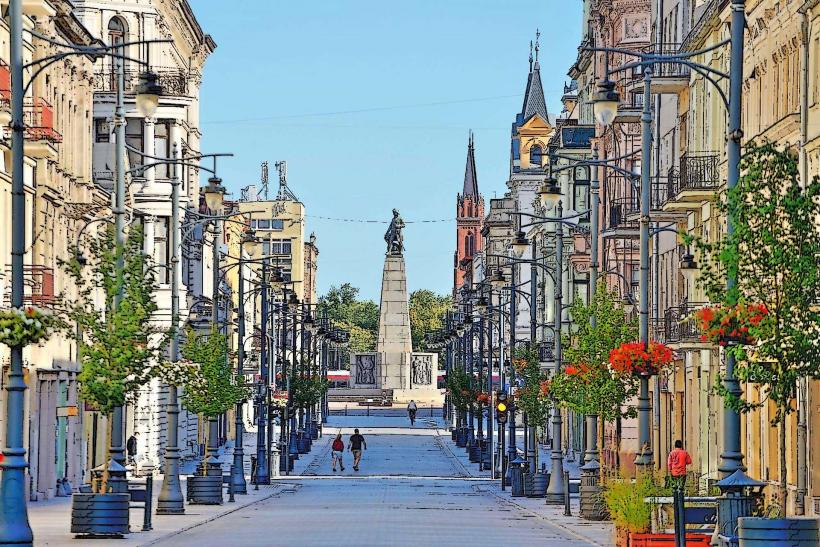
Piotrkowska Street: The specialized 4.2 km central axis; it is one of the longest commercial promenades in Europe and the city's primary social hub.
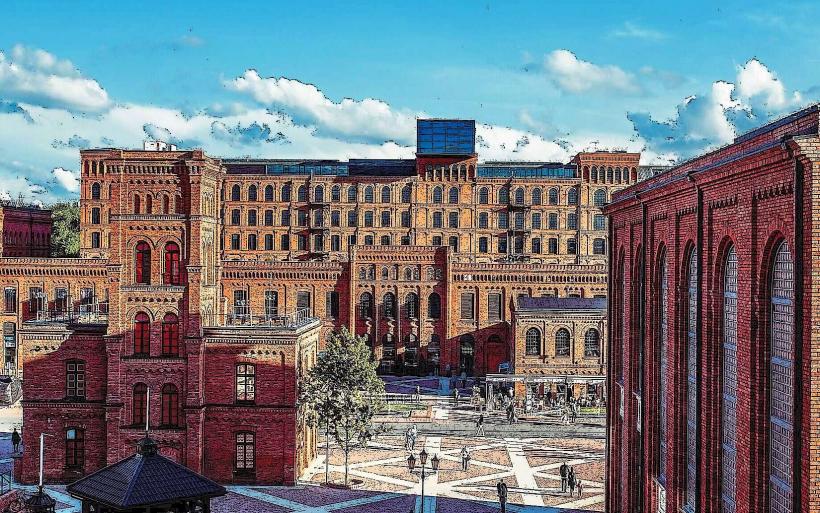
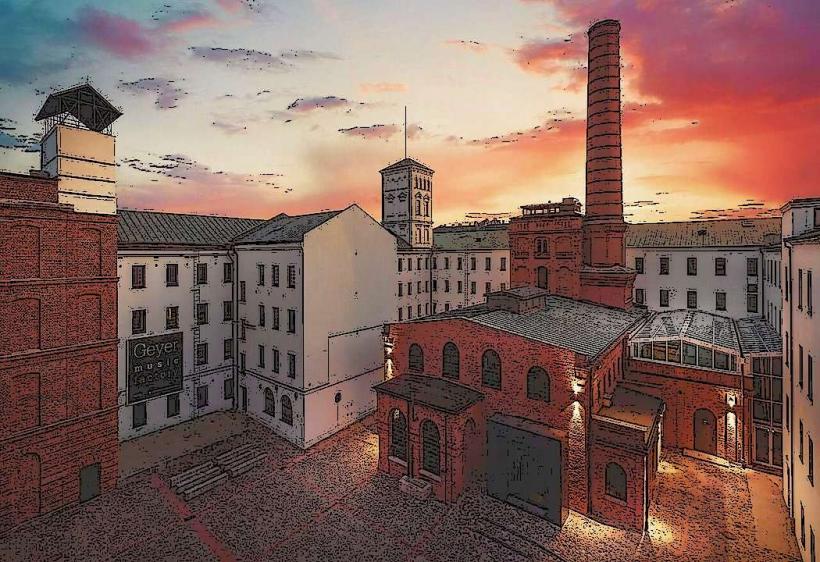
Księży Młyn (Pastor's Mill): A specialized "city within a city"; a perfectly preserved 19th-century industrial complex consisting of red-brick factories, workers' residences (famuły), and owner palaces.
Nowe Centrum Łodzi (NCŁ): A specialized 100-hectare redevelopment zone around the underground Łódź Fabryczna rail station, focusing on modern office space and culture.
Bałuty: A specialized northern district with a complex history, containing the site of the former Litzmannstadt Ghetto and the modern Manufaktura complex.
Top City Landmarks
Manufaktura: A specialized 27-hectare shopping and arts center located in the former textile empire of Izrael Poznański; it is the largest successful industrial revitalization project in Europe.
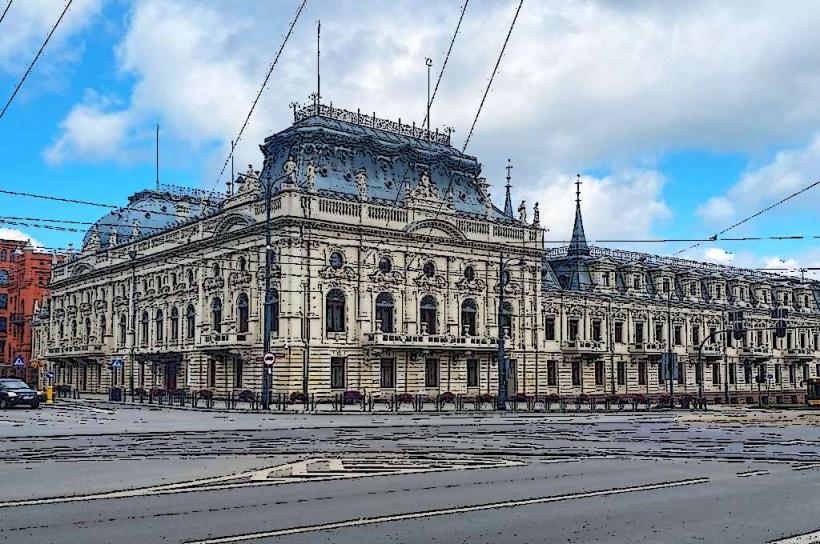
Poznański Palace: A specialized Neo-Baroque residence often called the "Louvre of Łódź," representing the peak of the 19th-century "Cotton Kings'" opulence.
EC1 Łódź: A specialized cultural and science center housed in the city's first power plant, featuring Poland’s most modern planetarium.
National Film School (PWSFTviT): A specialized institution world-renowned for training directors like Roman Polański and Andrzej Wajda; its iconic "stairs" are a pilgrimage site for filmmakers.
The Rose Passage (Pasaż Róży): A specialized art installation in a courtyard off Piotrkowska, where walls are covered in thousands of mirror fragments.
Radegast Station: A specialized memorial site at the former deportation point for the Łódź Ghetto, preserved as a symbol of the city's WWII tragedy.
Transportation Network
Łódź is the geographical "Center of Poland," located at the junction of the A1 and A2 motorways.
Łódź Fabryczna: A specialized subterranean multi-modal rail hub; as of 2026, it is the primary node for the nearly completed high-speed cross-city tunnel project.
Cross-City Rail Tunnel: A specialized "metro-style" tunnel connecting Fabryczna and Kaliska stations, expected to be fully operational in 2026 to eliminate regional transit bottlenecks.
Public Transit: A specialized network of trams and buses. In 2026, the "Migawka" digital ticketing system is fully integrated with the national CPK (Central Communication Port) network.
Rickshaws: A specialized traditional transit mode unique to Piotrkowska Street, used for short-distance travel along the promenade.
Safety & "Red Zones"
The general safety level has significantly improved due to extensive revitalization. There are no "red zones," but standard urban awareness is recommended in non-revitalized pockets of Bałuty and Stare Polesie late at night. The city center is heavily monitored and generally safe.
Digital & Financial Infrastructure
The city is a leader in BPO (Business Process Outsourcing) and Logistics Technology. Internet speeds average 500–1000 Mbps. 5G is universal. In 2026, Łódź operates a specialized "Urban Data Platform" to manage the complex logistics of the massive redevelopment projects in the NCŁ zone.
Climate & Air Quality
Łódź has a temperate continental climate. Average temperatures range from -2°C in January to 25°C in July. Air quality is moderate; the city has implemented a specialized "Low-Emission Zone" in the center as of 2026, significantly reducing smog from older vehicle fleets.
Culture & Social Norms
Social norms are characterized by "Łódź grit"-a pragmatic, industrial-influenced resilience and a strong pride in the city's "underdog" status. Tipping (10%) is standard. The primary cultural event is the Light Move Festival (September), which uses the city’s facade architecture for massive light mappings.
Local Cost Index (2026 Estimates)
1 Espresso: 11–14 PLN
1 Pint of Local Beer: 12–18 PLN
1 Standard Lunch: 35–55 PLN
Monthly Transit Pass: 168 PLN
Nearby Day Trips
Nieborów and Arkadia: 45 mins away; a specialized Radziwiłł family palace and Romantic-style garden.
Uniejów Thermal Spa: 1 hour away; a specialized wellness center utilizing local geothermal waters near a medieval castle.
Mandoria Park: 20 mins away; Europe’s largest specialized indoor theme park, styled as a 16th-century trading city.
Facts & Legends
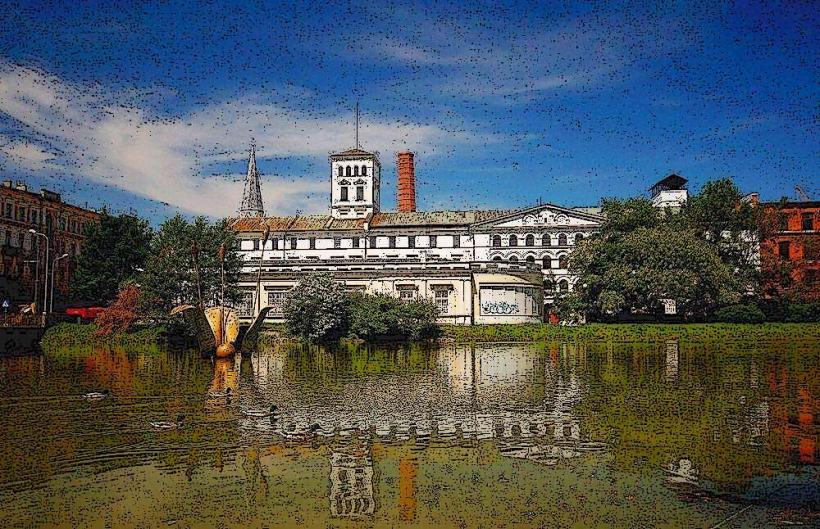
Łódź is the UNESCO City of Film and hosts the world-famous Camerimage festival. Legend states that the city's name (which translates to "Boat") refers to a legendary pioneer who arrived on a wooden boat, despite the city having no major river. A verified fact is that the city features over 150 large-scale murals, making it one of the most significant open-air street art galleries in the world. Historically, it was the only major city in Poland to transition directly from a village to an industrial metropolis without a feudal phase.