Information
City: MalaccaCountry: Malaysia
Continent: Asia
Malacca, Malaysia, Asia
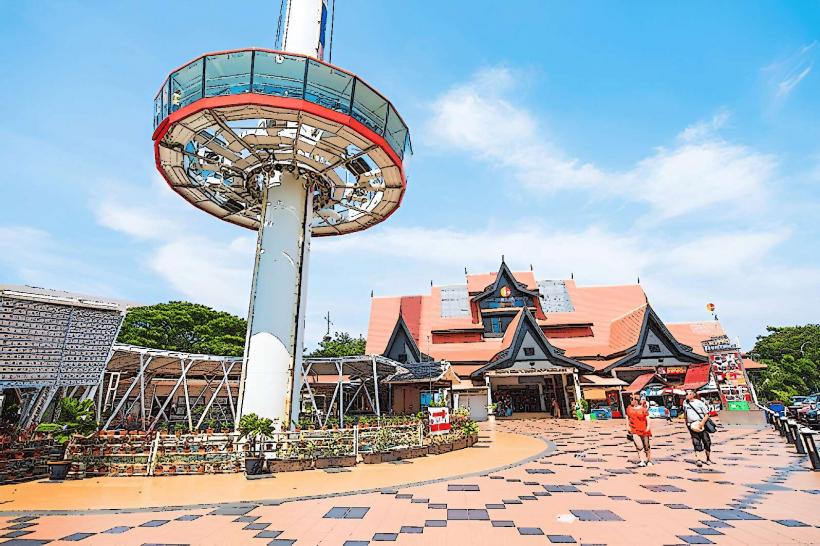
Malacca City (Bandar Melaka) is the capital of the Malaysian state of Malacca. Located on the southwest coast of the Malay Peninsula along the strategic Strait of Malacca, it is a UNESCO World Heritage Site recognized for its preserved colonial architecture and unique "Straits" culture.
Historical Timeline
Malacca was founded around 1400 by Parameswara, the last Raja of Singapura. It quickly became the most important trade port in Southeast Asia, acting as the nexus for the global spice trade. Its strategic value led to successive colonizations: the Portuguese (1511), the Dutch (1641), and finally the British (1824) via the Anglo-Dutch Treaty. This layered history created the "Peranakan" (Straits Chinese) and "Kristang" (Portuguese-Eurasian) communities found nowhere else.
Demographics & Population
The city has a population of approximately 580,000. The demographic is a highly integrated mix of Malay ($63\%$), Chinese ($32\%$), and Indian ($4\%$) ethnicities, plus the distinctive Portuguese-Eurasian minority. The economy is primarily driven by tourism, maritime services, and manufacturing in the surrounding industrial zones.
Urban Layout & Key Districts
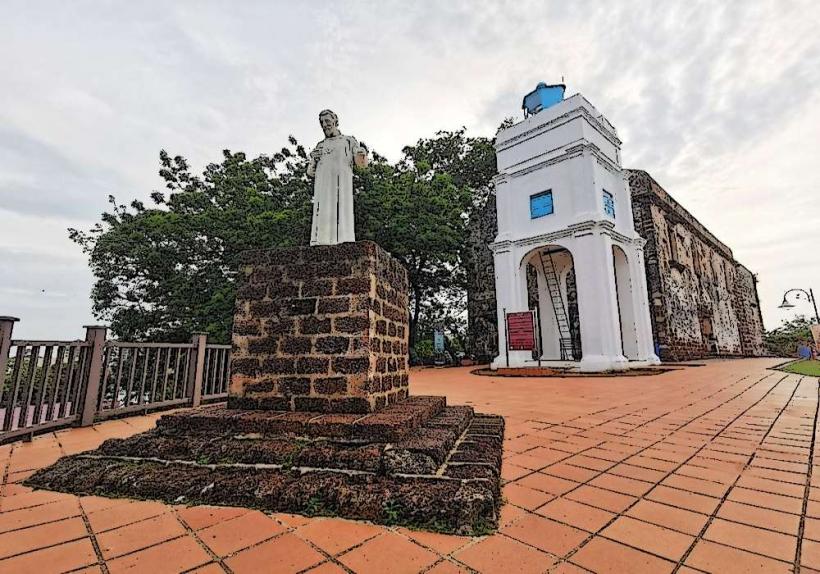
The Heritage Core: Located on the eastern bank of the Malacca River, containing the Dutch Square and St. Paul’s Hill.
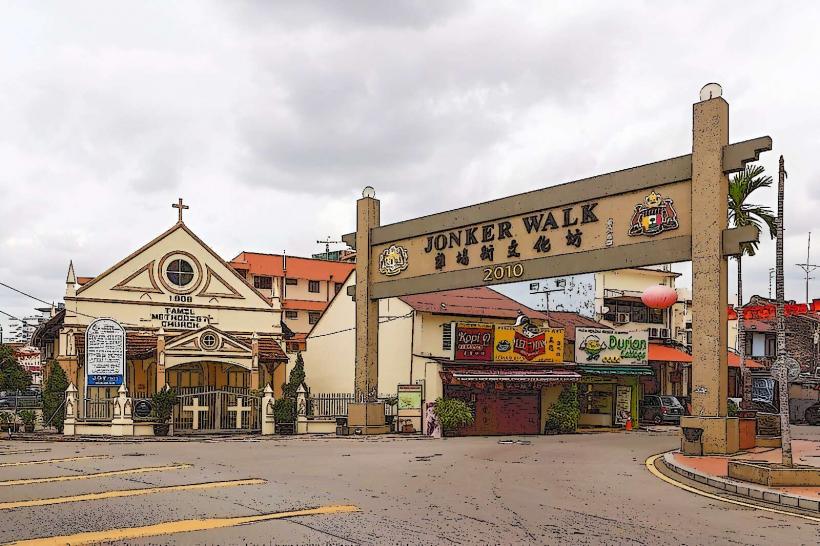
Jonker Walk (Chinatown): Located on the western bank; the center of the city’s social and nightlife.
Melaka Raya: A modern commercial district built on reclaimed land, featuring shopping malls and hotels.
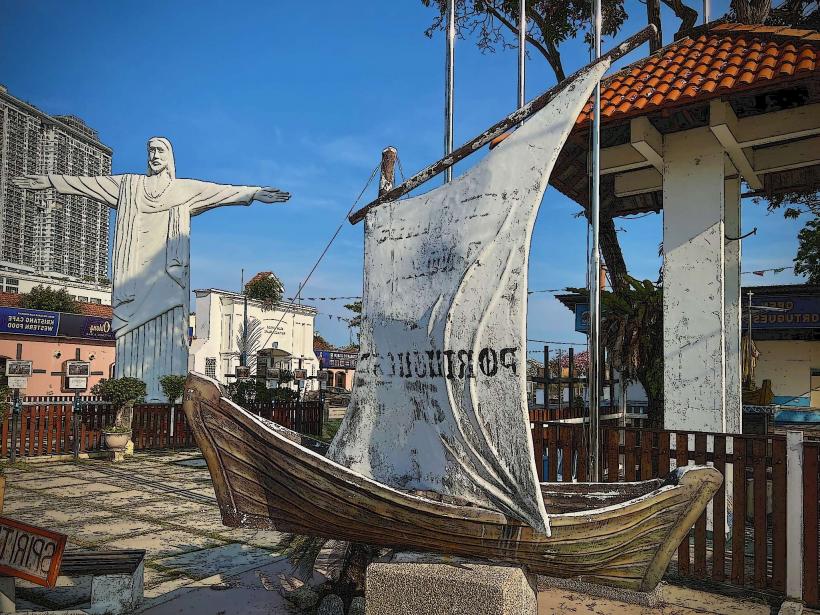
Portuguese Settlement: A coastal enclave south of the center where the Kristang community and Portuguese traditions are preserved.
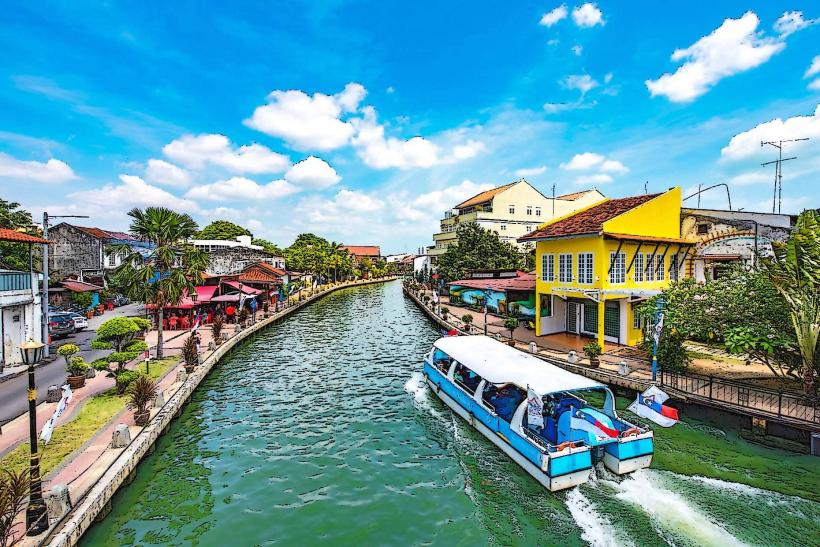
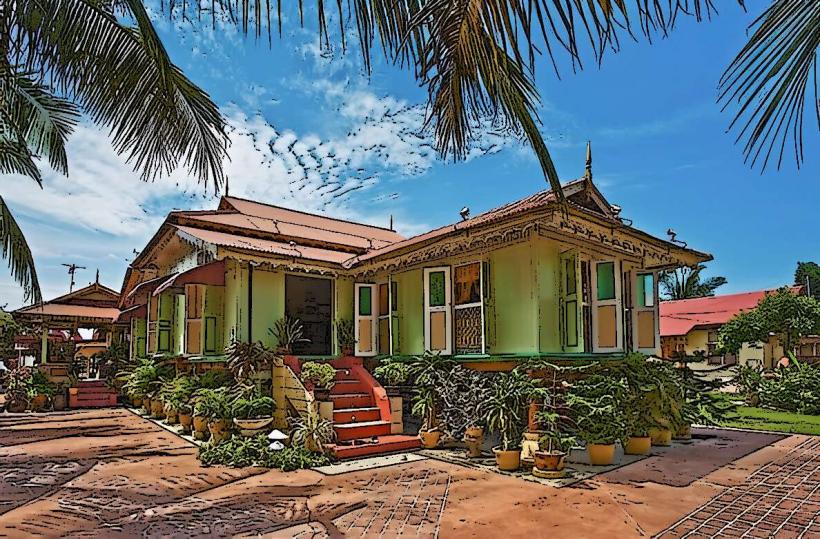
Kampung Morten: A traditional Malay village located on a bend in the river, functioning as a "living museum."
Top Landmarks
A Famosa (Porta de Santiago): The remains of a 16th-century Portuguese fortress.
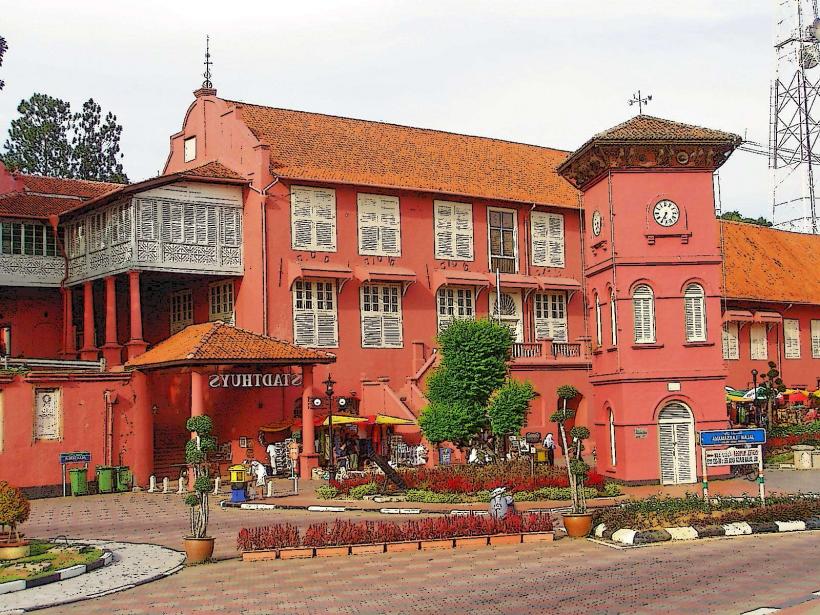
Stadthuys: Built in 1650, this massive red building served as the Dutch administrative center and is the oldest Dutch building in the East.
St. Paul’s Church: Ruins of a 1521 Portuguese chapel where St. Francis Xavier was once buried.
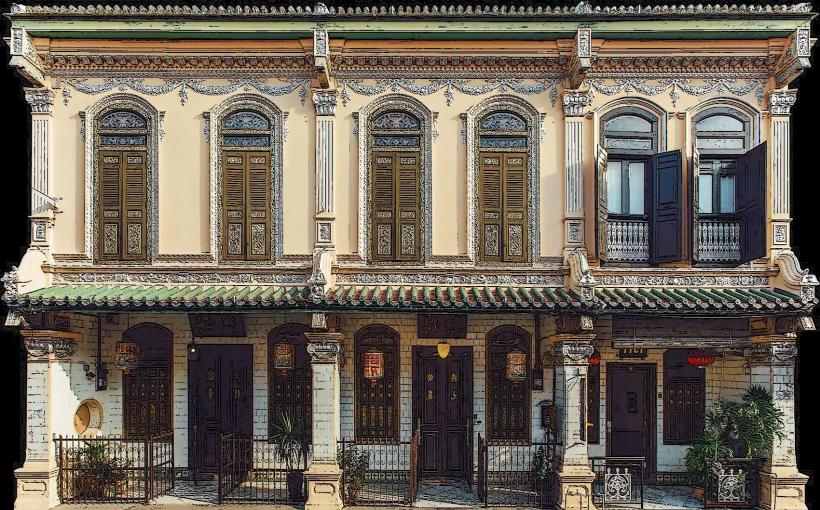
Baba & Nyonya Heritage Museum: A restored townhouse showcasing the opulent lifestyle of the Peranakan community.
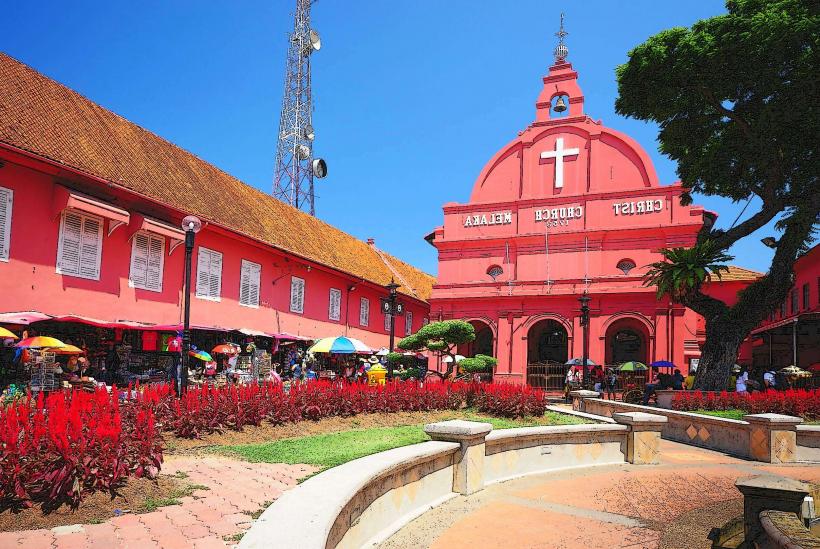
Christ Church Melaka: An 18th-century Dutch Reformed church known for its iconic red exterior and ceiling beams carved from single trees.
Transportation Network
Road: Accessible via the North-South Expressway (E2). It is approximately 2 hours south of Kuala Lumpur.
Bus: Melaka Sentral is the primary terminal for intercity buses. Within the city, "Panorama Melaka" buses operate, but coverage is limited.
Sea: The Malacca River Cruise provides a $45$-minute loop through the historic center.
Trishaws: Famous for being heavily decorated with flowers, lights, and loud music; they are the primary tourist transport within the heritage zone.
Safety & "Red Zones"
Traffic: The historic core is extremely congested on weekends; pedestrians should be wary of motorcycles on narrow one-way streets.
Pickpocketing: High-density areas like Jonker Walk during the Night Market are primary spots for opportunistic theft.
River Safety: The Malacca River is deep and has a strong current; do not attempt to swim or enter the water.
Digital & Financial Infrastructure
5G coverage is stable throughout the city. The currency is the Malaysian Ringgit (MYR). ATMs are abundant in Melaka Raya and along Jalan Hang Tuah. Contactless payment is standard in malls and hotels, but the Jonker Night Market and traditional coffee shops (kopitiams) are cash-reliant.
Climate & Air Quality
Equatorial climate: consistently hot and humid ($26^\circ\text{C}$ to $32^\circ\text{C}$). The city is slightly drier than Kuala Lumpur but prone to heavy afternoon thunderstorms. Air quality is generally good, though regional haze can occur during the dry season.
Culture & Social Norms
Peranakan Culture: A fusion of Chinese and Malay traditions, visible in the intricate "Nonya" embroidery and porcelain.
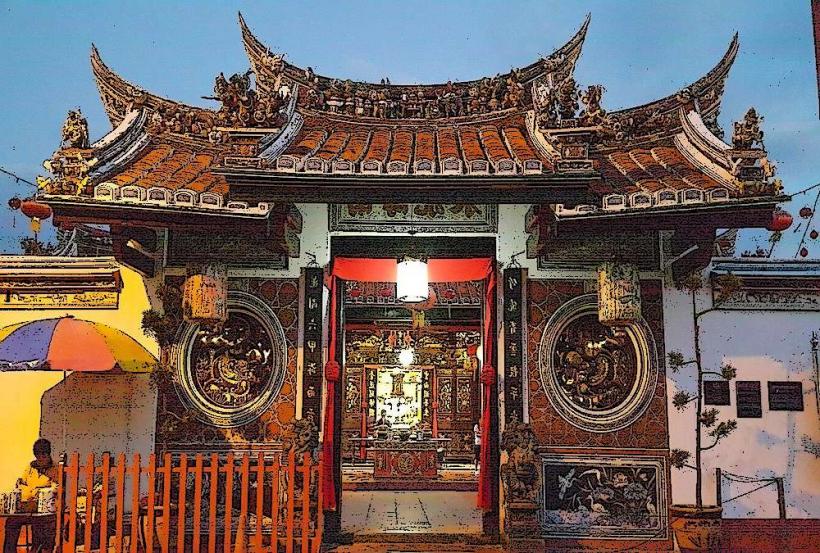
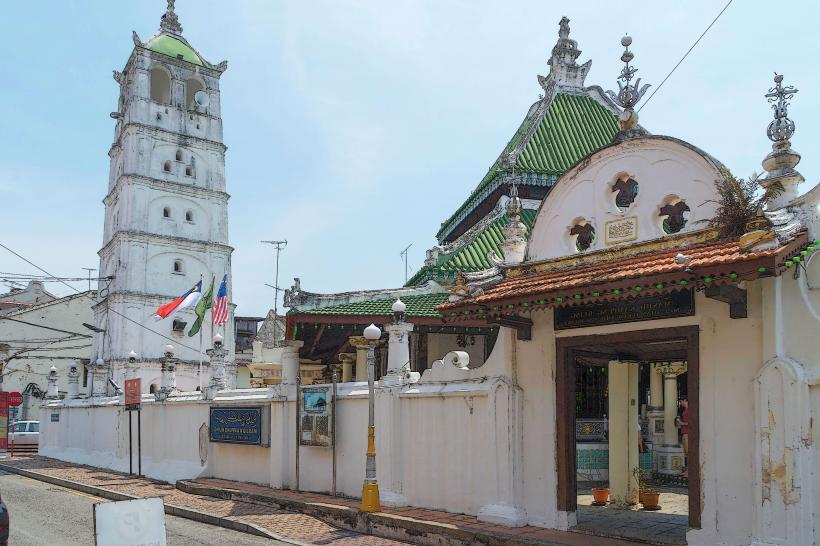
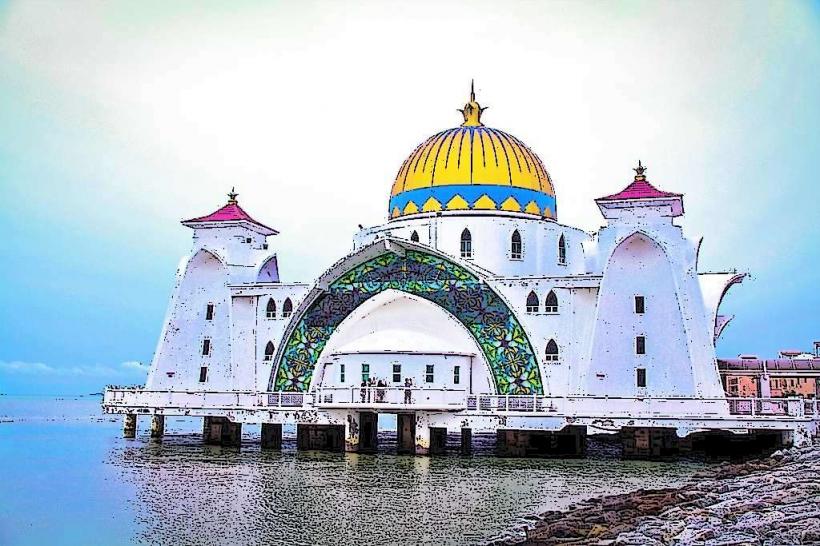
Religious Diversity: "Harmony Street" (Jalan Tukang Emas) features a mosque, a Hindu temple, and a Chinese temple in close proximity.
Cuisine: Renowned for Chicken Rice Balls, Nyonya Laksa, and Satay Celup.
Local Cost Index (MYR)
1 Hawker Meal: RM 8.00–RM 14.00
1 River Cruise Ticket: RM 30.00 (Tourist rate)
1 Trishaw Tour (30 mins): RM 40.00–RM 50.00
Nearby Day Trips
Pulau Besar: An island 15 km off the coast, known for Islamic shrines and local legends.
A'Famosa Resort: A large-scale theme park and golf resort located in Alor Gajah.
Facts & Legends
Legend says that Parameswara named the city after a Melaka tree he was leaning against while watching a small mousedeer kick one of his hunting dogs into a river-interpreting the mousedeer's bravery as a sign of a great location. A geographic fact: The Strait of Malacca is the world's busiest shipping lane, carrying roughly one-quarter of the world’s traded goods. Historically, the city was so wealthy in the 15th century that it was said "whoever is lord of Malacca has his hand on the throat of Venice."