Information
City: PhoenixCountry: USA Arizona
Continent: North America
Phoenix, USA Arizona, North America
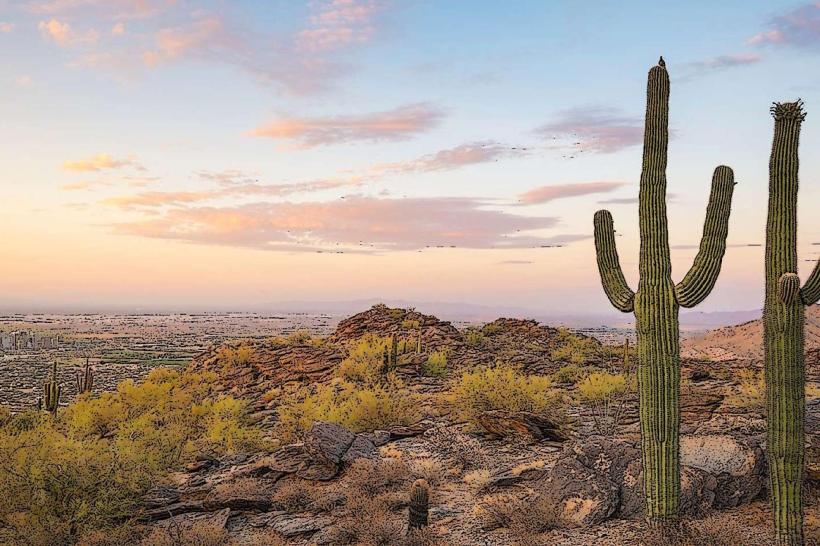
Phoenix is the capital of Arizona and the fifth-largest city in the United States. Located in the Salt River Valley (the "Valley of the Sun"), it serves as the primary economic, political, and cultural hub of the American Southwest.
Historical Timeline
Inhabited by the Hohokam people for over a millennium, who created a sophisticated canal system that remains the basis for the city's modern water infrastructure. Primary governance eras include its 1867 founding by Jack Swilling and its 1881 incorporation. A critical historical event was the 1911 completion of the Roosevelt Dam, which secured the water supply necessary for large-scale desert habitation. The post-WWII era was defined by the widespread adoption of air conditioning, which triggered a massive demographic shift from the "Rust Belt" to the "Sun Belt."
Demographics & Population
The population is approximately 1.65 million (city) and 5 million (metropolitan area). The demographics are White (41%), Hispanic or Latino (43%), Black or African American (7%), and Asian (4%). It is one of the fastest-growing major cities in the U.S.
Urban Layout & Key Districts
Phoenix is characterized by a massive grid system and sprawling suburban developments.
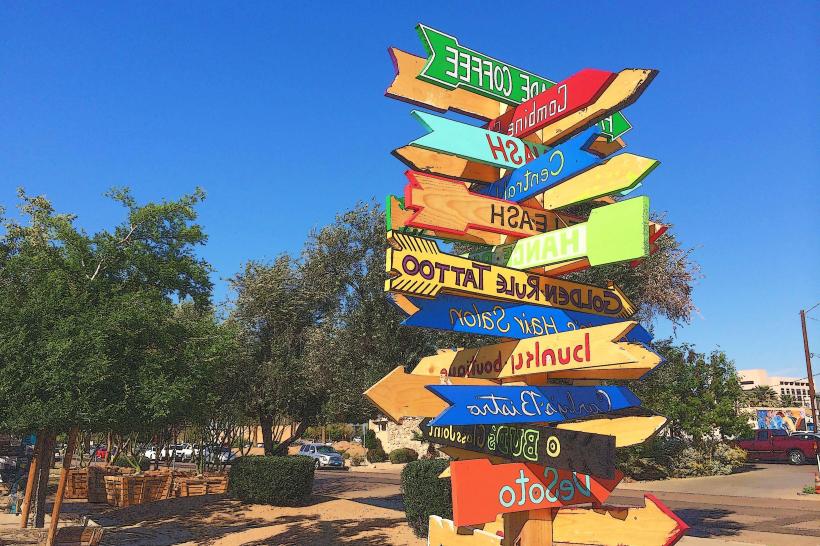
Downtown: The urban core featuring the Phoenix Convention Center, sports arenas, and the Roosevelt Row (RoRo) arts district.
Biltmore / Camelback Corridor: An affluent financial and upscale retail district.
Arcadia: A historic residential area known for lush landscaping and luxury estates.
North Mountain: A rugged residential area focused on hiking and outdoor lifestyle.
Desert Ridge: A master-planned community in North Phoenix featuring high-end retail and the Mayo Clinic campus.
Top City Landmarks
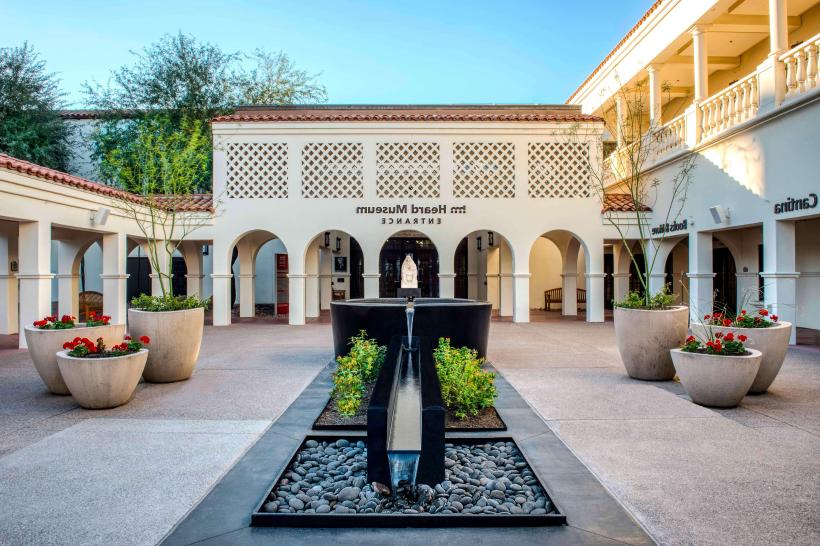
Heard Museum: Globally recognized for its extensive collection of American Indian art and history.
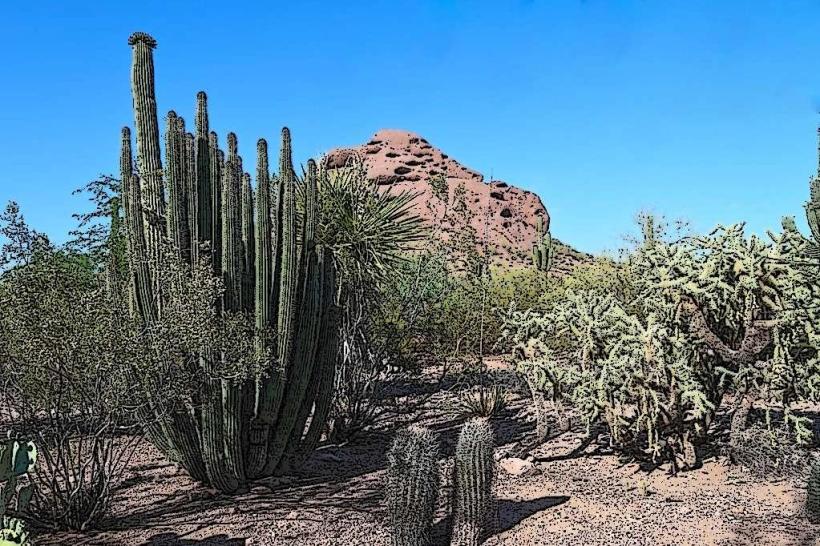
Desert Botanical Garden: A 140-acre facility showcasing thousands of species of desert plants.
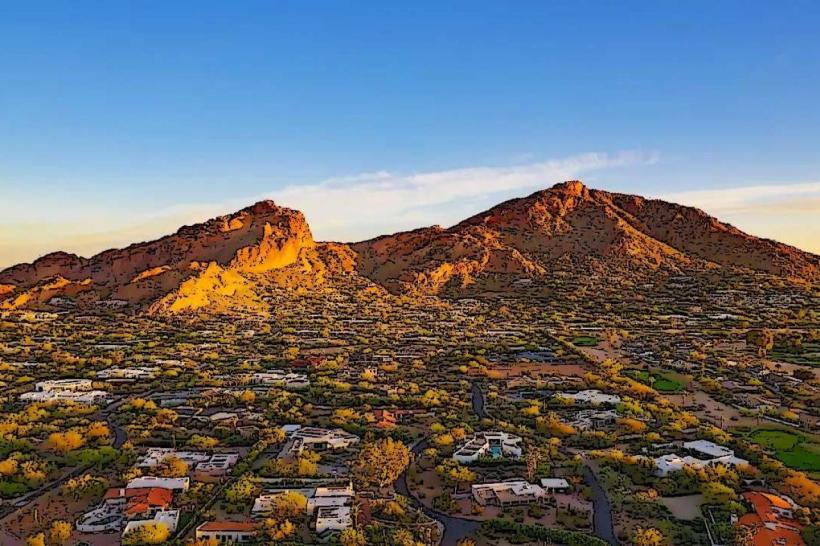
Camelback Mountain: The city's most iconic natural landmark, featuring intense hiking trails (Echo Canyon and Cholla).
Musical Instrument Museum (MIM): The largest museum of its kind in the world, displaying instruments from nearly 200 countries.
Taliesin West: Frank Lloyd Wright’s winter home and desert laboratory, a UNESCO World Heritage site (located in adjacent Scottsdale).
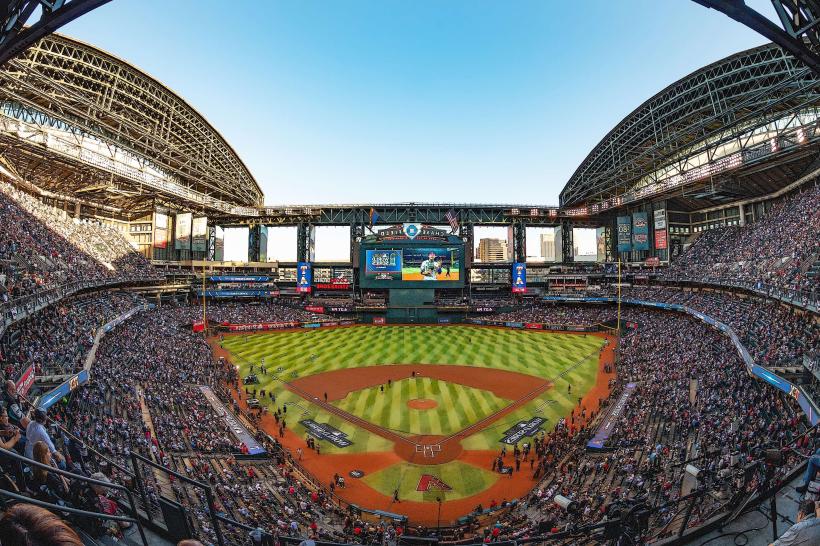
Chase Field: Home of the Arizona Diamondbacks, featuring a retractable roof.
Transportation Network
Movement is serviced by Valley Metro, which operates a bus system and a 45-km light rail line connecting Phoenix to Tempe and Mesa. The city is bisected by I-10, I-17, and the Loop 101/202 freeway systems. Commercial air service is provided by Phoenix Sky Harbor International Airport (PHX). Ride-sharing is universal. Traffic density is extreme during rush hours, specifically on the "Mini-Stack" interchange and the I-10 tunnel.
Safety & "Red Zones"
The general safety level is moderate. Property crime, specifically vehicle theft and "porch piracy," is high. Caution is advised at night in parts of Maryvale (West Phoenix) and sections of South Phoenix near the Baseline Road corridor, which experience higher rates of violent crime. Downtown is generally safe and well-patrolled. Common scams involve fraudulent "solar energy" door-to-door solicitations.
Digital & Financial Infrastructure
Internet speeds average 600 Mbps with fiber availability via Cox, CenturyLink (Lumen), and Google Fiber. Main mobile carriers are T-Mobile, Verizon, and AT&T. Card acceptance is universal. ATMs are ubiquitous.
Climate & Air Quality
Temperatures range from 7°C to 20°C in winter and 28°C to 45°C (113°F+) in summer. Characterized by extreme heat and low humidity. Air quality is often poor during summer due to ozone levels and seasonal haboobs (massive dust storms) during the monsoon season (June–September).
Culture & Social Norms
The standard tipping percentage is 18–25%. A handshake is the standard greeting. Dress codes are "Desert-Casual" (lightweight fabrics and sun protection are functional necessities). The city is culturally defined by its "Western Frontier" heritage, its proximity to the Mexican border, and its rapid modernization into a tech hub ("Silicon Desert").
Accommodation Zones
Downtown: Recommended for business, sports events, and arts access.
Biltmore / Arcadia: Recommended for luxury stays and central proximity.
North Phoenix / Desert Ridge: Recommended for resorts and family-oriented travel.
Local Cost Index
1 Espresso: $5.25 (USD)
1 Standard Lunch: $20.00 (USD)
1 Light Rail Fare: $2.00 (Single) / $4.00 (Day pass).
Nearby Day Trips
Sedona (Red Rocks): (185 km north).
Grand Canyon National Park: (360 km north).
Tucson / Saguaro National Park: (180 km south).
Facts & Legends
Phoenix is the only state capital with a population exceeding one million residents. Historically, it was the site of the "Phoenix Lights" in 1997, one of the most famous mass UFO sightings in history. A local legend involves the "Lost Dutchman’s Gold Mine" in the nearby Superstition Mountains, a fabled treasure that has lured prospectors for over a century. Another legend concerns the "Sunken City of the Hohokam," rumored hidden chambers beneath the modern canal system.