Information
City: SalamancaCountry: Spain
Continent: Europe
Salamanca, Spain, Europe
Salamanca serves as the intellectual and cultural heart of the Castile and León region. It is situated on the Tormes River in the Northern Meseta, approximately 200 km west of Madrid. Known as La Dorada (The Golden City), it is characterized by its unique Villamayor sandstone architecture, which glows gold at sunset.
Historical Timeline
Founded as the Celtic settlement Helmantica, it was conquered by Hannibal in 220 BC before becoming a major Roman station on the Vía de la Plata (Silver Way). Governance eras include Visigothic, Islamic (8th–11th centuries), and Leonese. The defining historical event was the 1218 founding of the University of Salamanca, one of the oldest in the world. The city’s urban form reached its peak during the 16th-century Spanish Golden Age (Plateresque style) and was largely preserved after the Peninsular War (1808–1814).
Demographics & Population
As of 2026, the city population is approximately 143,000. The demographic is heavily influenced by a transient population of 30,000+ university students. The primary ethnic demographic is Spanish (92%), with international residents mainly from Latin America and other EU nations. The median age of permanent residents is 46.4 years.
Urban Layout & Key Districts
Casco Antiguo (Old City): A UNESCO World Heritage site containing the high density of monuments, cathedral, and university buildings.
Plaza Mayor & Surroundings: The social and commercial epicenter of the city.
Garrido: A high-density residential district to the northeast, offering more affordable local services.
University Zone: Concentrated in the southwestern part of the historic center.
Top City Landmarks
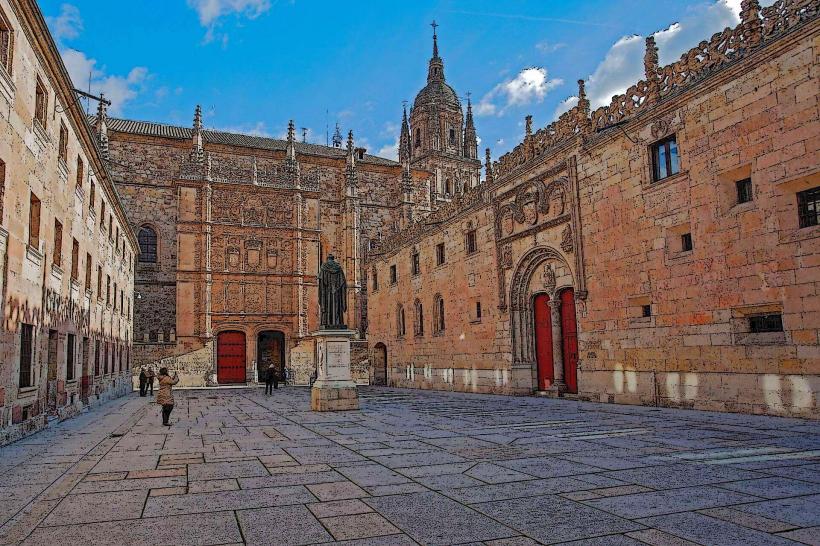
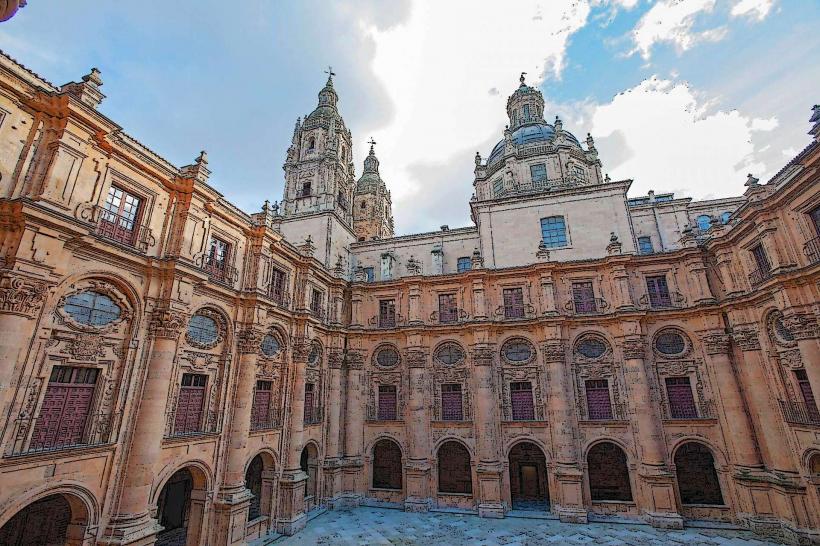
University of Salamanca: Features the famous Plateresque façade; legend says students must find the stone frog on the skull to pass their exams.
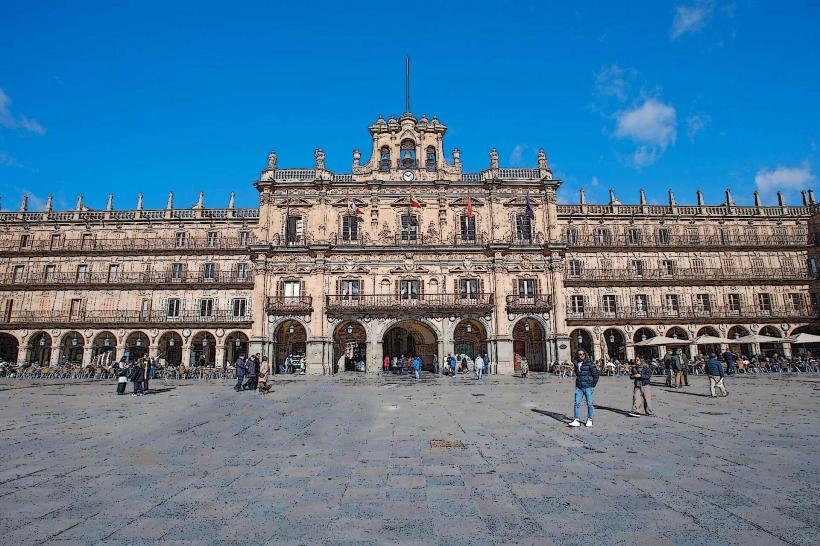
Plaza Mayor: Widely considered the most beautiful Baroque square in Spain, designed by Alberto Churriguera.
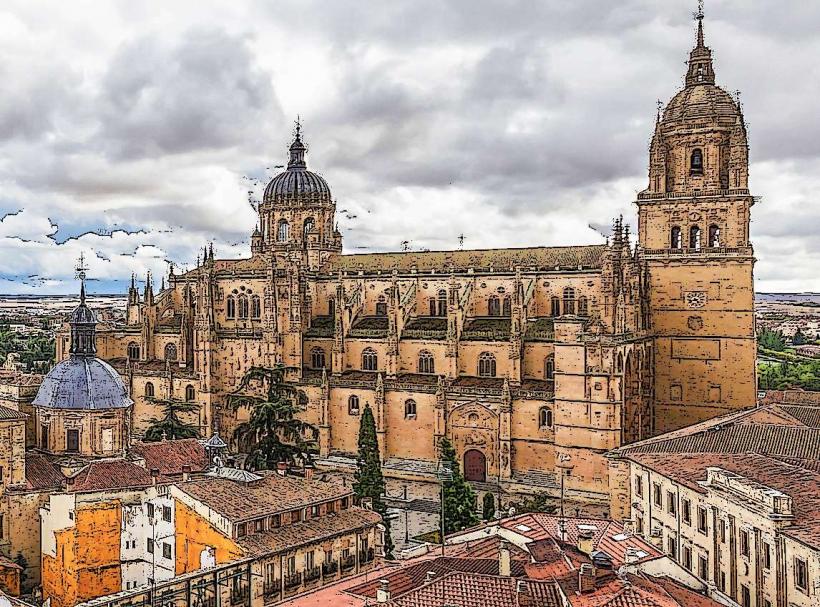
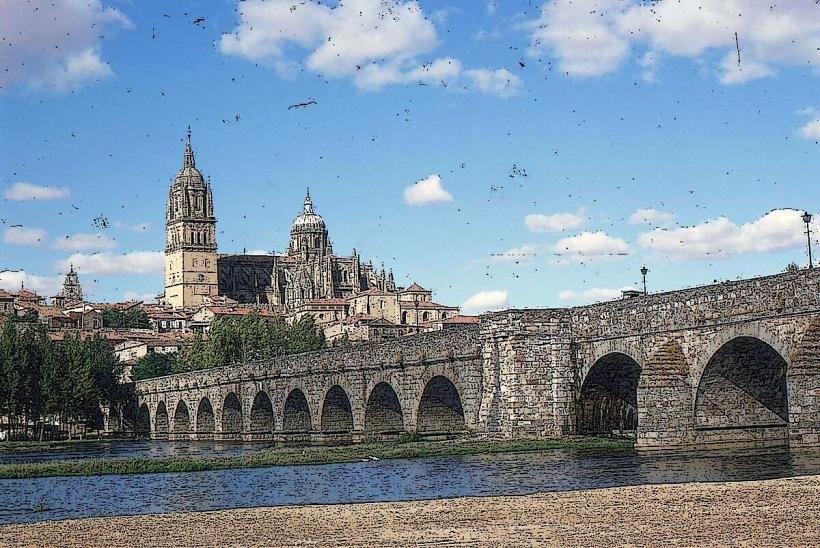
The New and Old Cathedrals: A unique complex where the 16th-century Gothic New Cathedral is joined to the 12th-century Romanesque Old Cathedral.
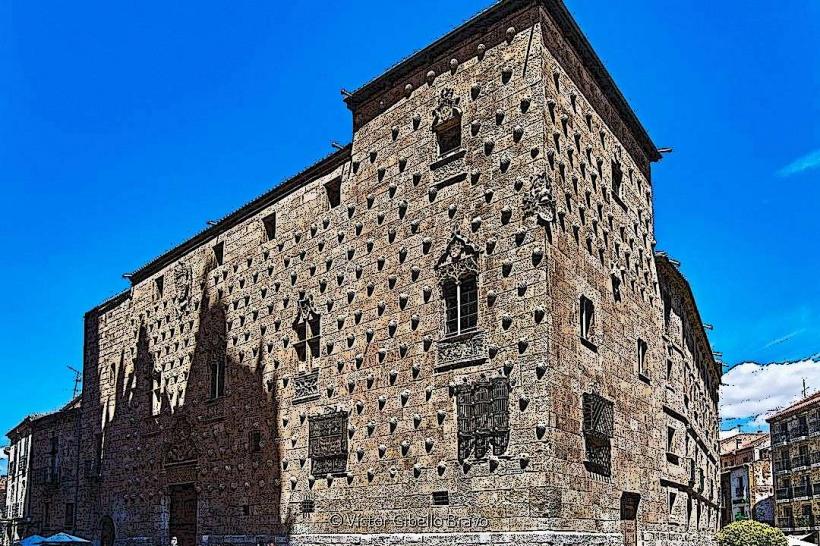
Casa de las Conchas: A 15th-century palace decorated with over 300 stone scallop shells, the symbol of the Order of Santiago.
Roman Bridge (Puente Romano): A 1st-century AD bridge that remains a primary pedestrian entry to the city.
Transportation Network
The city is compact and primarily navigated on foot. Local transit consists of a red municipal bus network. Taxis are white; the primary hailing app is PideTaxi. There is no metro or tram. The Vialia station connects Salamanca to Madrid (Alvia high-speed) in approximately 1 hour 40 minutes.
Safety & "Red Zones"
Salamanca is exceptionally safe, ranking among the safest cities in Spain due to its academic atmosphere. There are no "red zones." Standard caution for pickpockets is advised in the Plaza Mayor and near the Cathedral during peak tourist hours.
Digital & Financial Infrastructure
Average fixed broadband speed is 210 Mbps. 5G coverage is universal in the urban core via Movistar, Orange, and Vodafone. Card acceptance is 100% in restaurants and retail. Following the Eurozone standard, the currency is the Euro (€). ATMs are abundant around the Plaza Mayor and Calle Toro.
Climate & Air Quality
The climate is Mediterranean-Continental. Summers are hot and dry (15°C to 32°C); winters are cold with frequent frost (-2°C to 9°C). Air quality is excellent due to low industrial activity and the city's elevation (800m).
Culture & Social Norms
Language: Castilian Spanish; the region is famous for speaking the "purest" form of Spanish, making it a global hub for language learners.
Tipping: Not required; rounding up or leaving €1 is standard.
Lunes de Aguas: A unique local festival (Monday after Easter) where residents eat hornazo (meat pie) by the river.
Student Culture: Thursday is the primary night for student nightlife.
Accommodation Zones
Casco Antiguo: Recommended for tourism and proximity to monuments.
Van Dyck: Recommended for food enthusiasts (famous for its tapas route) and a more local feel.
Local Cost Index
1 Espresso: €1.40–€1.80
1 Standard Lunch (Menu del Día): €12.00–€15.00
1 Single Bus Ticket: €1.10
Nearby Day Trips
Alba de Tormes (20 km): Burial site of Saint Teresa of Ávila.
La Alberca (75 km): A traditional stone village in the Sierra de Francia.
Arribes del Duero (90 km): Dramatic river canyons on the Portuguese border.
Zamora (65 km): Known for having the highest concentration of Romanesque churches in Europe.
Facts & Legends
During a 1992 restoration of the New Cathedral, an astronaut and a faun eating ice cream were added to the stone carvings by stonemasons as a modern signature, sparking numerous modern myths. A verified oddity: the University of Salamanca was the first in Europe to receive the title of "University" and was the site where Christopher Columbus's plans for his voyage were debated by a council of geographers.