Information
City: Sant Francesc XavierCountry: Balearic Islands
Continent: Europe
Sant Francesc Xavier, Balearic Islands, Europe
Sant Francesc Xavier is the capital and largest village of Formentera. It serves as the island’s administrative, religious, and commercial center.
Historical Timeline
The town was developed in the early 18th century as the island was repopulated after being abandoned for centuries due to pirate raids. The central church, completed in 1738, was designed as a fortress to provide shelter for the population. Following the tourism expansion of the 1960s, Sant Francesc became the primary hub for the island's unique "slow-living" culture.
Demographics & Population
The population is approximately 3,500. It is the most inhabited area on Formentera. The demographic is a mix of local families (Formenterencs) and an international resident community. The economy is driven by retail, local administration, and boutique tourism.
Urban Layout & Key Districts
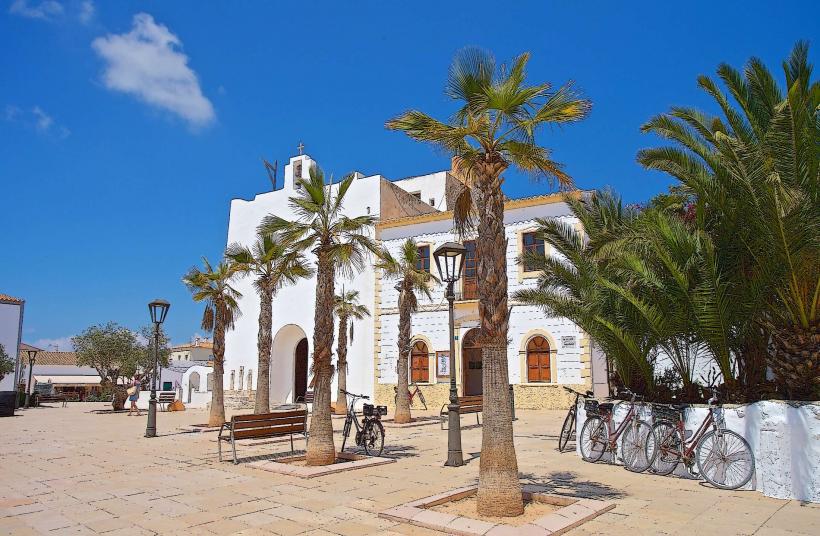
Plaça de la Constitució: The central square housing the church and town hall; the island's primary social gathering point.
Pedestrian Core: The streets surrounding the square, such as Carrer de Santa Maria, are lined with upscale boutiques and cafes.
Sa Raval: The residential outskirts extending toward the countryside.
Sant Ferran de Ses Roques: A neighboring village 2 km east, known for its historic hippie roots.
Top Landmarks
Sant Francesc Xavier Church: A massive, austere whitewashed fortress-church with thick walls and a flat roof that once held cannons.
Sa Mirada Windmills: Two historic windmills located on the outskirts, offering views over the Estany des Peix.
Ethnological Museum of Formentera: Showcases traditional tools, clothing, and the island's agricultural history.
Town Hall (Ajuntament): A classic example of Balearic civic architecture located in the main plaza.
Transportation Network
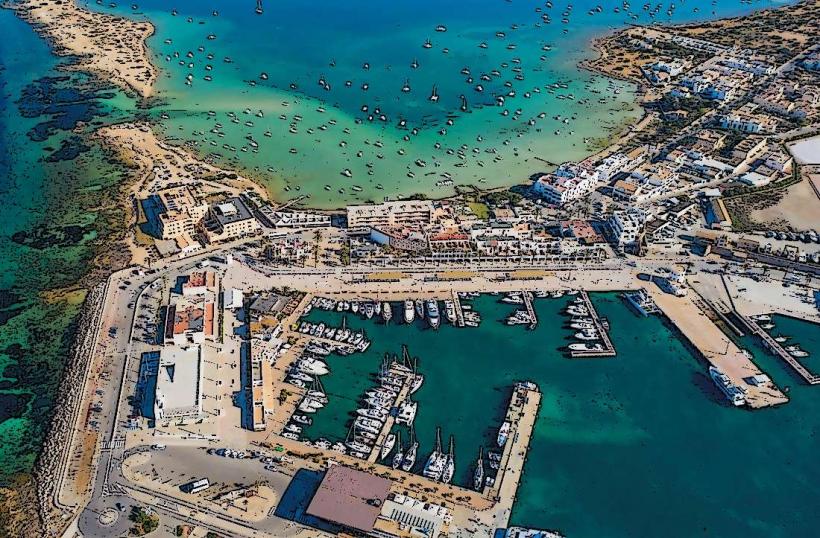
Sea: Accessed via the Port of La Savina (3 km north), the only entry point to the island.
Road: Directly connected to La Savina, Sant Ferran, and El Pilar de la Mola via the PM-820 highway.
Cycling: Formentera is mostly flat; Sant Francesc is a primary node for the island's "Green Routes" (Rutes Verdes).
Parking: The village center is pedestrian-only; large public lots are situated at the southern and western entrances.
Safety & "Red Zones"
Driving: Scooters are the primary mode of transport for tourists; be aware of sand and gravel on rural roads which causes frequent skidding.
Environmental Protection: Driving and parking on sand dunes or protected flora result in extreme fines.
Hydration: Formentera has no natural freshwater springs; tap water is desalinated and often slightly brackish.
Digital & Financial Infrastructure
4G/5G coverage is stable in the town center but can drop in rural areas. The currency is the Euro (€). This is the primary location on the island for banks and ATMs. Contactless payment is standard in boutiques and restaurants.
Climate & Air Quality
Mediterranean climate. It is the driest and sunniest of the Balearic Islands. Air quality is pristine due to limited vehicle traffic and the absence of industry.
Culture & Social Norms
Fashion: Known for "Formentera Style"-minimalist, high-quality white linens and artisan jewelry.
Weekly Markets: The town hosts artisan and flea markets during the summer months.
Cuisine: Specialized in Ensalada Payesa (dried fish salad), Peix Sec (sun-dried fish), and Miel de Formentera (thyme honey).
Local Cost Index (EUR)
1 Espresso: €2.00–€3.50
1 Standard Lunch (Daily Menu): €18.00–€28.00
1 Bicycle Rental (Daily): €10.00–€15.00
Nearby Day Trips
Ses Illetes: Frequently cited as one of the world's best beaches, located 10 minutes north.
Cap de Barbaria: A remote lighthouse at the island's southern tip, famous for sunset views.
Estany des Peix: A shallow lagoon popular for sailing and birdwatching.
Facts & Legends
Legend says the island’s thick pine forests were once home to giant lizards, though today only small green lizards (Sargantanes) remain as the island's symbol. A geographic fact: Sant Francesc is the only capital in the Balearics without a coastline. Historically, the church was built without windows near the ground level specifically to prevent pirates from climbing into the sanctuary during an assault.