Information
City: SevnicaCountry: Slovenia
Continent: Europe
Sevnica, Slovenia, Europe
Sevnica is the administrative and economic center of the Lower Sava Valley in eastern Slovenia. It is situated on the left bank of the Sava River at its confluence with the Sevnična stream, serving as a primary hub for the regional timber and textile industries.
Historical Timeline
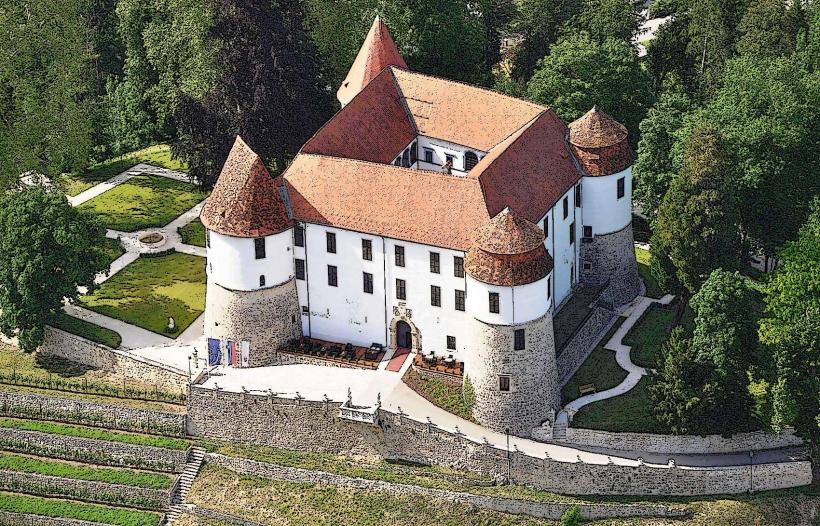
The site has been inhabited since the Hallstatt period, but the town was first documented in 1275 as "Lichtenwald." It was governed primarily by the Archdiocese of Salzburg until 1494, after which it passed to various noble families under the Habsburg Monarchy. The most significant architectural reconstruction occurred in the late 16th century when the medieval castle was rebuilt into its current Renaissance form. The primary event shaping the current urban form was the 19th-century construction of the Austrian Southern Railway, which shifted the town's economic focus from the river to the rail corridor.
Demographics & Population
The municipality has a total population of approximately 17,633 residents, with 4,500 residing in the town center. The demographics are predominantly ethnic Slovene (94%). The median age of the population is 45.1 years.
Urban Layout & Key Districts
The town is organized linearly between the Sava River and the surrounding hills. The Old Town (Staro jedro) is situated on a terrace below the castle hill. The New Center (Novo mesto) contains the primary administrative and commercial buildings. Boštanj is a significant district located directly across the Sava River on the right bank, connected by a central bridge.
Top City Landmarks
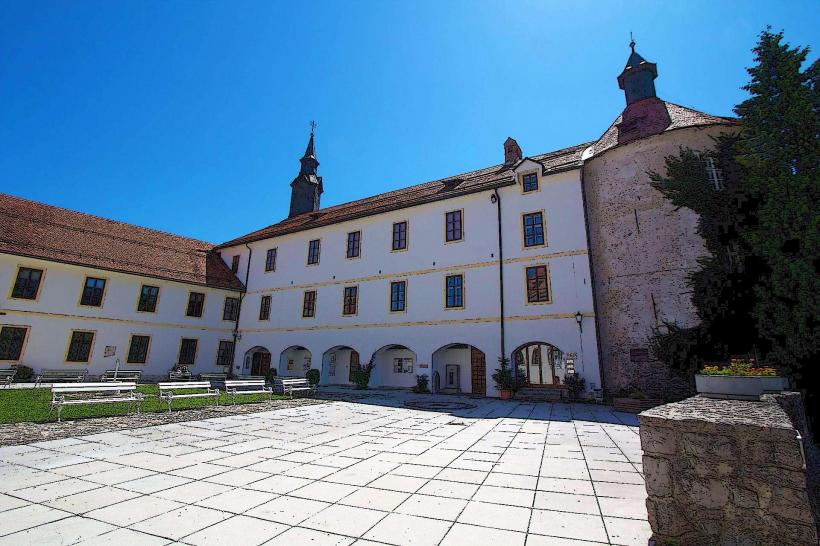
Sevnica Castle (Renaissance fortress and cultural center)
Church of Saint Nicholas (Old Town landmark)
The Luther Cellar (16th-century painted vault near the castle)
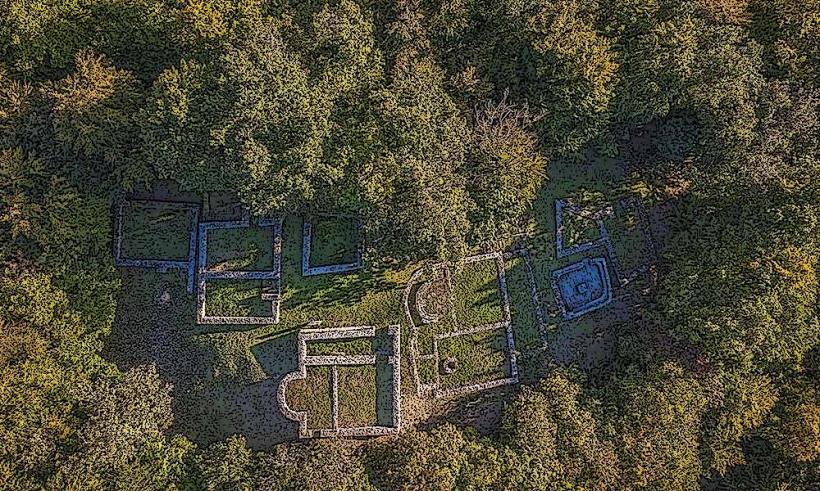
Ajdovski Gradec (Late Antiquity archaeological park)
Lisca (Alpine peak and hiking hub at 948 m)
Transportation Network
Navigation within Sevnica is primarily conducted on foot or by private vehicle. The town is a major stop on the Dobova–Ljubljana railway line. There is no metro or tram system. Ride-sharing apps like Uber are non-functional; local taxis must be pre-arranged via telephone. Traffic density is low, though the main regional road (G1-5) sees heavy freight transit.
Safety & "Red Zones"
The safety level is absolute. There are no neighborhoods or "red zones" to avoid. Crimes against visitors are statistically negligible. Standard vigilance is advised only during large public events like the Salami Festival (Salamijada).
Digital & Financial Infrastructure
Average internet speed is 100 Mbps. Main mobile carriers are Telekom Slovenije, A1, and Telemach. Card acceptance is high in supermarkets and restaurants. ATMs are located in the New Center and at the primary shopping complex near the railway station.
Climate & Air Quality
Temperatures range from -3°C to 4°C in January and 14°C to 27°C in July. The river valley is prone to morning fog in autumn and spring. Air quality is high, though humidity remains elevated throughout the summer due to the proximity of the Sava River.
Culture & Social Norms
Tipping is not mandatory; 10% is standard for professional restaurant service. The greeting is a firm handshake. Local culture is characterized by the "Salamijada" tradition (cured meat production) and viticulture (Blue Franconian wine). Smoking is prohibited in all indoor public spaces.
Accommodation Zones
Stay in the Old Town for proximity to the castle and historical sites. Stay in Boštanj or at the Lisca Mountain Hut for access to hiking trails and panoramic views of the valley.
Local Cost Index
1 Espresso: €1.50 ($1.65)
1 Standard Lunch: €12.00 ($13.20)
1 Train Ticket (to Ljubljana): €7.50 ($8.25)
Nearby Day Trips
Krško (Regional center): 18 km
Celje (Medieval castle city): 32 km
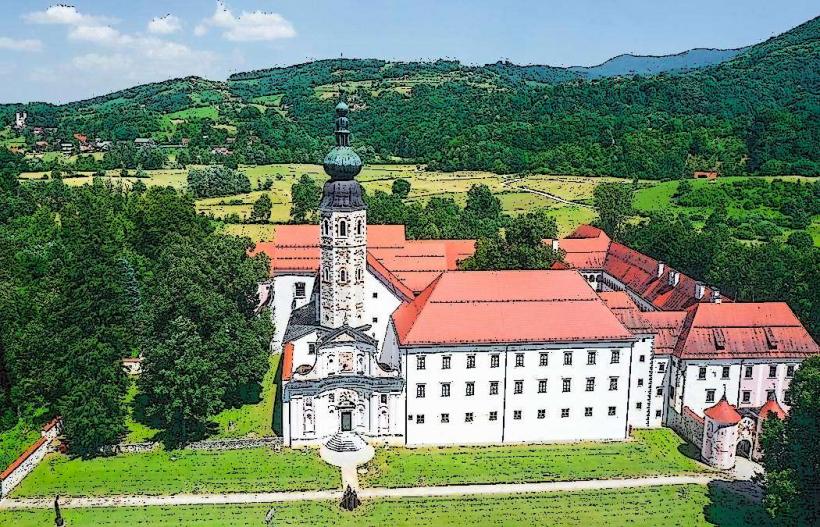
Olimje (Historic monastery and pharmacy): 40 km
Zagreb, Croatia (Capital city): 85 km
Facts & Legends
Sevnica achieved global recognition in 2016 as the hometown of Melania Trump, which triggered a local tourism boom and the creation of "First Lady" branded products. A local historical oddity is the Luther Cellar; despite its name, it was never used by Martin Luther but served as a secret meeting place for Protestants during the Counter-Reformation, featuring rare 16th-century frescoes of the Last Judgment.