Information
City: ShahaniyaCountry: Qatar
Continent: Asia
Shahaniya, Qatar, Asia
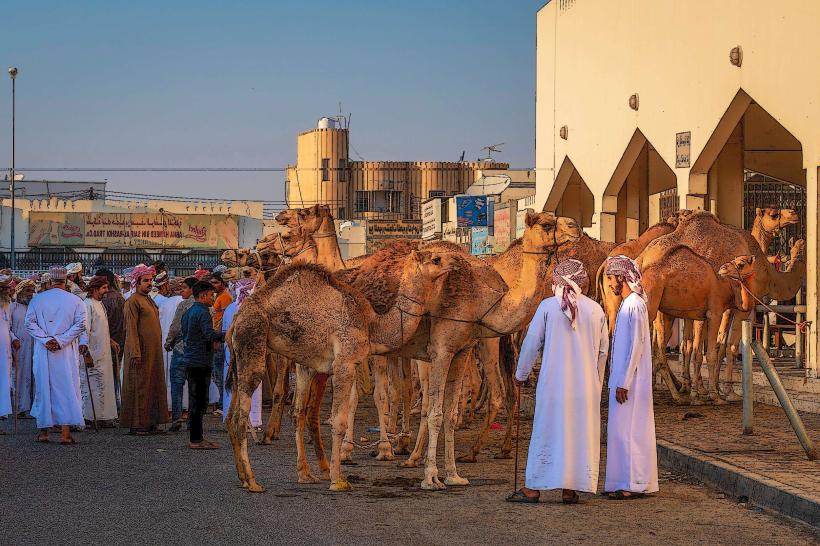
Al Shahaniya is a municipality in central Qatar, located approximately $30\text{–}40\text{ km}$ west of Doha. Known as the heart of Qatari camel culture, it serves as the nation’s primary hub for breeding, training, and racing. In 2026, the city remains a vital cultural anchor and a transition point between the urban sprawl of Doha and the industrial zones of Dukhan.
Historical Timeline
1970s–1980s: Established as a key administrative center for the central desert region.
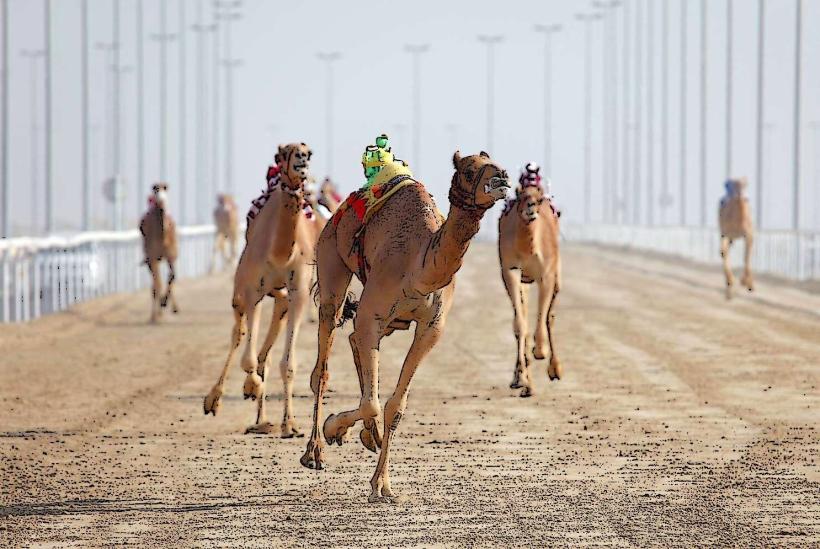
2004: Traditional jockeys were replaced by robotic jockeys, a major technological shift in camel racing.
2014: Al Shahaniya was officially separated from the Al Rayyan municipality to become its own administrative entity.
2026: In January 2026, the city is in the peak of the camel racing season, hosting prestigious national tournaments like HH The Emir’s Main Camel Race.
Demographics & Population
The population of Al Shahaniya municipality is approximately 161,240 as of early 2026.
Density: Despite its vast land area ($3,309\text{ km}^2$), the municipality has a very low population density, with most residents concentrated in the Al Shahaniya city core.
Gender Ratio: Reflecting the heavy presence of agricultural and specialized animal husbandry labor, the population is significantly male-dominant (approximately 89% male).
Composition: Home to Bedouin families and specialized expatriate trainers and handlers from across South Asia and East Africa.
Urban Layout & Key Districts
Al Shahaniya City: The residential and administrative core featuring schools, health centers, and local markets.
Camel City: A specialized "city within a city" surrounding the racetrack, consisting of thousands of stables, trainer housing, and camel-specific pharmacies.
Zekreet (West Coast): A remote coastal district within the municipality known for its unique limestone geography and art installations.
Al Sheehaniya Package 1: An ongoing $86.6\text{M}$ infrastructure project (expected completion Q2 2027) currently upgrading $10\text{ km}$ of internal roads and $18.5\text{ km}$ of cycle paths.
Top City Landmarks
Al Shahaniya Camel Racetrack: One of the largest and most modern tracks globally. Visitors can watch races or witness daily training sessions (usually at 9:30 AM and 5:30 PM).
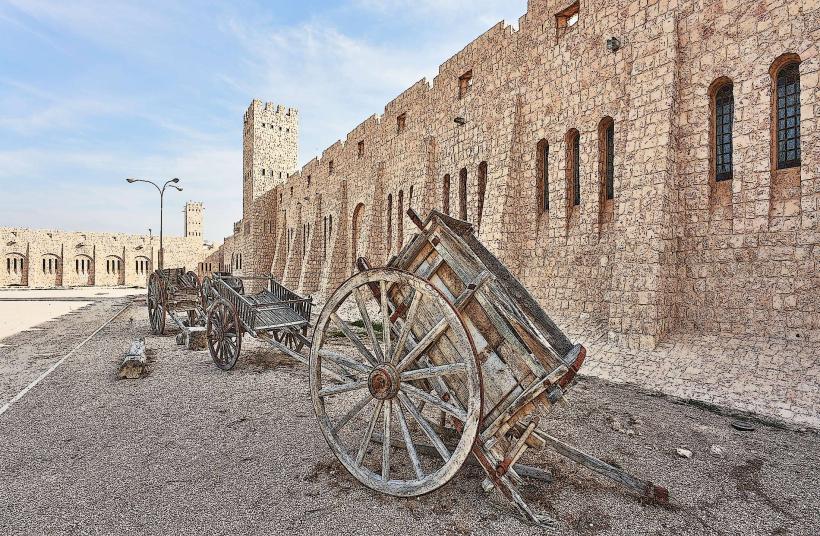
Sheikh Faisal Bin Qassim Al Thani Museum: One of the world’s largest private museums, housing over 15,000 artifacts including vintage cars, ancient manuscripts, and traditional Qatari dhows.
Al Dosari Zoo and Game Reserve: A private nature reserve that educates the public on regional flora and fauna; popular for family picnics and observing Arabian oryx.
Desert Park: A $13,803\text{ m}^2$ park designed in the shape of a desert tree, featuring indigenous plants and wildlife.
Richard Serra’s "East-West/West-East": Located in the nearby Brouq Nature Reserve; four massive steel plates standing over $14\text{ m}$ tall in the middle of the desert.
Umbrella Rock: A famous, naturally weathered limestone formation in Zekreet that resembles a giant mushroom or umbrella.
Transportation & Infrastructure
Dukhan Highway: The primary eight-lane arterial road connecting Al Shahaniya to Doha (east) and Dukhan (west).
Transit: In 2026, the city is primarily car-dependent. Public bus routes exist but are limited. Most tourists arrive via private tour operators or 4x4 vehicles.
Utilities: The municipality is currently integrating a $315.5\text{M}$ QAR drainage and foul sewer network to support new residential plots for Qatari citizens.
Safety & Health
Safety: Generally very safe with low crime. However, road safety on the rural desert roads is a primary concern; wandering livestock and aggressive driving on the highway are common hazards.
2026 Advisory: As of January 22, 2026, travelers are advised to exercise "High Caution" due to regional tensions, though Al Shahaniya remains operationally stable.
MERS-CoV Caution: International health agencies recommend avoiding close contact with camels and unpasteurized camel milk due to the risk of Middle East Respiratory Syndrome.
Climate & Environment
Current Status (Jan 22, 2026): Peak visiting season. Daytime temperatures are mild ($14^{\circ}\text{C}$ to $22^{\circ}\text{C}$), providing the only window for comfortable desert exploration.
Al Reem Biosphere Reserve: A UNESCO-recognized reserve within the municipality protecting the desert’s biodiversity, including the Arabian gazelle.
Local Cost Index (2026 Estimates)
1 Traditional Tea (Karak): 1–2 QAR
1 Guided Camel Racetrack Tour: 180–360 QAR
1 Admission to Sheikh Faisal Museum: 50 QAR
1 High-End Racing Camel: 365,000 to 1,000,000+ QAR
Facts & Legends
A verified historical oddity is that the camel racing robots used in Al Shahaniya are designed to resemble human jockeys in miniature, complete with colorful racing silks and remote-controlled whips. A prominent local legend surrounds the Zekreet Peninsula; it is often said that the area was once an ancient seafaring outpost for the Dilmun civilization, with the bizarre rock formations serving as natural navigation markers for sailors navigating the Gulf thousands of years ago.