Information
City: SzczecinCountry: Poland
Continent: Europe
Szczecin, Poland, Europe
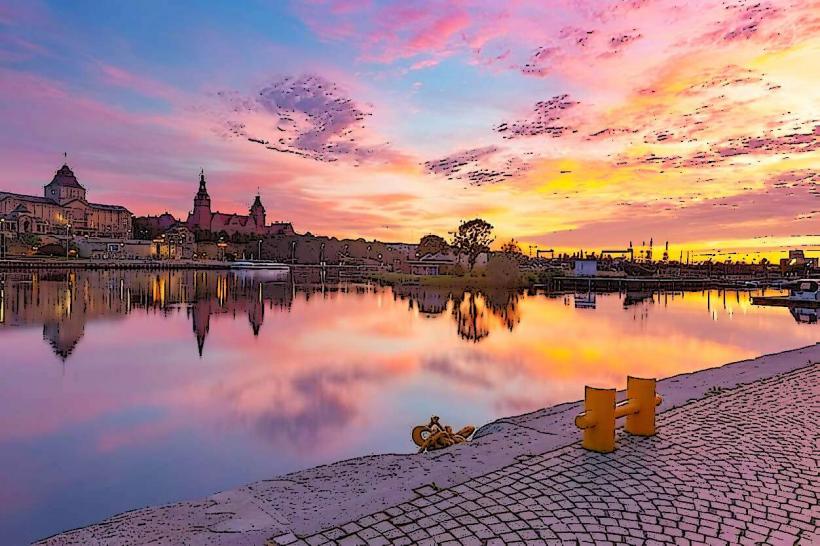
Szczecin functions as the administrative and economic capital of the West Pomeranian (Zachodniopomorskie) Voivodeship. Situated on the Odra River and Lake Dąbie, 65 km from the Baltic Sea, it serves as a specialized node for maritime logistics, renewable energy (offshore wind), and cross-border commerce with Germany. It is defined by its unique Parisian-style "star" urban layout, its status as a historical Hanseatic city, and its modern transition into a "Floating Garden" metropolis.
Historical Timeline
Szczecin was first mentioned in 967 AD. The primary era of governance was defined by the House of Griffins, who ruled the Duchy of Pomerania for five centuries. The primary event shaping its modern identity was the 1945 transition from German Stettin to Polish Szczecin, followed by the 1970 and 1980 anti-communist strikes at the Paris Commune Shipyard. Historically, it served as a major Prussian port and military stronghold, heavily reconstructed after the Allied bombings of WWII.
Demographics & Population
The population is approximately 390,000 (2026 estimate). The demographic profile is characterized by a strong maritime and academic identity, supported by the Maritime University of Szczecin and the West Pomeranian University of Technology. The workforce is specialized in ship repair, green hydrogen technology, and international logistics.
Urban Layout & Key Districts
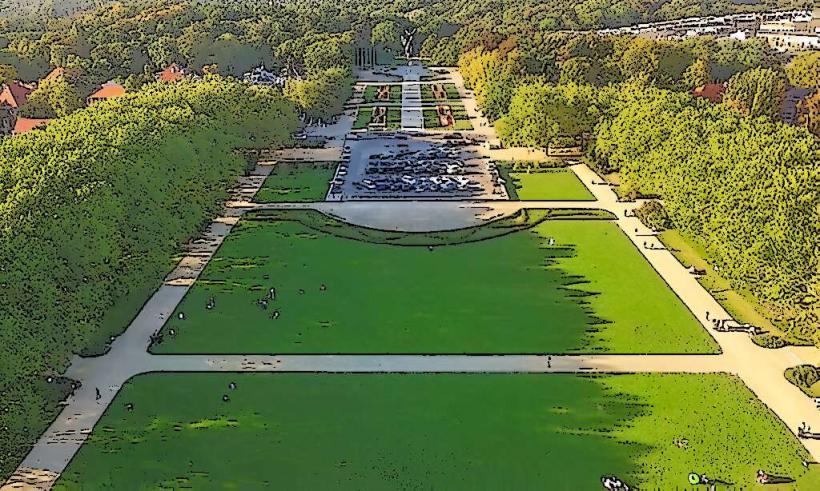
The city is organized around a specialized radial plan modeled after Paris.
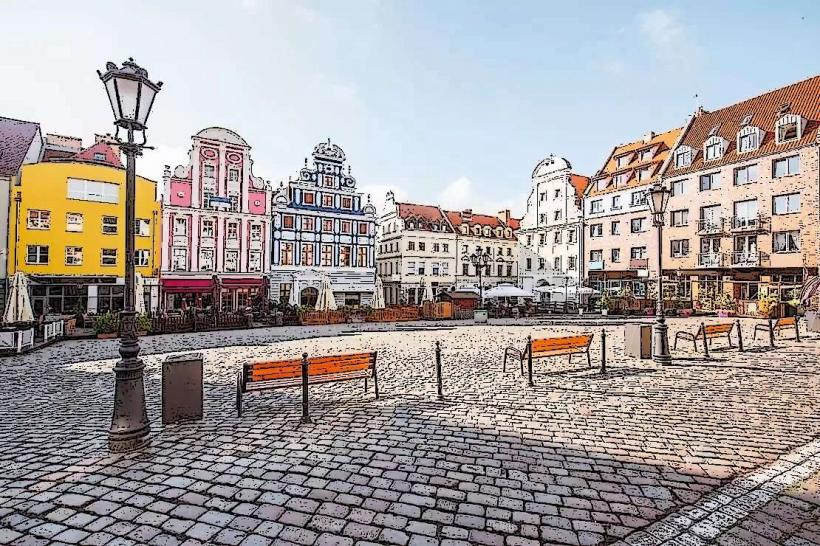
Old Town (Stare Miasto): A specialized historic zone on the Odra bank, featuring the Castle and the reconstructed Hay Market.
Center (Śródmieście): The specialized core featuring wide boulevards and large circular plazas (e.g., Plac Grunwaldzki) where several streets converge.
Łasztownia: A specialized river island undergoing massive revitalization, transforming from an industrial port area into the city's primary cultural and social hub.
Pogodno: A specialized residential district known for its historic villas and high density of green spaces.
Top City Landmarks
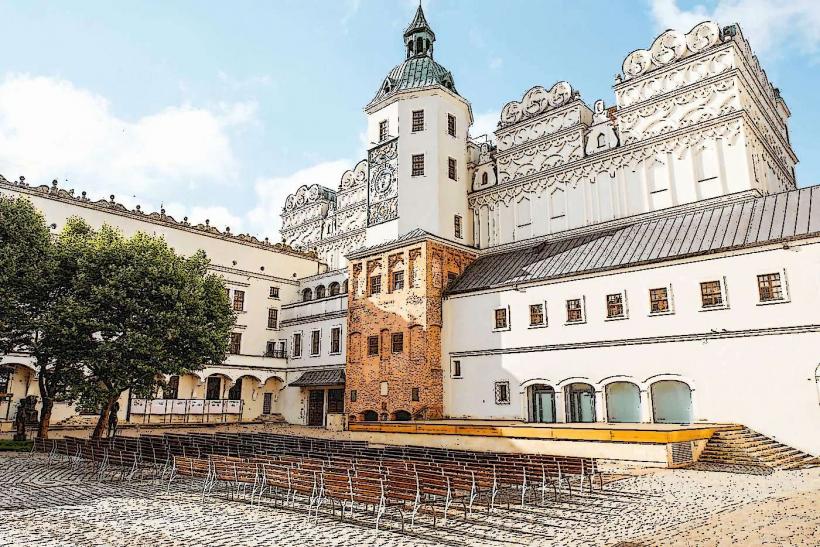
Pomeranian Dukes' Castle: A specialized Renaissance fortress; formerly the seat of the Griffins, it now houses a museum, opera, and cinema.
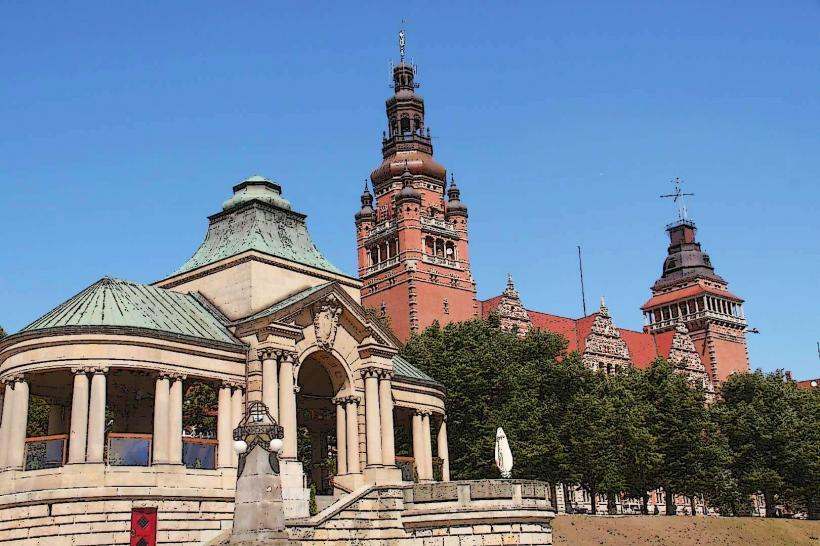
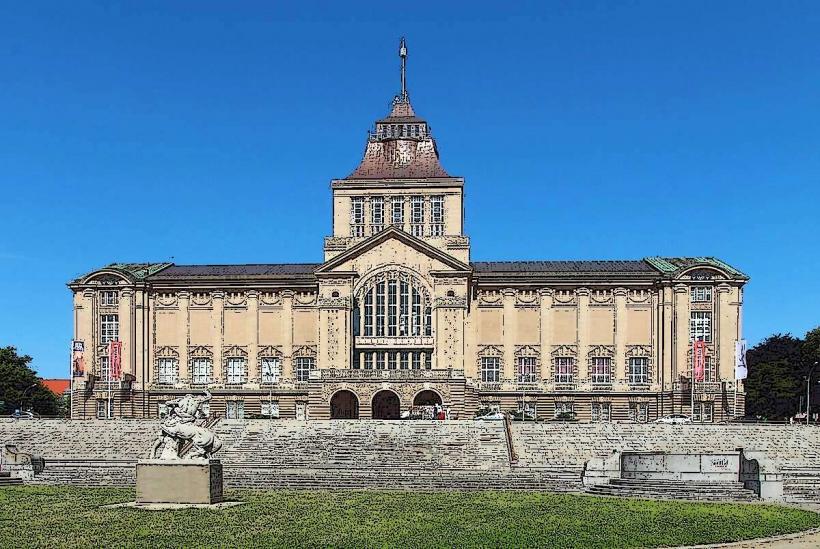
Wały Chrobrego (Chrobry Embankment): A specialized 500-meter elevated terrace and promenade along the Odra, featuring monumental architecture including the National Museum.
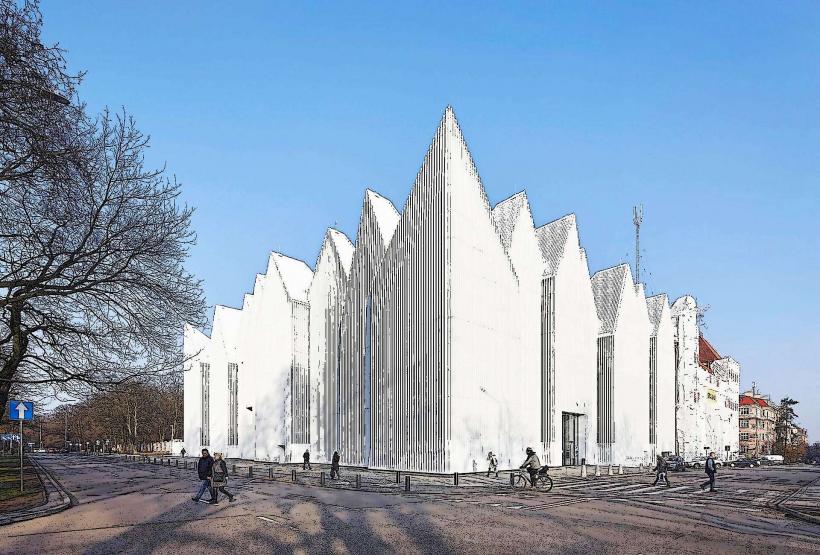
Szczecin Philharmonic: A specialized contemporary landmark; the ice-white, translucent building won the Mies van der Rohe Award for its structural innovation.
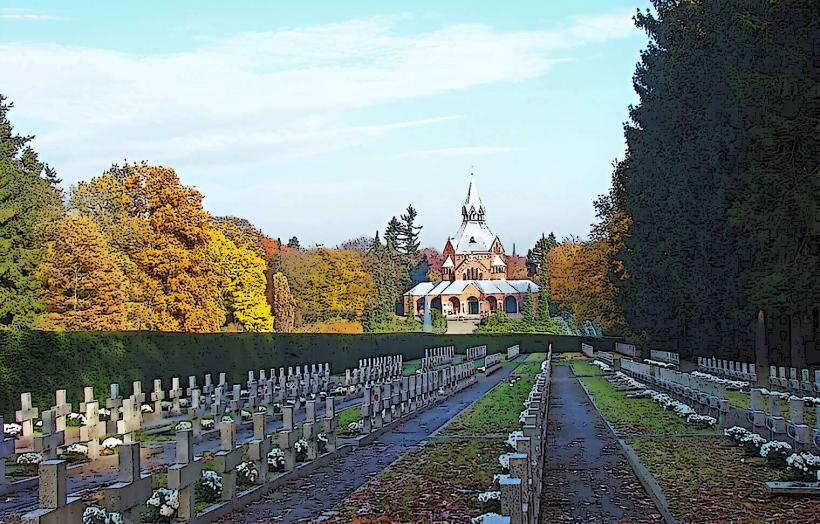
Central Cemetery: The largest specialized necropolis in Poland and the third largest in Europe, designed as a massive landscape park.
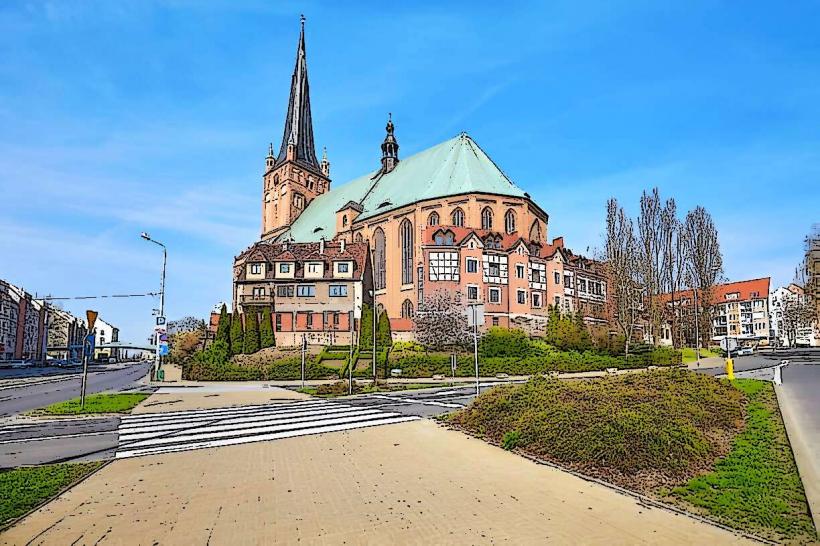
St. James the Apostle Cathedral: A specialized 14th-century Gothic brick cathedral featuring a viewing platform at 110 meters.
Craneosaurs (Dźwigozaury): Specialized historic port cranes on Łasztownia island that have been preserved and illuminated as city symbols.
Transportation Network
Szczecin is the primary logistics hub for the Oder-Havel Canal and Baltic trade.
Szczecin-Goleniów Airport (SZZ): Located 45 km northeast, serving as a regional international link.
Port of Szczecin-Świnoujście: A specialized deep-water port complex; as of 2026, it is a primary hub for the installation of Baltic offshore wind farms.
Railway Station Szczecin Główny: A major hub connecting to Berlin (approx. 2 hours) and the rest of Poland.
Public Transit: A specialized network of trams and buses. In 2026, the city operates the "Szczecin Metropolitan Railway" (SKM), linking the city with surrounding towns like Stargard and Police.
Safety & "Red Zones"
The general safety level is high. Szczecin is statistically secure. There are no "red zones." Standard urban awareness is recommended in the vicinity of the railway station and parts of the Niebuszewo district late at night.
Digital & Financial Infrastructure
The city is a leader in Offshore Wind Engineering and ICT Services. Internet speeds average 600–1000 Mbps. 5G is universal. In 2026, the city utilizes a specialized "Floating Garden 2050" digital platform to manage urban ecology and river-based traffic.
Climate & Air Quality
Szczecin has a temperate maritime climate. Average temperatures range from 0°C in January to 24°C in July. Air quality is among the highest in Polish cities due to the massive proportion of water and forest areas (approx. 50% of the city area).
Culture & Social Norms
Social norms are characterized by a "border-city" openness and strong maritime traditions. Tipping (10%) is standard. The primary cultural event is The Tall Ships Races (periodically) and the Days of the Sea.
Local Cost Index (2026 Estimates)
1 Espresso: 12–15 PLN
1 Pint of Local Beer: 14–22 PLN
1 Standard Lunch: 40–65 PLN
Paszteciik Szczeciński (Local Snack): 6–9 PLN
Nearby Day Trips
Wolin National Park: 1 hour away; a specialized coastal park featuring bison reserves and massive sea cliffs.
Crooked Forest (Krzywy Las): 20 mins away; a specialized natural monument consisting of approx. 100 oddly curved pine trees.
Świnoujście: 1 hour 15 mins away; a specialized port and spa town on the Baltic Sea, home to the tallest lighthouse in Poland.
Facts & Legends
Szczecin is the site of the world's oldest functioning cinema, Cinema Pionier 1907. Legend states that the city's "star" layout was designed to confuse invaders or, alternatively, to facilitate secret subterranean transit. A verified fact is that the city is the birthplace of Catherine the Great, Empress of Russia. Historically, the city’s post-war reconstruction followed a specialized "Green and Blue" strategy, integrating the Odra river directly into the urban fabric.