Information
City: TucsonCountry: USA Arizona
Continent: North America
Tucson, USA Arizona, North America
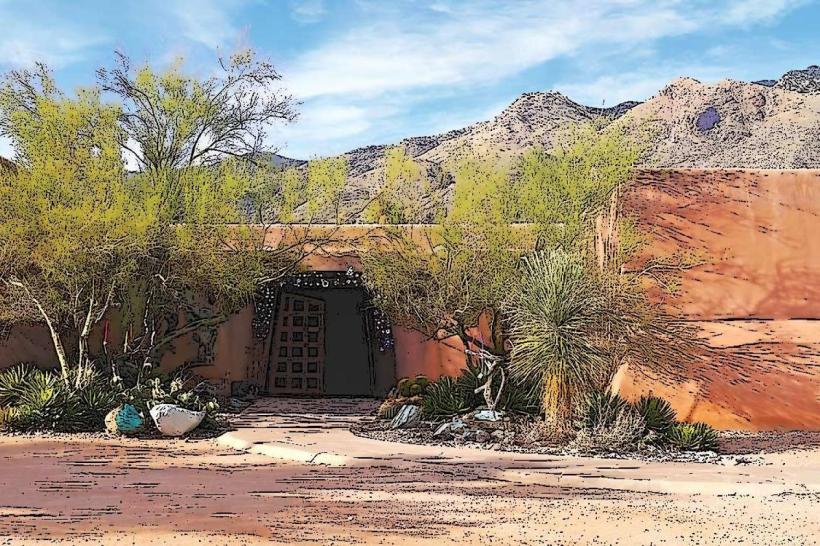
Tucson is an independent city in Pima County, situated in the Sonoran Desert. It is the second-largest city in Arizona and serves as a major hub for the defense, aerospace, and optics industries, as well as being home to the University of Arizona. It is the first city in the U.S. to be designated a UNESCO City of Gastronomy.
Historical Timeline
Inhabited by the Tohono O’odham people for millennia. Primary governance eras include its 1775 establishment as a Spanish military fort (Presidio San Agustín del Tucsón) and its 1854 acquisition by the U.S. via the Gadsden Purchase. A critical historical event was the 1885 founding of the University of Arizona, which transformed the city into an intellectual center. The mid-20th century was defined by the establishment of Davis-Monthan Air Force Base, solidifying its military identity.
Demographics & Population
The population is approximately 545,000 (city) and 1 million (metropolitan area). The demographics are White (43%), Hispanic or Latino (44%), Black or African American (5%), and Asian (3%). It maintains a distinctively "Old West" and multicultural identity compared to Phoenix.
Urban Layout & Key Districts
The city is surrounded by five mountain ranges: Santa Catalina, Rincon, Santa Rita, Tucson, and Tortolita.
Downtown: The revitalized urban core featuring the Congress Street historic corridor, Fourth Avenue, and the Sun Link streetcar.
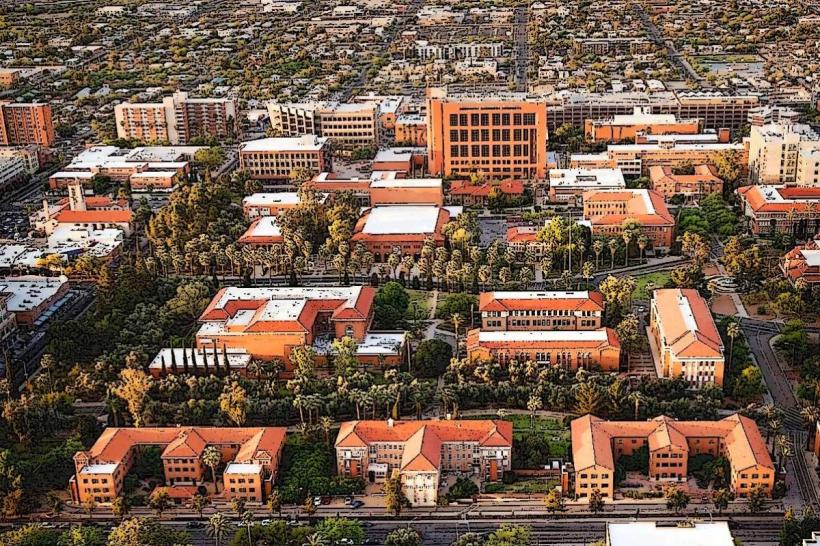
University District: Centered on the UA campus, characterized by red-brick architecture and high student density.
Catalina Foothills: An affluent residential district in the northern hills featuring resort-style living and high-end retail.
Barrio Viejo: A historic district featuring one of the largest collections of 19th-century adobe homes in the U.S.
South Tucson: An independent enclave city within Tucson, known for authentic Mexican cuisine and vibrant murals.
Top City Landmarks
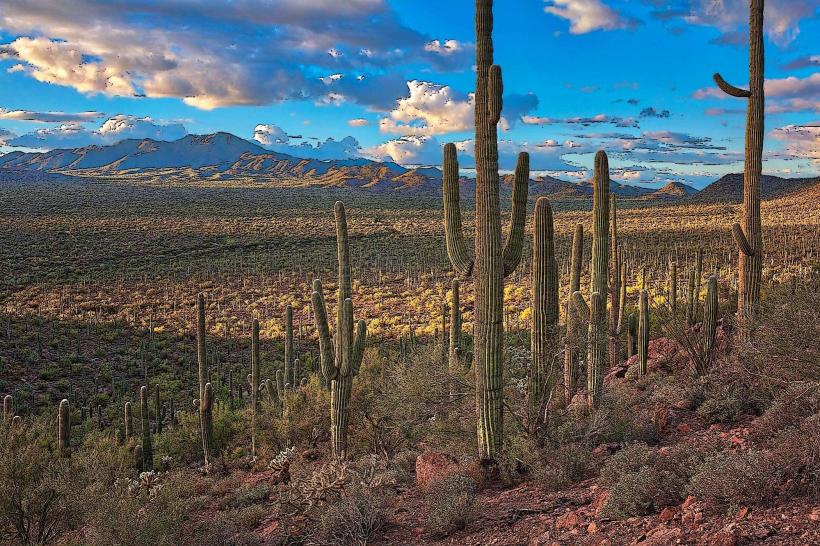
Saguaro National Park: Split into East (Rincon Mountain) and West (Tucson Mountain) districts, protecting the world's largest cacti.
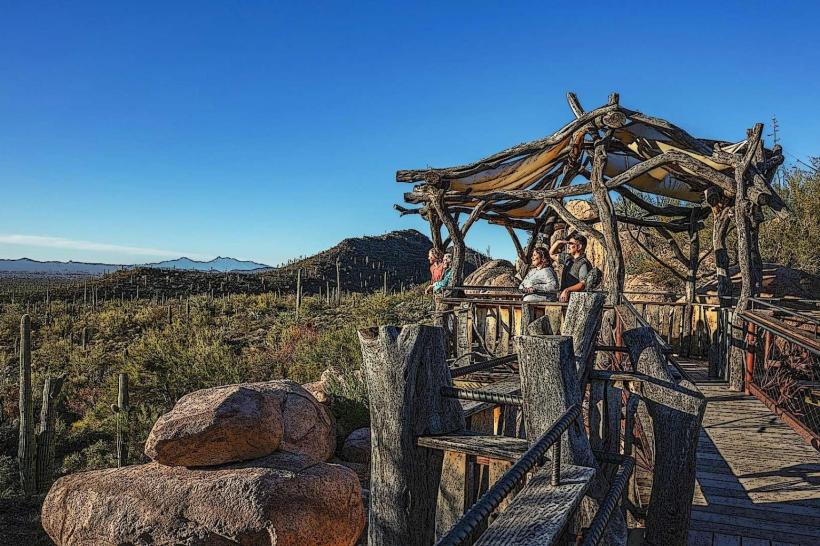
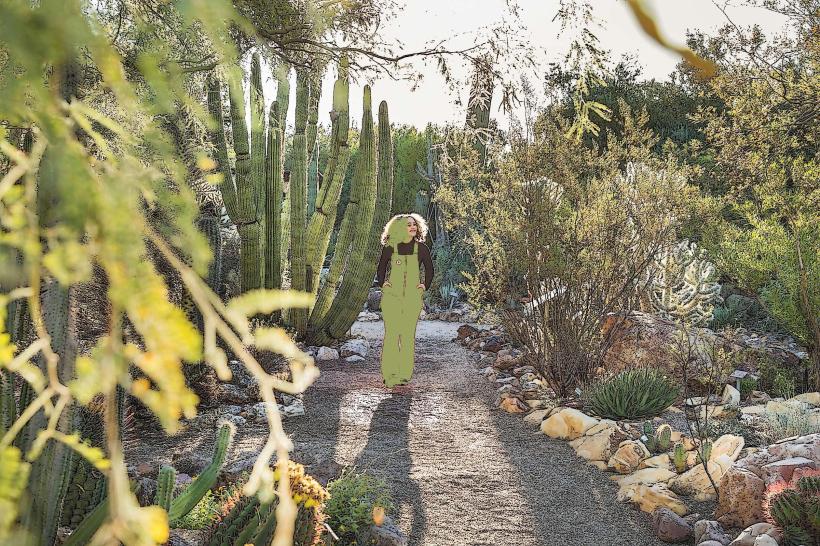
Arizona-Sonora Desert Museum: A world-class zoo, botanical garden, and natural history museum.
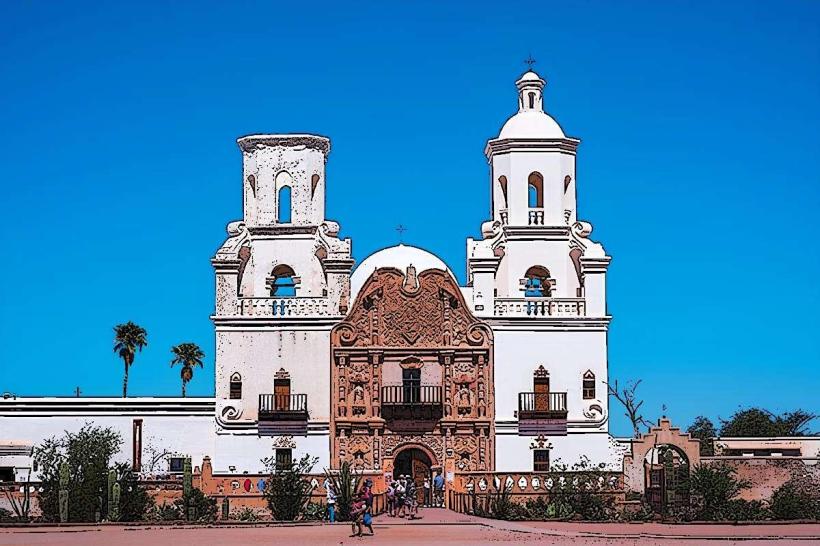
Mission San Xavier del Bac: An 18th-century Spanish Catholic mission known as the "White Dove of the Desert."
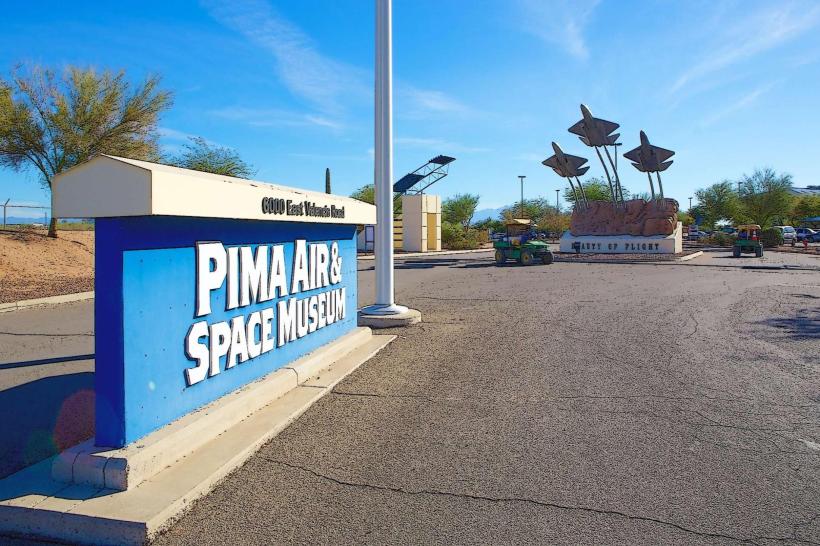
Pima Air & Space Museum: One of the world's largest non-government funded aerospace museums, featuring over 350 aircraft.
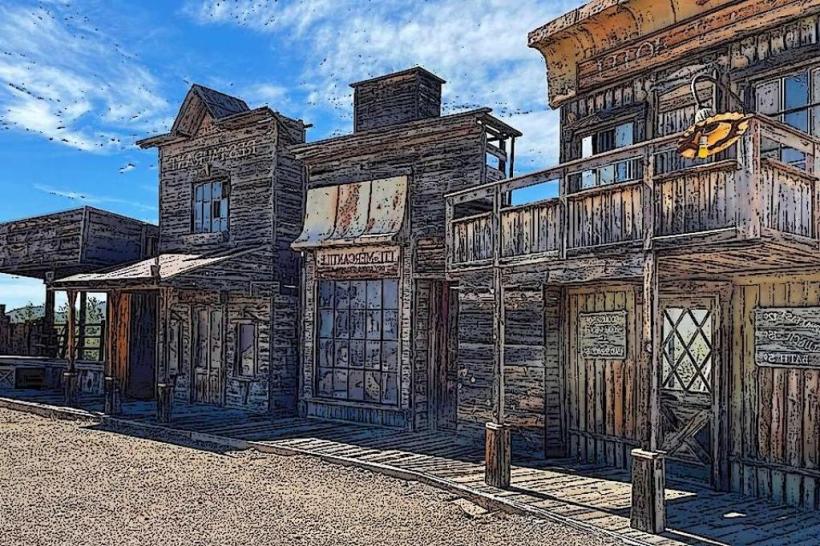
Old Tucson: A movie studio and theme park where over 300 Western films and television shows were filmed.
Mount Lemmon: The highest point in the Santa Catalina Mountains (2,791 m), offering a "Sky Island" climate.
Transportation Network
Movement is serviced by Sun Tran (bus) and the Sun Link (modern streetcar). The city is bisected by I-10 and I-19. It is served by Tucson International Airport (TUS) and Amtrak (Sunset Limited and Texas Eagle). Ride-sharing is universal. Traffic density is moderate but exacerbated by the lack of a cross-town freeway system; most transit relies on surface arterial roads.
Safety & "Red Zones"
The general safety level is moderate. Property crime, specifically "car prowls" and bicycle theft, is high. Caution is advised at night in parts of the Grant Road corridor and sections of South Tucson due to higher rates of violent crime and narcotics activity. The University and Foothills areas are very safe. Common scams involve fraudulent "gem and mineral" sales during the annual city-wide show.
Digital & Financial Infrastructure
Internet speeds average 400 Mbps with fiber availability via Cox and CenturyLink. Main mobile carriers are Verizon, AT&T, and T-Mobile. Card acceptance is universal. ATMs are concentrated in the Downtown and University districts.
Climate & Air Quality
Temperatures range from 4°C to 19°C in winter and 24°C to 39°C (100°F+) in summer. Characterized by "Dry Heat" and intense summer Monsoons. Air quality is generally high, though vulnerable to dust storms and seasonal wildfire smoke.
Culture & Social Norms
The standard tipping percentage is 18–25%. A handshake is the standard greeting. Dress codes are "Desert-Casual" or "Western-Arts." The city is culturally defined by its Sonoran Hot Dog, its world-famous Gem and Mineral Show, and its "Keep Tucson Weird" grassroots identity.
Accommodation Zones
Downtown / Fourth Avenue: Recommended for boutique hotels and walkable nightlife.
Catalina Foothills: Recommended for high-end resorts and mountain views.
Local Cost Index
1 Espresso: $4.75 (USD)
1 Sonoran Hot Dog: $6.00 (USD)
1 Streetcar Fare: $0.00 (Currently fare-free).
Nearby Day Trips
Benson / Kartchner Caverns: (80 km east).
Tombstone ("The Town Too Tough to Die"): (115 km southeast).
Bisbee: (150 km southeast).
Facts & Legends
Tucson is home to the "Boneyard"-the 309th Aerospace Maintenance and Regeneration Group, the world's largest aircraft storage facility. Historically, it was the site of the capture of John Dillinger in 1934. A local legend involves the "Ghost of the Hotel Congress," where a spectral figure is said to haunt Room 242. Another legend concerns the "Secret Treasure of Tumamoc Hill," rumored Spanish gold buried during the mission era.