Information
City: VelingradCountry: Bulgaria
Continent: Europe
Velingrad, Bulgaria, Europe
Velingrad functions as the primary balneological and spa-tourism pivot of the Balkans. Situated in the Chepino Valley of the Western Rhodope Mountains, it serves as a specialized node for thermal hydrology, respiratory rehabilitation, and high-altitude logistics. It is defined by its 80+ mineral springs, its status as the "Spa Capital of the Balkans," and its 2026 role as a flagship for Bulgaria’s Eurozone integration and luxury wellness development.
Historical Timeline
Antiquity: Originally inhabited by the Thracian tribe of the Bessi; the Romans later established thermal baths, recognizing the curative properties of the Chepino springs.
1948: Formed by the specialized merger of three distinct villages: Chepino, Ladzhene, and Kamenitsa.
2008: Officially designated as the "Spa Capital of the Balkans" by the International Hotel and Restaurant Association (IHRA).
2026 Context: On January 1, 2026, Velingrad transitioned to the Euro (€) as its official currency. The city is currently implementing the "Rhodope Wellness 2030" plan, focusing on geothermal heating for public buildings and the expansion of 5-star spa infrastructure.
Demographics & Population
The urban population is approximately 25,500 (2026 estimate). The demographic is specialized toward hospitality, forestry, and medical rehabilitation. Velingrad maintains a diverse religious profile with a stable co-existence of Orthodox Christians and Bulgarian Muslims (Pomaks), contributing to a unique regional folklore and culinary heritage.
Urban Layout & Key Districts
Velingrad is organized into three specialized historical districts, each with its own thermal profile.
Ladzhene (The Center): The specialized administrative and commercial core; it houses the municipality, the central park, and the highest concentration of public thermal baths.
Chepino: The southernmost district; it is home to the Kleptuza spring and specialized sanatoriums focusing on respiratory and neurological health.
Kamenitsa: The northernmost and largest district; it features the hottest mineral springs (up to $91\text{°C}$) and is the birthplace of the world-famous opera singer Nicolai Ghiaurov.
Yundola: A specialized mountain meadow district 16 km away, serving as a high-altitude sports training center and gateway between the Rhodopes and Rila.
Top City Landmarks
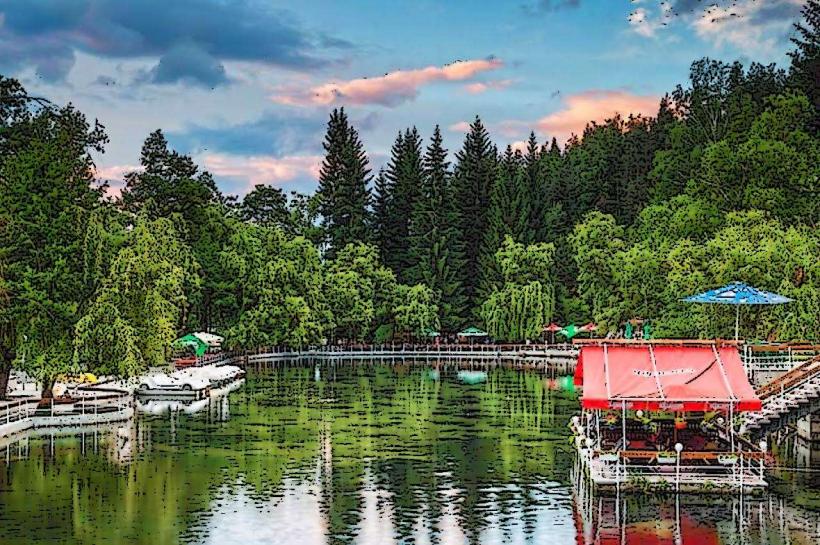
Kleptuza Karst Spring: A specialized natural phenomenon and the largest karst spring in Bulgaria (570–1200 L/sec); it feeds two lakes and serves as the city’s primary emblem.
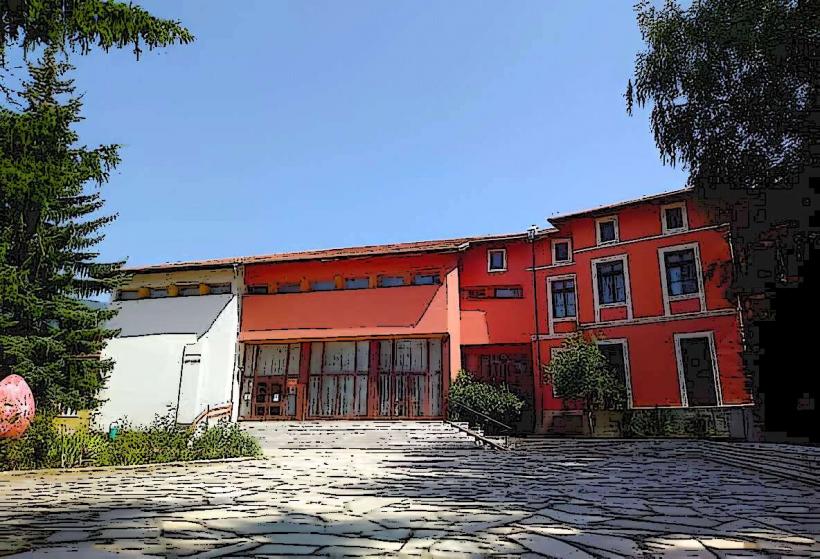
Historical Museum: Houses a specialized permanent exhibition of Easter Eggs decorated using a unique wax-resist technique local to the Chepino valley.
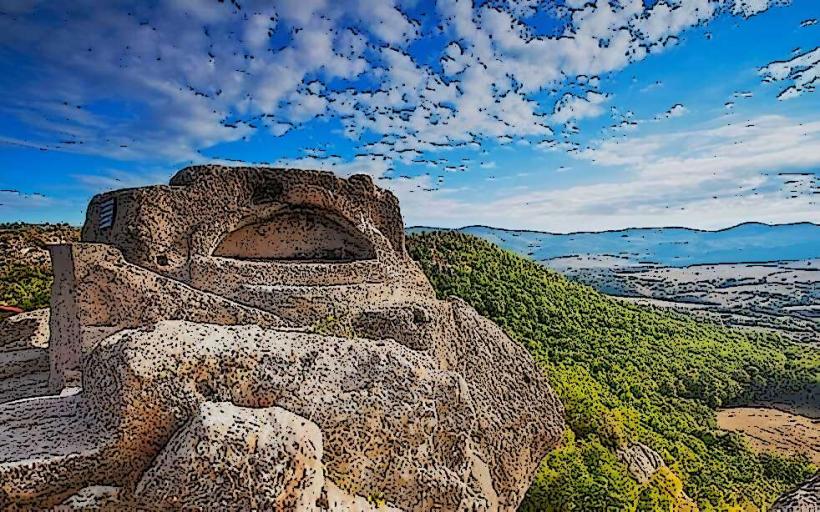
Tsepina Fortress: 15 mins away; a specialized medieval stronghold (11th–13th century) that served as the capital of the independent ruler Despot Alexius Slav.
Saint George Chapel: A specialized spiritual site in the Kamenitsa district built over the ruins of an ancient monastery.
Pliocene Park (Dorkovo): 14 km away; a specialized museum featuring a 5-meter mastodon reconstruction, based on the largest paleontological find in Europe.
Hydrography & Wellness
Velingrad’s economy is anchored by its 80+ mineral springs with temperatures ranging from $22\text{°C}$ to $91\text{°C}$.
Chepino Zone: Radon-rich waters specialized for the nervous system and metabolic disorders.
Ladzhene Zone: Hydrocarbonate-sodium waters specialized for gastrointestinal and biliary diseases.
Kamenitsa Zone: High-sulfate and fluorine waters specialized for the musculoskeletal system and skin conditions.
Transportation & 2026 Logistics
Velingrad is the most significant stop on the specialized Septemvri–Dobrinishte Narrow-Gauge Railway.
Narrow-Gauge Rail: The only operational 760mm line in Bulgaria; in 2026, it serves as a specialized "slow-travel" tourist attraction and vital link for remote mountain villages.
Road Link: 120 km from Sofia (2 hours) and 85 km from Plovdiv (1.5 hours) via the 84 mountain road through the Chepino Gorge.
Avramovo Station: 30 mins away; the highest railway station in the Balkans (1,267m), marking the boundary between the Rila and Rhodope mountains.
Safety & Environment
The general safety level is high. Warning: The mountain roads leading to Velingrad are subject to heavy fog and rockfall in the winter months (December–March). In 2026, the city utilizes an "Eco-Monitor" system to track the purity of the thermal aquifers and regulate the discharge of spa-related wastewater into the Chepinska River.
Local Cost Index (2026 Estimates)
1 Espresso: €1.50 – €2.50
1 Craft Beer (Rhodope Brewery): €2.50 – €4.00
Public Mineral Bath Entry: €4.00 – €8.00
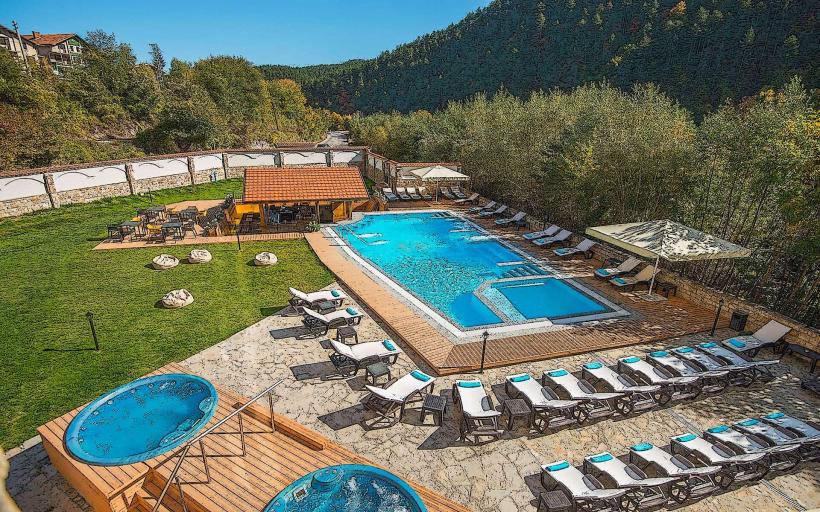
5-Star Spa Day Pass: €35.00 – €60.00
Monthly Rent (1-BR Center): €300 – €500
Facts & Legends
Velingrad is the site of the world's highest density of 5-star spa hotels relative to population size. Legend states that Orpheus used to wander the nearby forests, and the curative springs appeared where his tears hit the ground. A verified fact is that the city’s air has one of the highest negative ion concentrations in Bulgaria, facilitating natural stress reduction. Historically, the city was the primary retreat for the Bulgarian elite and remains the "Baden-Baden of the East."