Information
City: ZaireCountry: Angola
Continent: Africa
Zaire, Angola, Africa
Zaire is a province in northwestern Angola, bordering the Atlantic Ocean to the west and the Democratic Republic of the Congo (DRC) to the north. It is defined by its identity as the "Cradle of Angola," being the heartland of the ancient Kingdom of Kongo, and its modern role as a primary driver of the national economy through offshore oil and gas production.
Historical Timeline
The region was the seat of the Kingdom of Kongo from the 14th century, which established diplomatic ties with the Vatican and Portugal in the late 1400s. A critical historical event occurred in 1914 when the Portuguese formally abolished the Kongo monarchy following several uprisings. During the Angolan War of Independence (1961–1974), Zaire was a major theater of conflict, causing a large portion of the Bakongo people to flee to the neighboring Republic of Zaire (now DRC). In July 2017, M'banza Kongo was inscribed as a UNESCO World Heritage site. In November 2025, the province reached a new milestone with the inauguration of a $4 billion non-associated gas plant in Soyo, marking a shift toward energy diversification.
Demographics & Population
The 2026 estimated population is approximately 700,000. The population is predominantly Bakongo. Portuguese is the official language, but Kikongo is the primary language of culture and daily interaction. The economy is dual-tracked: Petroleum and Natural Gas dominate the formal sector, while Subsistence Agriculture and Artisanal Fishing support the majority of the rural population.
Urban Layout & Key Districts
The province is divided into six municipalities, with two major urban poles:
M'banza Kongo: The provincial capital and spiritual center; located on a high plateau, it contains the historic ruins of the Kongo Kingdom.
Soyo: Located at the mouth of the Congo River; it is a high-security industrial hub for the oil and LNG (Liquefied Natural Gas) industries.
N'Zeto: A strategic coastal town and transport node linking Luanda to the northern border.
Cuimba: An inland agricultural district bordering the DRC.
Noqui: A northern border post across from Matadi (DRC).
Top Landmarks
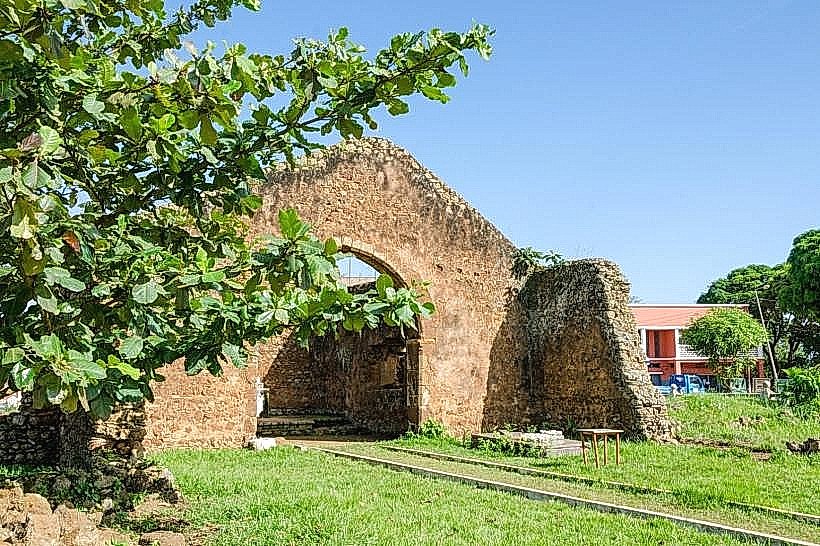
M'banza Kongo (UNESCO Site): Includes the Kulumbimbi (remains of the first cathedral in sub-Saharan Africa, built in 1491) and the Yala Nkuwu (the sacred tree where the King delivered verdicts).
Congo River Mouth (Foz do Rio Zaire): The dramatic point where the second-largest river in Africa meets the Atlantic Ocean.
Ponta do Padrão: A historic site in Soyo where Diogo Cão first landed in 1482, marked by a stone pillar (padrão).
Zua Evua Caves: Ancient caves located 80 km from the capital, containing archaeological vestiges over a thousand years old.
Soyo Gas & LNG Facilities: A massive industrial complex representing some of the most advanced energy infrastructure in West Africa.
Transportation Network
Soyo Airport (SZA) and M'banza Kongo Airport (SSY) provide critical air links to Luanda. The EN-100 highway serves as the primary coastal artery, connecting the province to Luanda; the drive from the capital to N'Zeto takes approximately 5 hours on well-maintained roads. Within the province, the Congo River provides essential fluvial transport for goods and passengers moving toward the DRC.
Safety & Health
General safety is high in urban centers, but the border regions (especially Noqui and Cuimba) are subject to strict monitoring due to cross-border smuggling and migration. In early 2026, the region remains under observation for waterborne diseases like Cholera due to its proximity to the Congo River Basin. Malaria risk is very high year-round.
Digital & Financial Infrastructure
4G connectivity is stable in Soyo and M'banza Kongo via Unitel and Movicel. The Kwanza (AOA) is the currency. Soyo has a high density of ATMs and bank branches specifically serving the petroleum sector. Digital payments are increasingly common in Soyo's commercial areas.
Climate & Ecology
Aw (Tropical savanna) climate. The region features a rainy season from November to May and a dry season (Cacimbo) from June to October. The ecology varies from the mangroves of the Congo Delta to the dense rainforests and savannas of the interior. In 2026, the province is a focal point for gas flaring reduction initiatives to mitigate environmental impact near Soyo.
Culture & Social Norms
The culture is deeply traditional, governed by the legacy of the Kongo kings and the influence of the Catholic Church. Respect for the customary courts and traditional authorities is significant. Cuisine highlights include Sacafolha (cassava leaves and beans) and Bombó Funge (cassava-based porridge) served with fresh or dried fish.
Local Cost Index
1 Standard Meal: $10.00–$25.00 USD (higher in Soyo due to the oil industry).
Mid-range Hotel Night: $80.00–$150.00 USD.
Facts & Legends
M'banza Kongo was once known as São Salvador do Congo during the colonial era. A popular legend from the 1680s claims that a Kongo king buried his mother alive because she refused to relinquish a traditional "idol" for a Christian crucifix. Another fact: the Soyo Gas Plant, completed in late 2025, is Angola's first facility designed to process gas not associated with oil production, fundamentally changing the country's energy landscape.