Information
Landmark: Atlantis (Sa Pedrera)City: Ibiza Island
Country: Balearic Islands
Continent: Europe
Atlantis (Sa Pedrera), Ibiza Island, Balearic Islands, Europe
Atlantis, also known as Sa Pedrera, is a historical site located on the western coast of Ibiza Island in the Balearic Islands.
This site comprises a former Phoenician quarry and a natural rock formation.
Visual Characteristics
The area features large, flat sandstone blocks, many of which have been carved into geometric shapes and figures. The coastline is characterized by rugged cliffs and clear, turquoise water. Vegetation is sparse, consisting mainly of low-lying shrubs and hardy Mediterranean plants.
Location & Access Logistics
Atlantis is situated approximately 10 kilometers west of the city of Ibiza. Access is via a dirt track that branches off the main road (PM-820) towards Cala d'Hort. The track is approximately 2 kilometers long and is suitable for vehicles with higher clearance; parking is available at the end of the track. Alternatively, it can be reached by a moderate hike from Cala d'Hort, a walk of about 1.5 kilometers. There are no direct public transport routes to the site itself.
Historical & Ecological Origin
The site originated as a Phoenician quarry, active from the 6th century BC. The sandstone blocks were extracted for the construction of the ancient city of Ebusus (modern-day Ibiza Town). The unique rock formations are a result of natural erosion and the quarrying activities.
Key Highlights & Activities
Exploration of the carved stone formations is the primary activity. Visitors can observe the remnants of the quarrying process and the artistic carvings. Swimming and sunbathing are possible on the small rocky coves. The site is also a popular spot for photography, particularly at sunrise and sunset.
Infrastructure & Amenities
There are no formal facilities at Atlantis. Restrooms, shade, and food vendors are not present at the site. Cell phone signal (4G/5G) is generally available but can be intermittent due to the remote location.
Best Time to Visit
The best time of day for photography is during the golden hours, approximately one hour after sunrise and one hour before sunset, when the light casts long shadows on the rock formations. The months of May, June, September, and October offer pleasant weather conditions with fewer crowds than the peak summer months. High tide can make access to some lower-lying carved areas difficult.
Facts & Legends
A local legend suggests that the site was once a part of the mythical city of Atlantis, with the carved stones being remnants of its architecture. More concretely, the site was rediscovered in the 1960s by hippies who were drawn to its unique atmosphere and began creating further carvings.
Nearby Landmarks
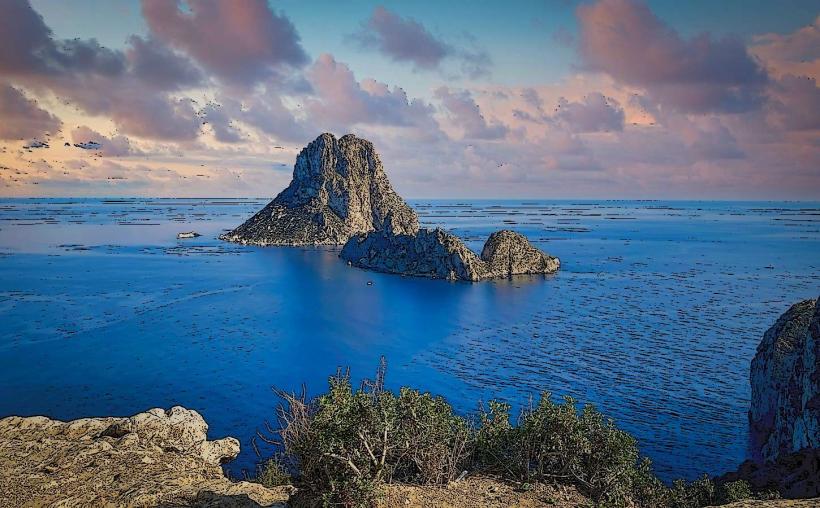
- Es Vedrà (1.5km West)
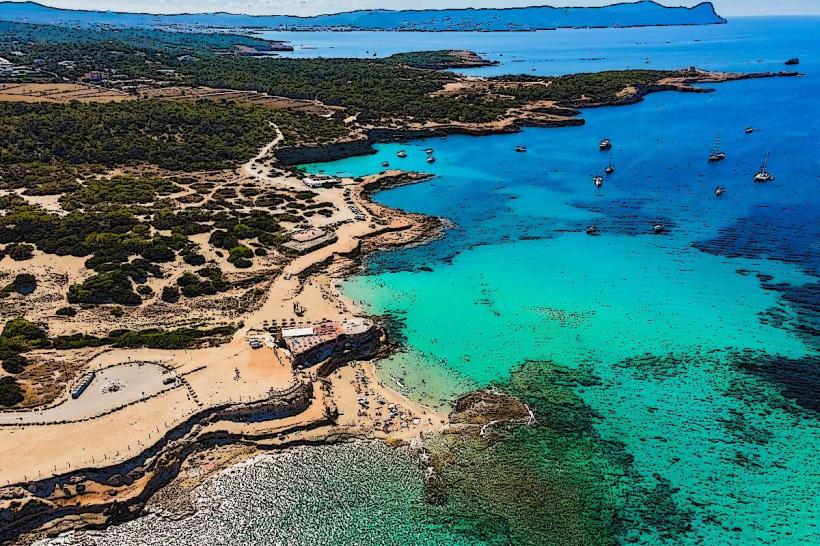
- Cala d'Hort (1.5km Southeast)
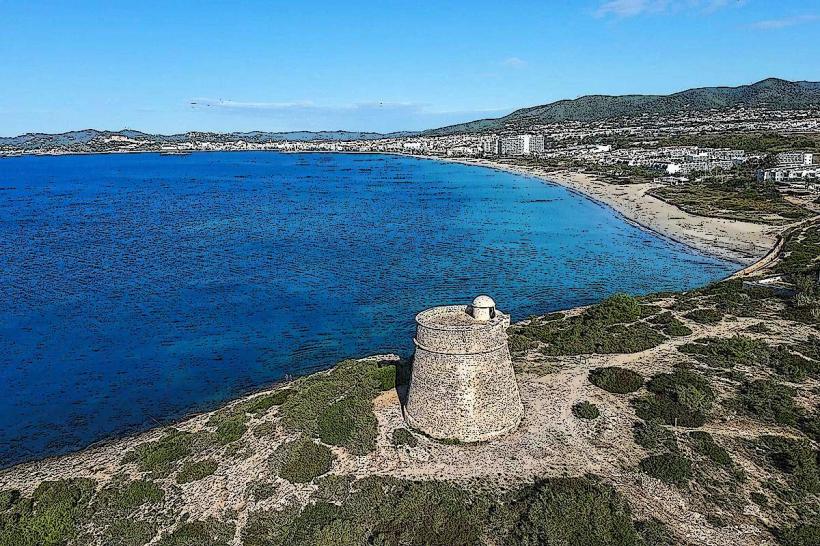
- Torre des Savinar (3km Northwest)
- Punta d'es Morro (4km South)