Information
Landmark: Barrio de Santa CruzCity: Alicante
Country: Spain
Continent: Europe
Barrio de Santa Cruz, Alicante, Spain, Europe
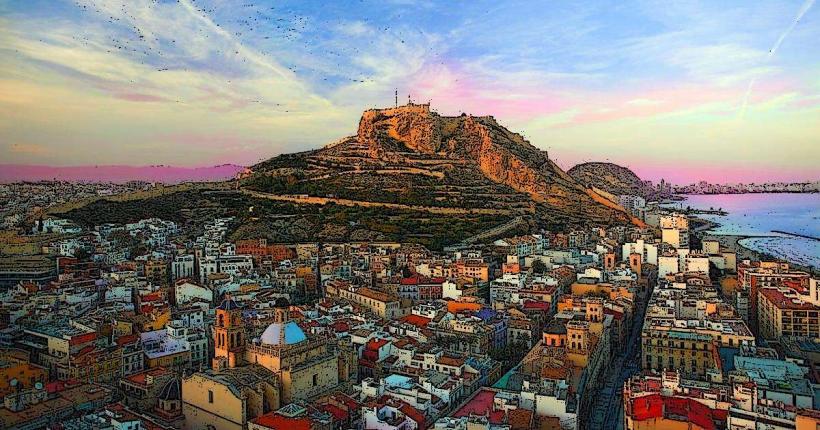
Barrio de Santa Cruz is a historic residential neighborhood situated on the southern slopes of Mount Benacantil in Alicante, Spain. It represents the oldest part of the city, characterized by a steep, terraced layout that transitions from the modern urban center to the walls of the Castillo de Santa Bárbara.
Visual Characteristics
The district is defined by narrow, winding pedestrian alleys and steep staircases flanked by low-rise, whitewashed houses. Facades are decorated with vibrant ceramic tiles and a high density of potted Mediterranean plants, specifically geraniums and bougainvillea. Many houses feature wrought-iron balconies and doors painted in bright primary colors, contrasting with the limestone rock of the mountain.
Location & Access Logistics
The neighborhood is located directly above the Alicante Town Hall and behind the Co-cathedral of St. Nicholas. It is strictly a pedestrian zone due to the narrowness of the streets and the frequency of stairs. Visitors can enter via the Plaza de Quijano or through the Calle San Roque. The nearest vehicle access and public transport stops are at the Rambla de Méndez Núñez, approximately 300 meters away.
Historical & Ecological Origin
Originally established as the Moorish quarter during the Islamic rule of Al-Andalus, the neighborhood retained its medieval footprint after the Christian Reconquista. Its location on the sheltered, south-facing slope of the mountain provides a microclimate that protects the area from northern winds while maximizing sunlight exposure.
Key Highlights & Activities
Walking through the "Callejón del Agua" and "Calle San Rafael" is the primary activity for observing traditional architecture. The Hermitage of Santa Cruz, a small 18th-century chapel, sits at the neighborhood's highest point and serves as the starting point for Holy Week processions. Several lookout points (miradores) provide unobstructed views of the Mediterranean Sea and the Port of Alicante.
Infrastructure & Amenities
The neighborhood is primarily residential; however, small artisan shops and traditional taverns are located near the lower entrance. Public restrooms are not available within the residential streets but can be found in the nearby Plaza de Quijano. 5G cellular signal is consistent. Due to the verticality of the terrain, there is no wheelchair access to most of the upper district.
Best Time to Visit
Mid-morning is the optimal time for photography as the sun illuminates the narrow alleys before they fall into the shadow of the mountain. Late afternoon offers cooler temperatures for the ascent. The neighborhood is particularly active during the "Cruces de Mayo" (May Crosses) festival when the streets are decorated with floral displays.
Facts & Legends
The neighborhood is famous for the "Procession of the Holy Cross," where costumed penitents carry heavy platforms down the incredibly narrow and steep stairs, a feat requiring precision and physical strength. A specific tip for visitors: while the area is highly scenic, it is a quiet residential zone where residents maintain the tradition of "tomar la fresca" (sitting outside to enjoy the cool evening air).
Nearby Landmarks
Castillo de Santa Bárbara: 0.3km North (via mountain paths)
Alicante Town Hall: 0.2km South
Co-cathedral of Saint Nicholas: 0.25km Southwest
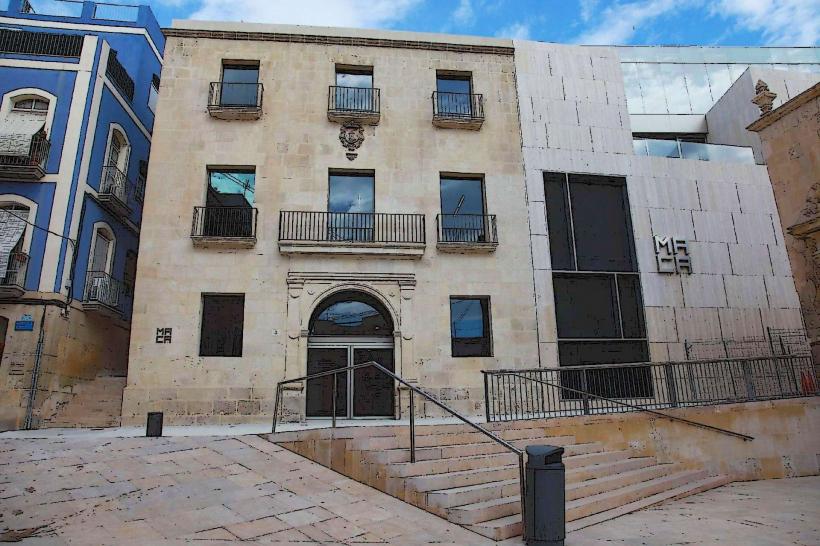
Museum of Contemporary Art (MACA): 0.2km East
Plaza de Quijano: 0.1km South