Information
Landmark: Castillo de Santa BarbaraCity: Alicante
Country: Spain
Continent: Europe
Castillo de Santa Barbara, Alicante, Spain, Europe
The Castle of Santa Bárbara is a medieval fortress situated atop Mount Benacantil, 166 meters above sea level, in the center of Alicante, Spain. It is one of the largest medieval fortresses in Spain, providing a 360-degree vantage point over the Bay of Alicante and the surrounding Mediterranean coastline.
Visual Characteristics
The fortress is constructed from limestone and sandstone, blending into the rock of the mountain. It is divided into three distinct enclosures: the highest ("La Torreta") contains the keep and oldest ruins, the intermediate level features 16th-century buildings like the Guard Room and Queen’s Bastion, and the lowest level dates to the 18th century. The architecture is characterized by thick defensive walls, stone sentry boxes, and expansive parade grounds.
Location & Access Logistics
The castle is located at the summit of Mount Benacantil. Access is available via a high-speed elevator carved into the rock, with the entrance located on Calle Jovellanos opposite Postiguet Beach. Pedestrians can walk up through the Parque de la Ereta or the Santa Cruz neighborhood. Vehicle access is via the Vazquez de Mella road; a public shuttle bus also operates from the city center to the castle gates.
Historical & Ecological Origin
The fortress has origins dating to the 9th century during the Muslim occupation of the Iberian Peninsula. It was captured by Castilian forces on December 4, 1248-the feast day of Saint Barbara-giving the castle its name. Most of the current structure was renovated during the reigns of Philip II and Charles III to adapt to modern artillery warfare.
Key Highlights & Activities
Visitors can explore the MUSA (Museum of the City of Alicante) located within the castle rooms, which displays archaeological finds and historical exhibits. Key actions include walking the ramparts of the Macho del Castillo, visiting the dungeons, and viewing the "Face of the Moor" (La Cara del Moro), a natural rock profile visible from the beach below.
Infrastructure & Amenities
The site is equipped with public restrooms, a cafeteria with outdoor seating, and a gift shop. 5G cellular signal is strong throughout the complex. While much of the fortress is exposed to the sun, the interior museum rooms and the cafeteria provide shaded areas. Information panels are provided in multiple languages.
Best Time to Visit
The best time for photography is at sunset for panoramic views of the city and port. To avoid high temperatures and tourist crowds, visits should be scheduled for early morning (09:00–11:00). The castle remains open year-round, though elevator and museum hours vary by season.
Facts & Legends
A local legend explains the "Face of the Moor" rock formation as the petrified face of a Muslim king who died of grief after his daughter, Cantara, threw herself from the cliffs for love. Historically, the castle served as a prison during the Spanish Civil War, and the names of prisoners can still be found etched into some of the stone walls.
Nearby Landmarks
Postiguet Beach: 0.3km South (at mountain base)
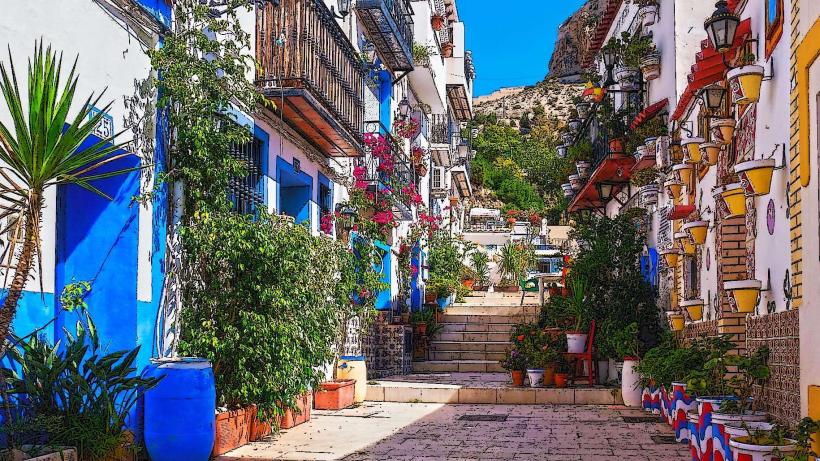
Barrio de Santa Cruz: 0.4km Southwest
Basilica of Saint Mary: 0.5km Southwest
Archaeological Museum of Alicante (MARQ): 0.8km Northeast
Alicante Town Hall: 0.6km Southwest