Information
Landmark: Borgo MedievaleCity: Turin
Country: Italy
Continent: Europe
Borgo Medievale, Turin, Italy, Europe
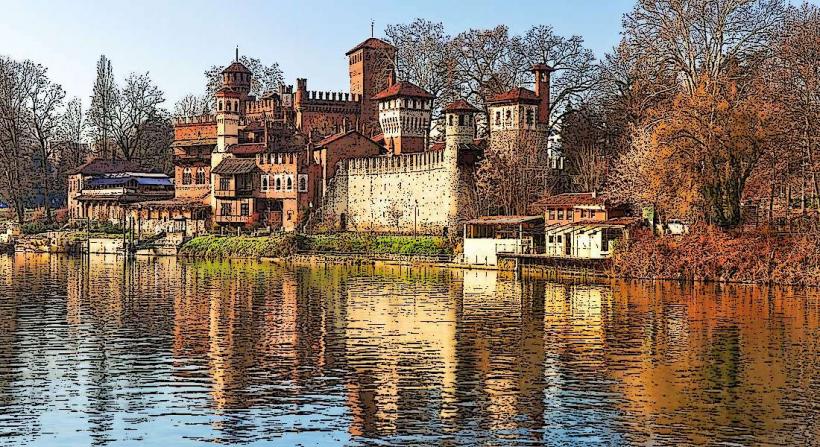
The Borgo Medievale is an open-air museum and architectural complex located in Parco del Valentino. It is an "authentic fake," built in 1884 as a meticulous reconstruction of a 15th-century Piedmontese village and castle for the Italian General Exhibition.
Visual Characteristics
The complex consists of a fortified village with narrow, winding streets, artisanal workshops, and a sprawling castle (Rocca) overlooking the Po River. The architecture utilizes authentic medieval techniques and materials, including terracotta brickwork, stone fortifications, and hand-painted frescoes. It features a drawbridge, a courtyard with a fountain, and a series of houses modeled after specific historic buildings found in the Aosta Valley and Piedmont regions.
Location & Access Logistics
Located at Viale Virgilio, 107, within Parco del Valentino. It is approximately 1.5 kilometers southeast of Torino Porta Nuova station. Access is pedestrian via the park's main paths. Closest public transit includes tram line 9 and bus lines 67 and 18. Parking is available at the nearby underground Parcheggio Torino Esposizioni (0.3 km).
Historical & Ecological Origin
Conceptualized by a commission of scholars and architects led by Alfredo d'Andrade, the Borgo was intended to preserve the memory of disappearing medieval structures in Northern Italy. While many exhibition pavilions are temporary, the Borgo was preserved due to its immense popularity. It is situated on the alluvial plane of the river, integrated with the park’s mature vegetation and the riverbank ecosystem.
Key Highlights & Activities
The Rocca (Castle): A multi-story fortified residence featuring fully furnished rooms, including the dining hall, kitchen, and the Baron’s bedroom, demonstrating life in the 1400s.
Artisanal Workshops: Active shops including a printing press, a blacksmith, and a paper-making laboratory where traditional techniques are still practiced.
The Medieval Garden: A curated space divided into three sections: the "Garden of Delights" (ornamental), the "Kitchen Garden" (edible), and the "Garden of Simple Herbs" (medicinal).
Infrastructure & Amenities
The village streets are free to enter during park hours, while the Rocca requires a ticket for guided tours. The site includes a cafeteria with riverside seating, a souvenir shop specializing in medieval crafts, and public restrooms near the entrance. Most of the village is accessible, though the upper floors of the Rocca involve steep, historic-style staircases.
Best Time to Visit
The village is open daily from 09:00 to 19:00 (winter) or 20:00 (summer). The Rocca has more restricted hours, typically Tuesday through Sunday. Spring and autumn are ideal for visiting the gardens. The site is particularly atmospheric on foggy winter mornings or during late afternoon when the river reflects the brickwork.
Facts & Legends
Every detail of the Borgo is a copy of a real historical element; for example, the fountain is a replica of the one in the castle of Challant in the Aosta Valley. Although it is a 19th-century creation, it was so well-constructed that it survived the Allied bombings of World War II, which heavily damaged the surrounding park and city.
Nearby Landmarks
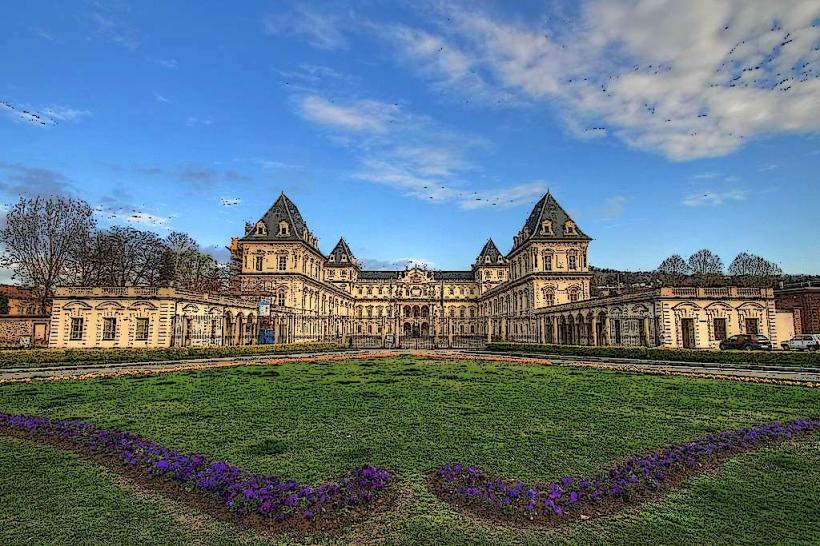
Castello del Valentino: 0.5km North
Fountain of the Twelve Months: 0.2km North
Turin Exhibition Center (Torino Esposizioni): 0.2km West
National Automobile Museum (MAUTO): 1.5km South
River Po: 0.01km (Adjacent)