Information
Landmark: Bridge of LiesCity: Sibiu
Country: Romania
Continent: Europe
Bridge of Lies, Sibiu, Romania, Europe
The Bridge of Lies is a pedestrian cast-iron bridge located in the Small Square of Sibiu, Romania. It spans Ocnei Street, connecting the Lower Town to the Upper Town and linking the Small Square with Huet Square.
Visual Characteristics
The bridge is a curved, cast-iron structure featuring decorative geometric motifs and the coat of arms of Sibiu. It rests on massive stone supports and is painted dark gray with wrought-iron railings. The bridge spans 10.4 meters and is 4 meters wide, with four cast-iron arches providing structural support.
Location & Access Logistics
The site is situated at the intersection of Piața Mică and Piața Huet. Access is strictly pedestrian. The nearest vehicular parking is at Piața Teatrului (0.4km East) or along the city's outer ring road. From the Sibiu Central Railway Station, the bridge is a 1-kilometer walk via General Magheru Street and the Large Square.
Historical & Ecological Origin
Constructed in 1859 by Fredericus Hutter and cast at the Friedrichshütte foundry in Hesse, Germany, it was the first cast-iron bridge in Romania. It replaced a previous wooden structure. The bridge was officially inaugurated in 1860. It was built as a functional overpass to facilitate pedestrian movement over the steep slope of Ocnei Street.
Key Highlights & Activities
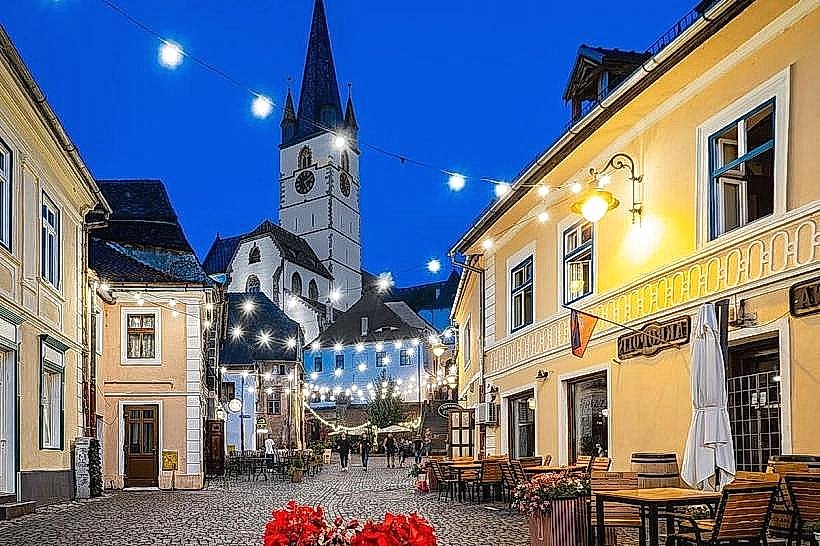
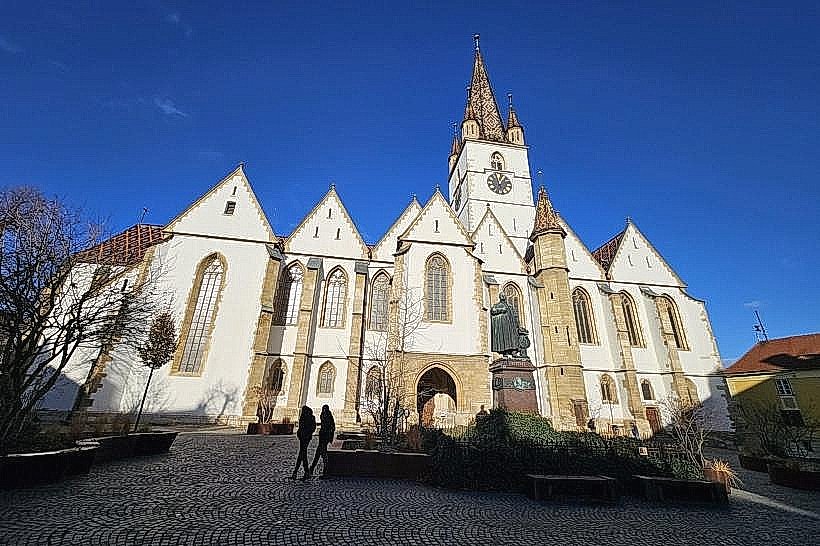
Walking across the span provides a vantage point for photographing the Small Square and the Evangelical Cathedral. The bridge serves as a transition point between major historic plazas. Below the bridge, on Ocnei Street, visitors can view the ironwork architecture from a low angle. It is a common gathering point for guided walking tours.
Infrastructure & Amenities
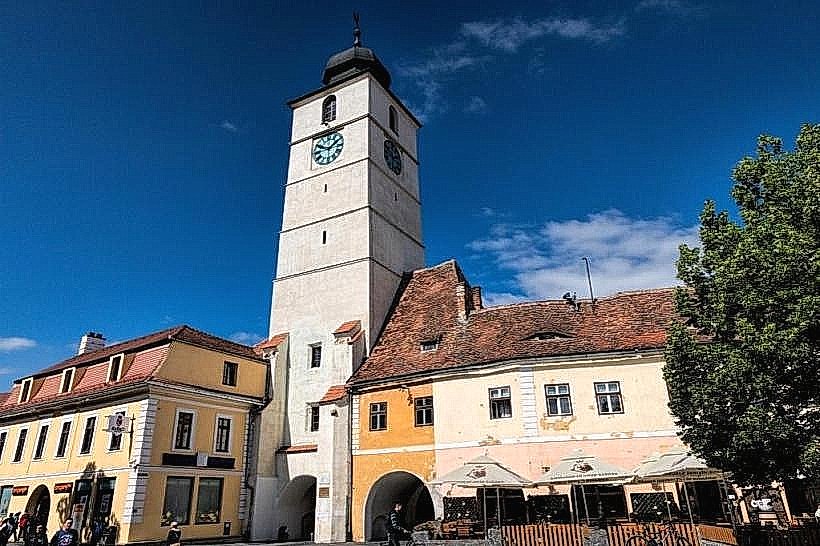
The bridge is a public thoroughfare with no admission fees or restrooms on the structure itself. Public facilities are located in the adjacent Large Square near the Council Tower. 5G cellular connectivity is consistent. Benches and cafes are densely packed in the surrounding Small Square.
Best Time to Visit
Optimal lighting for photography occurs in the late afternoon when the sun illuminates the facade of the nearby Council Tower and the bridge's ironwork. The site is accessible 24 hours a day. During the winter months, the bridge is often decorated with holiday lights as part of the Sibiu Christmas Market festivities.
Facts & Legends
The bridge's name originated from a linguistic confusion; in German, it was called Liegenbrücke (lying bridge, as in "positioned"), which sounds identical to Lügenbrücke (bridge of lies). Local folklore subsequently claimed the bridge possesses ears and will collapse or creak if someone tells a lie while standing on it. Historically, it was also associated with dishonest merchants whose goods were thrown over the side if they were found to have cheated customers in the square.
Nearby Landmarks
The Council Tower: 0.1km Southeast
Evangelical Cathedral of Saint Mary: 0.05km West
The Large Square: 0.15km Southeast
House of Arts: 0.05km East