Information
Landmark: Holy Trinity CathedralCity: Sibiu
Country: Romania
Continent: Europe
Holy Trinity Cathedral, Sibiu, Romania, Europe
The "Holy Trinity" Orthodox Cathedral is a Byzantine-style religious edifice located on Mitropoliei Street in Sibiu, Romania. Constructed in the early 20th century, it serves as the seat of the Romanian Orthodox Archbishop of Sibiu and the Metropolitan of Transylvania.
Visual Characteristics
The cathedral features a massive central dome flanked by two smaller octagonal towers and two 43-meter-high bell towers at the entrance. The exterior is decorated with alternating rows of red and yellow brick and stone, inspired by the Hagia Sophia in Istanbul. The interior is characterized by a vast, gilded iconostasis and extensive neo-Byzantine frescoes painted in gold and vibrant tempera, covering all wall surfaces and the interior of the dome.
Location & Access Logistics
The site is located at Strada Mitropoliei 33, approximately 0.4 kilometers southwest of the Large Square. Access is provided via a paved entrance on Mitropoliei Street. Limited street parking is available along the adjacent roads; the nearest significant public parking is at Piața Teatrului (0.5km East). It is within a 5-minute walk from the city center and 1.2 kilometers from the Sibiu Central Railway Station.
Historical & Ecological Origin
Construction began in 1902 and was completed in 1904, based on the plans of architects Virgil Nagy and József Pomperey. The cathedral was built on the site of a smaller 18th-century church to provide a monumental center for the Transylvanian Orthodox community. It was officially consecrated in 1906. The structure utilized modern industrial building techniques of the era while adhering to traditional Eastern Orthodox cruciform layouts.
Key Highlights & Activities
Visitors can enter the nave to observe the liturgical art and the massive 2,000-kilogram chandelier. Religious services are conducted daily, including morning matins and evening vespers. A small religious gift shop is located within the entrance vestibule. Photography of the interior is generally permitted but discouraged during active religious ceremonies. The cathedral's acoustic properties are frequently utilized for choir performances.
Infrastructure & Amenities
Information boards detailing the building's history are located near the main entrance. There are no public restrooms within the cathedral; the closest facilities are in the Large Square. 5G cellular signal is strong throughout the exterior and interior spaces. Natural shade is available under the trees in the small courtyard bordering the street entrance.
Best Time to Visit
The best time for photography of the interior frescoes is during mid-morning when natural light enters through the dome's windows. The cathedral is open daily from 07:00 to 20:00. To avoid interference with religious practices, tourist visits are best scheduled between morning Liturgy and evening Vespers. The exterior facade is best illuminated for photography in the late afternoon.
Facts & Legends
The cathedral's four bells, cast in Sopron, Hungary, are known for their distinct harmonized tones. A local historical detail notes that the funding for the construction was raised through a massive public subscription campaign across Transylvania, reflecting the social importance of the project at the time. The massive dome was one of the largest constructed in the region during the early 20th century without the use of a traditional steel frame.
Nearby Landmarks
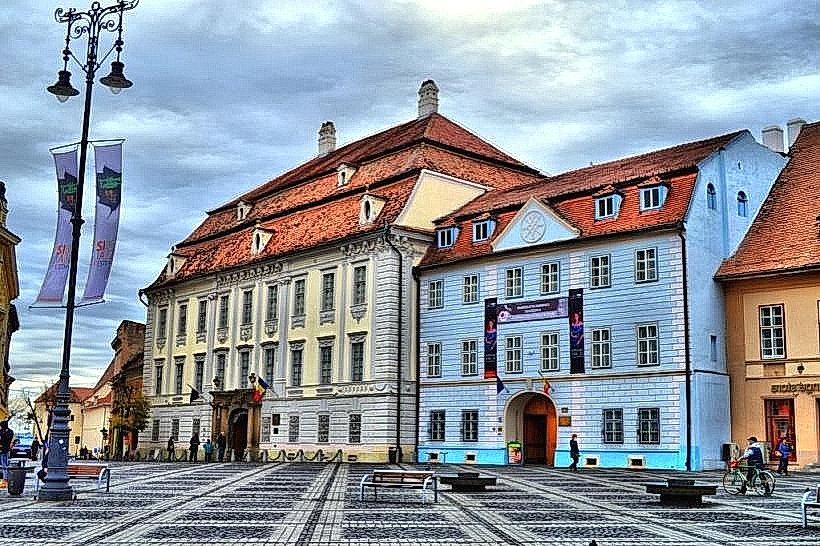
Brukenthal National Museum: 0.3km Northeast
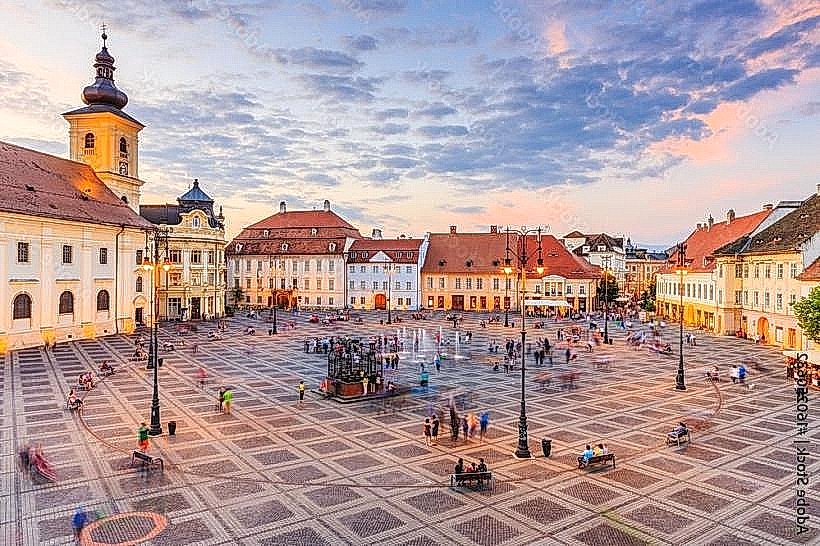
The Large Square: 0.4km Northeast
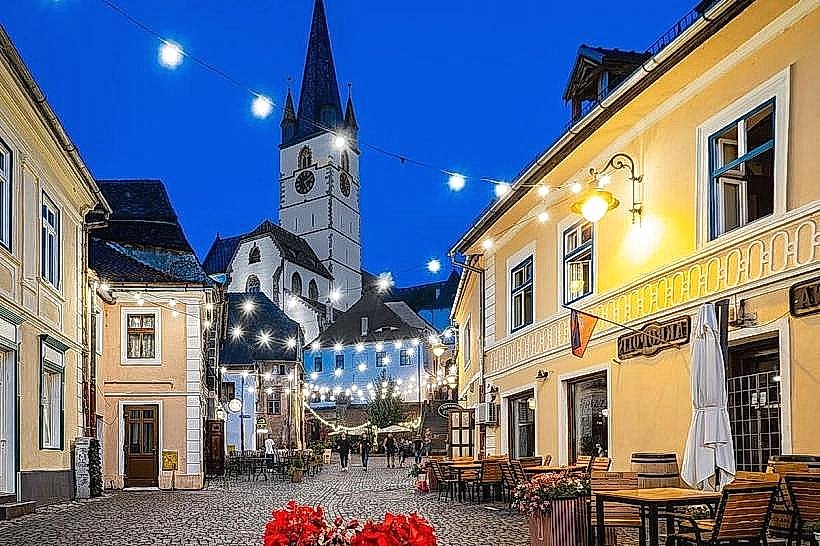
Evangelical Cathedral of Saint Mary: 0.3km North
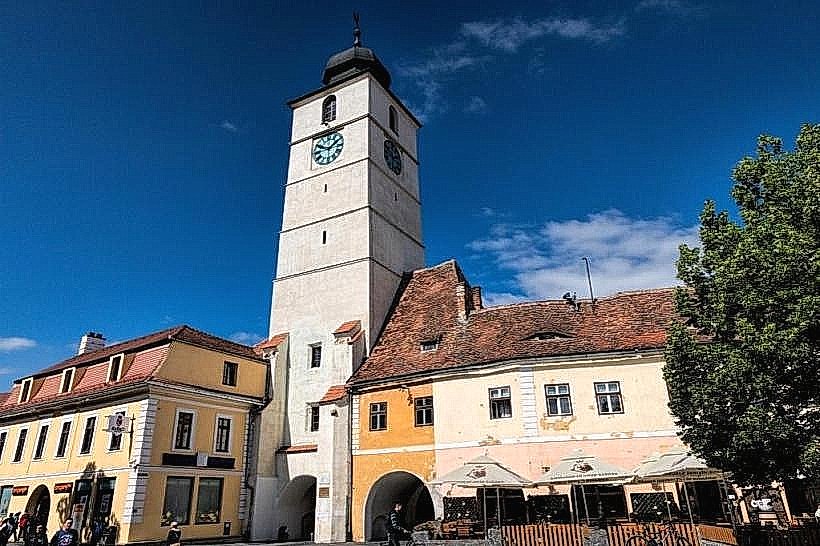
The Council Tower: 0.45km Northeast