Information
Landmark: Campo GrandeCity: Valladolid
Country: Spain
Continent: Europe
Campo Grande, Valladolid, Spain, Europe
Campo Grande is the largest public urban park in Valladolid, Spain, located in the city center. It is a triangular green space covering 11.5 hectares, bordered by the Paseo de Zorrilla, the Paseo de Filipinos, and the Calle de la Acera de Recoletos.
Visual Characteristics
The park is designed in a Romantic style, featuring dense woodland, winding gravel paths, and a central artificial pond with a waterfall. The landscape is dominated by mature trees, including Lebanon cedars, horse chestnuts, and cypresses. A notable visual element is the presence of free-roaming peacocks and a large population of squirrels. Numerous 19th-century statues, ornate iron fountains, and bird aviaries are distributed throughout the grounds.
Location & Access Logistics
Access: Situated at the southern edge of the historic center. The main entrance is at Plaza de Zorrilla.
Transport: Located 200 meters from the Valladolid-Campo Grande railway station. Multiple bus lines (1, 2, 5, 7, 9, 18, 19) stop along its perimeter.
Parking: No on-site parking. Nearby underground parking is available at Plaza de Zorrilla and Plaza de España.
Historical & Ecological Origin
Established in 1787 as the "Campo de la Verdad," it was originally a large open field used for military parades and public gatherings. In the late 19th century, Miguel Íscar, the mayor of Valladolid, transformed it into a botanical and romantic garden. Ecologically, it serves as the city's "green lung," hosting over 60 species of trees and a diverse range of birds, including pheasants, pigeons, and swans in its pond.
Key Highlights & Activities
The Pond: Features a decorative waterfall and offers boat rides operated by a traditional boatman.
The Aviary: A historic structure housing exotic bird species.
Statue of Miguel Íscar: Commemorating the park's primary developer.
Fountain of Fame: A monumental fountain located at the Plaza de Zorrilla entrance.
Walking Trails: Paved and gravel routes used for exercise and leisure.
Infrastructure & Amenities
The park contains public restrooms near the playground area. There is a children's play zone and several outdoor cafe terraces located at the perimeter. 5G signal is robust throughout the park. Numerous benches and shaded areas under the canopy provide heat relief during summer months.
Best Time to Visit
Autumn is optimal for photography due to the changing foliage. Early mornings are best for observing the peacocks and squirrels before the park becomes crowded. The park is illuminated at night, though the interior paths are significantly darker than the perimeter boulevards.
Facts & Legends
A local legend involves the "Espantanublos," a specific type of bell or sound once used in the area to ward off storms. A unique tip: the boatman on the pond (the "Barquero del Estanque") is a multi-generational tradition in the city. The park was also a historic site for duels during the 18th and early 19th centuries.
Nearby Landmarks
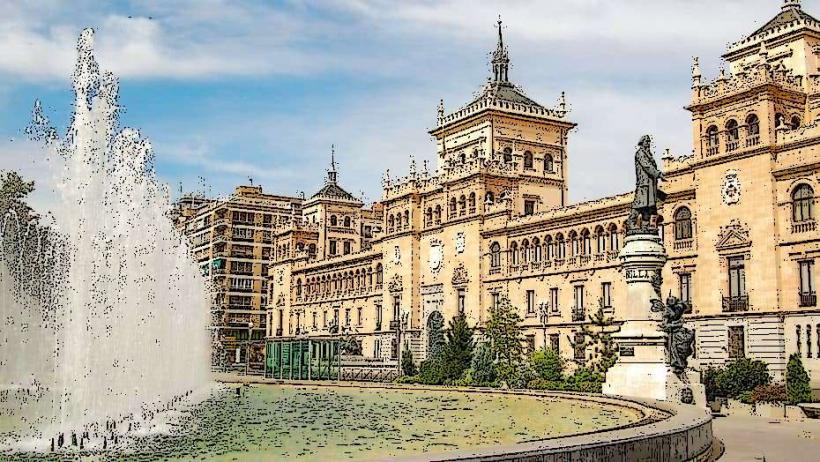
Academia de Caballería: 0.1km North
Casa de Cervantes: 0.3km Northeast
Plaza de Zorrilla: 0.05km North
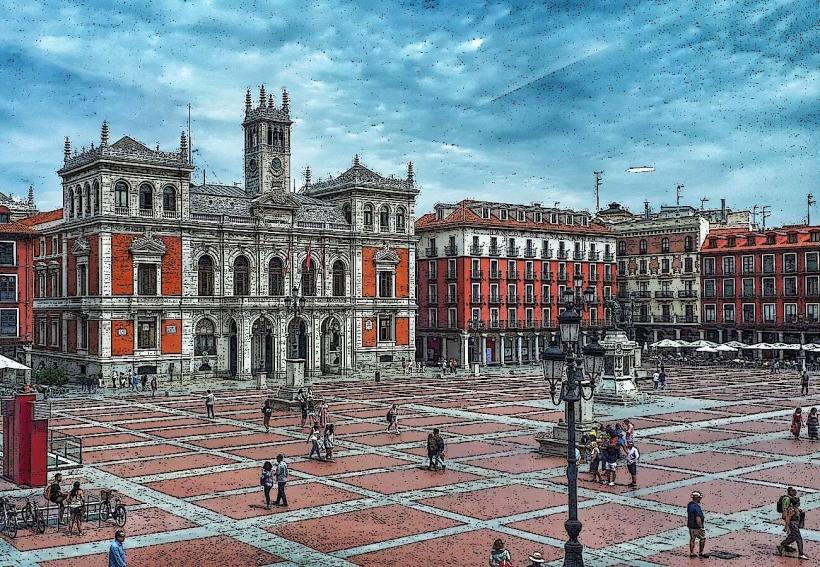
Plaza Mayor: 0.6km North
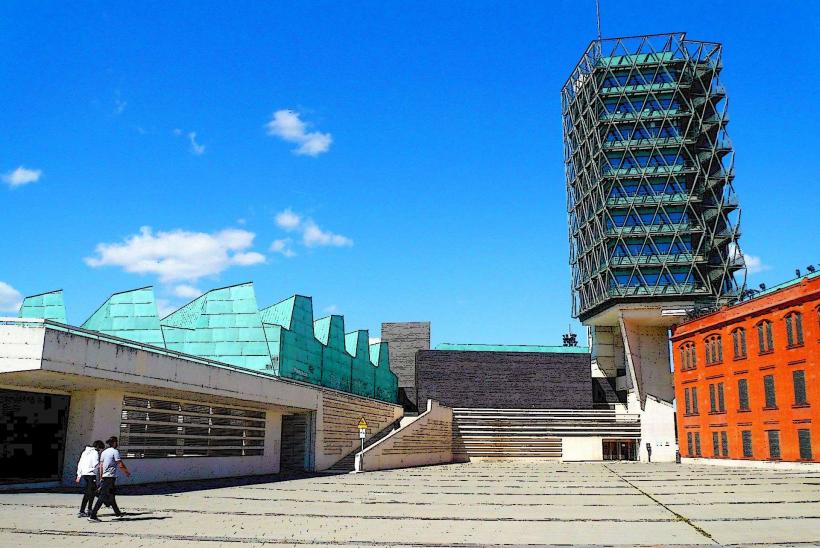
Museo de la Ciencia: 1.4km West (across the river)