Information
Landmark: Palacio de GaudiCity: Valladolid
Country: Spain
Continent: Europe
Palacio de Gaudi, Valladolid, Spain, Europe
The Gaudí Palace (Palacio Episcopal de Astorga) is not located in Valladolid; it is in Astorga, province of León, approximately 130 kilometers northwest of Valladolid. It is one of only three buildings designed by Antoni Gaudí outside of Catalonia.
Visual Characteristics
The palace is a Neogothic masterpiece built from grey granite sourced from El Bierzo. It features elements of a medieval castle, including a moat, four cylindrical corner towers, and battlements, but is distinctively Gaudíesque in its flared arches and organic proportions. The exterior is notable for its white-and-grey contrast, while the interior is characterized by Catalan vaults, glazed ceramics, and intricate stained glass.
Location & Access Logistics
Address: Plaza de Eduardo de Castro, 24700 Astorga, León.
Transport from Valladolid: Approximately 1 hour and 20 minutes by car via the A-6. Regular train and bus services connect Valladolid to Astorga.
Access: The palace is located in the center of Astorga, directly adjacent to the city's Cathedral.
Parking: Public parking is available in the nearby Plaza de San Roque or at the Melgar parking lot.
Historical & Ecological Origin
The palace was commissioned in 1887 by Bishop Joan Baptista Grau i Vallespinós, a friend of Gaudí, after the previous episcopal palace was destroyed by fire. Construction began in 1889 but was halted in 1893 following the death of the Bishop and disagreements between Gaudí and the Diocesan Council. The building remained unfinished for decades and was eventually completed in 1913 by architect Ricardo García Guereta. It never served its intended purpose as a residence and currently houses the Museo de los Caminos (Museum of the Pilgrimage Ways).
Key Highlights & Activities
Museo de los Caminos: A collection of archaeological artifacts, Roman inscriptions, and religious art related to the Camino de Santiago.
The Throne Room: Features ornate ceilings and columns with stylized capitals.
The Chapel: Notable for its verticality and the use of natural light through Gothic-style windows.
The Moat Statues: Three large zinc angels designed by Gaudí, originally intended for the roof but now situated in the exterior garden.
Infrastructure & Amenities
The site includes a gift shop and an automated ticket booth. The building is partially accessible, though the tower climbs and certain levels involve steep stairs. 5G signal is stable. The interior maintains a cool temperature due to the thick granite walls.
Best Time to Visit
The morning provides the best light for photographing the granite facade. Astorga is a major stop on the Camino de Santiago, so the site is most active during the peak pilgrimage months of May, June, and September.
Facts & Legends
Gaudí never returned to Astorga after he resigned from the project in 1893, and he reportedly burned his original plans in frustration. A specific architectural detail: the entrance portico features three flared arches that were technically difficult to build at the time, requiring specialized stonemasons brought from Catalonia.
Nearby Landmarks
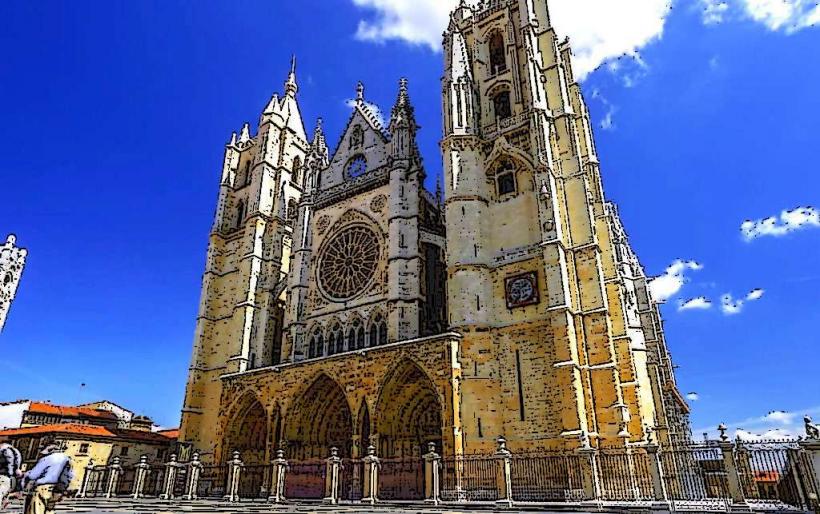
Astorga Cathedral: Adjacent (a mix of Gothic, Renaissance, and Baroque).
Roman Walls of Astorga: 0.1km East.
Chocolate Museum (Museo del Chocolate): 0.4km South.
Roman Ergastula (Museum): 0.3km East.
Castrillo de los Polvazares: 7km West (a traditional Maragato village).